Review: Glitch – The True Story of the Post Office Scandal at Cast Doncaster
 Shannaz
Posted On February 26, 2026
Shannaz
Posted On February 26, 2026
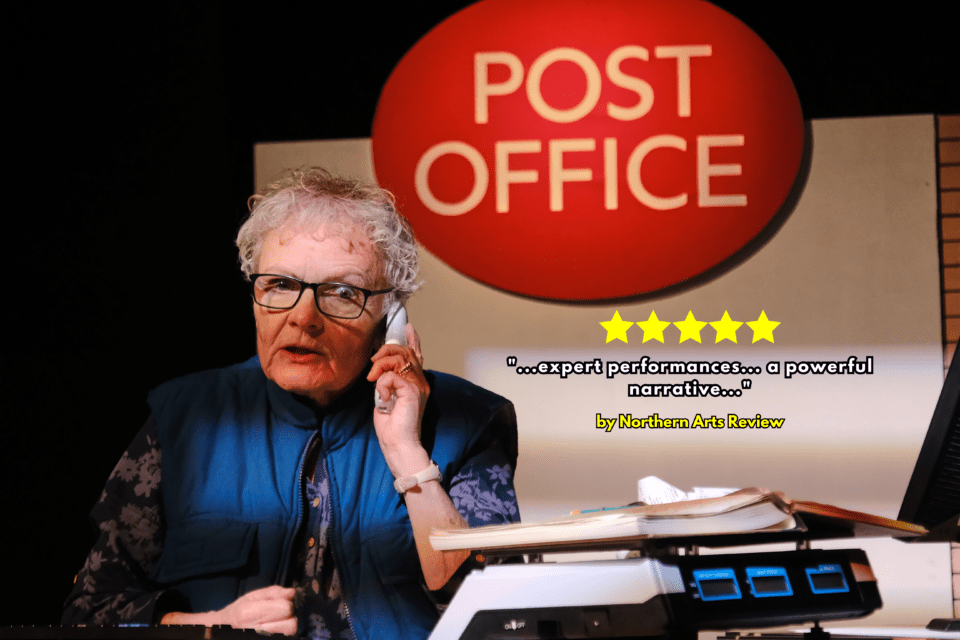
“…expert performances… a powerful narrative…”
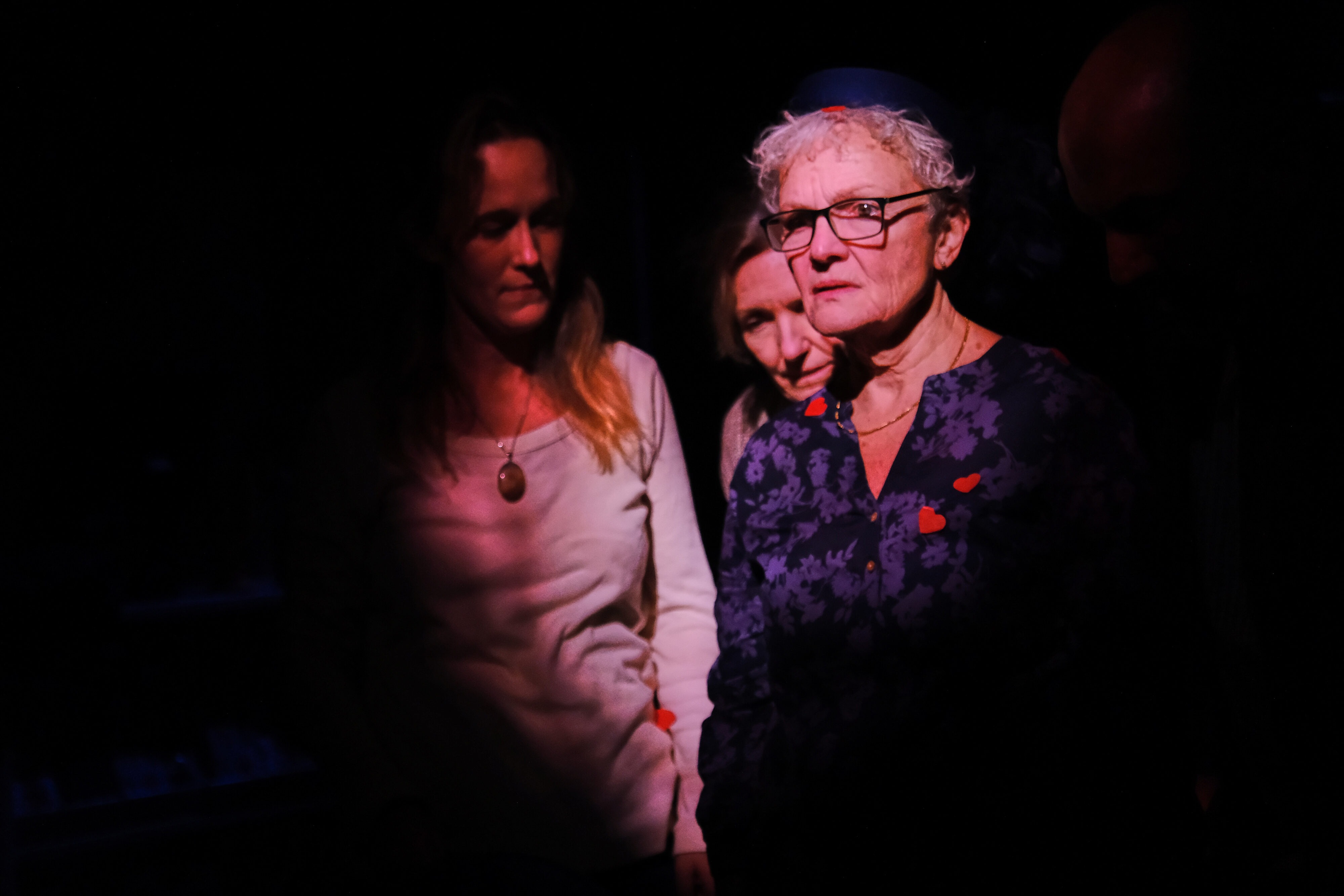
Glitch – The True Story of the Post Office Scandal by Zannah Kearns, Cast Doncaster
By Sean Sable
I’m going to be brutally honest with you. For the better part of a decade, the Post Office scandal occupied a very specific and slightly shameful corner of my attention. You know the one: the corner reserved for things you register, acknowledge as terrible, and then set aside in favour of a distracting Instagram reel. Every year or so, it taps on your shoulder with a headline or a snippet on the radio. With each story, you get the vague sense that something slow and grinding and genuinely awful is happening to a group of people who ran corner shops and village post offices. Moments later, it’s just a faint bit of white noise at the edges of your life.
I’ve thought about why that is, and I think there’s something specific to the texture of this particular injustice that makes it too easy to shrug off. Sub-postmasters aren’t a glamorous group and accounting software isn’t a glamorous subject. The infrastructure of everyday life is invisible by design. We just want it to function. And when it breaks, it still isn’t dramatic in the way we’ve been trained to attend to. No explosions or villains twirling moustaches. Just a computer that keeps producing the wrong numbers, and an institution that decides to destroy the humans instead of the machines. It shouldn’t be easy to look away from that. And yet…
But Glitch doesn’t let us off easy. It doesn’t pat us on the shoulder and tell us it’s okay to “protect our peace”. It’s exactly the kind of confronting theatre this story deserves.
RABBLE Theatre, the Reading-based company founded by Toby and Dani Davies in 2012, has been telling local stories of national significance since their earliest site-specific productions in the Reading Abbey ruins. Glitch, written by Zannah Kearns with dramaturgy from Beth Flintoff, is their first major national tour, supported by £85,000 from Arts Council England. It tells the true story of Pam Stubbs, sub-postmistress of Barkham for over twenty years, who took over the branch the day after her husband died and ran it alone until a glitch in the Horizon IT system began producing fictitious shortfalls. But the Post Office met its match in Pam. She fought back with handwritten records matching every receipt with the till’s transaction log. She refused to simply absorb the losses and move on, as so many other sub-postmasters were forced to do, and her evidence in the Bates v Post Office case was pivotal. The production was developed in direct collaboration with Pam as well as other affected sub-postmasters, and legal professionals involved in the fight. It is this proximity to those who lived through this gut-wrenching ordeal that shines through and gives this production a sense of authenticity that burns like a wound.
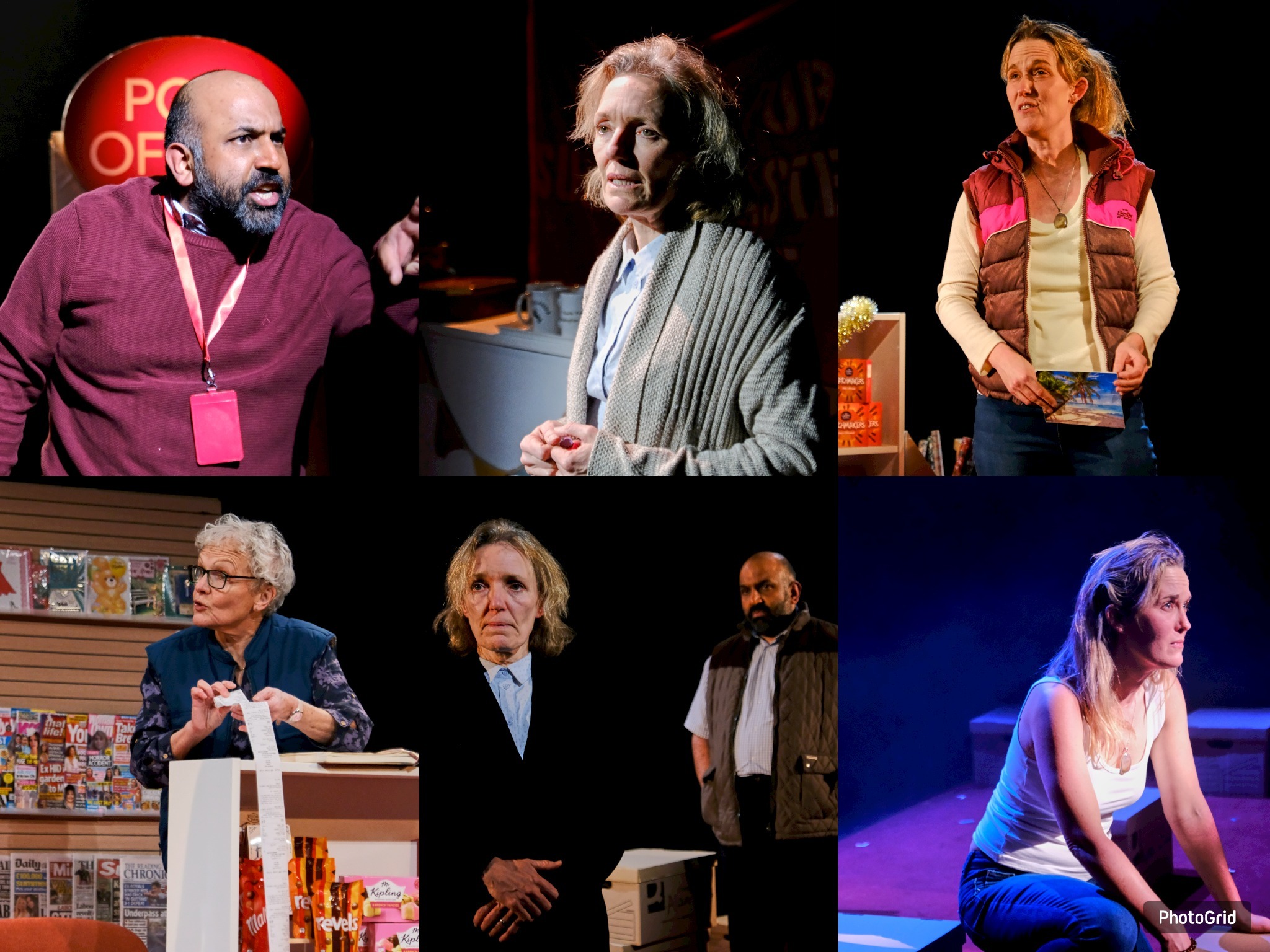
Designer Caitlin Abbott hasn’t tried to dress the story up or extricate it from mundanity. The corner shop is sketched out in a few modular wooden panels, some shelving units standing in for food racks, and the actual contents of a corner shop: boxes of Twixes, rows of women’s magazines and tabloids, a postal scale on the counter and a collection sack hanging beside it. I was in the front row, which meant I had time to sit with all of it before the show started, and I found myself picking out the details like Easter eggs. Everywhere you looked, life is shown as it actually is rather than tidied, improved or polished for more dramatic theatrical consumption. In that way, you can see RABBLE’s roots—embracing environment unflinchingly. A similar inclination is reflected in Caitlin Abbott’s costumes. These are clothes that look like they came off the rack at a supermarket, worn without vanity, worn because they fit well enough. This shouldn’t be a radical choice, but it is. It shows a defiance against vanity that allows the story to stand on its merits.
Scattered across the floor, and stacked against walls, are banker’s boxes. Each one has a name and a year jotted on it in black Sharpie. As the play progresses, you begin to understand that these are the names of sub-postmasters, and the years are when their lives were upended. They’re used for everything: as props for Pam to sort and sift through; as evidence of scale in a meeting room; as the population of a courtroom that a cast of four could never otherwise fill. When one of the individual stories (Tracey, Jan, the man whose wife tells you how the Post Office’s accusations followed him all the way to his suicide) peels away from the main narrative, the relevant box comes to life. No longer just contents or documents, but people.
Oliver Welsh’s lighting design is a lesson in narrative specificity. Neutral washes for the everyday and a tighter focus when one of the vignette stories steps forward. This is contrasted with a touch of real invention. When the Horizon glitch occurs, this is paired with a flicker of the lights. But it isn’t generic; the “visual glitch” is directed at the Post Office sign above the counter like an epicentre of an earthquake.
Benjamin Hudson’s sound design is the kind I spend most of my reviewing life wishing more productions would commit to. The world of the play exists on several audio levels simultaneously. There are radio announcers chatting about the case with the breezy remove of people who won’t be prosecuted for it. The judge presides as a disembodied voice, drawing conclusions as if from on high. A modest dramatic score runs under select sequences to nudge the mood but never distracts. And then there is the glitch. It’s only a fraction of a second, but it’s an auditory rupture that you feel in your spine.
It’s not often, as a writer, that words fail me (often, to the chagrin of friends and family, it’s quite the opposite). But I am going to admit defeat where I find it. I genuinely don’t have the language to express how expert the performances were from the whole cast. All four performers (Joanna Howarth as Pam Stubbs, Naveed Khan, Sabina Netherclift, and Laura Penneycard) made me forget I was watching a play. Joanna Howarth’s Pam is bloody-minded and warm and frightened in equal measure. I know Pam—or someone very nearly like her. And to this moment, my mind struggles with the concept that this was an actress and not the woman herself. At one point, Naveed Khan conducts an entire scene as two characters simultaneously—a Horizon repair technician and the man’s regional boss—with nothing but a small orange stress ball as the transitional object between them. The voice, the intonation, the posture, the cadence: all of it shifts with such ease that it’s almost disquieting.
I came away from seventy-five minutes of this feeling unsettled in a way I hadn’t expected. There is something specific about the proximity of this injustice to ordinary life that makes it harder to watch than the big, sensational stories we’re more comfortable labelling as “other people’s problems”. And perhaps it’s why we, collectively, had a hard time seeing the horror of what happened in towns and villages across the country. This feels so real, so ordinary, that it could happen not just to them, but to us. And that is so much harder to look at.
Glitch is a powerful narrative told by storytellers who understand the importance of restraint. It never needs to point at the horrors of the story and tell us what to think. It simply shows us and lets us feel.

Glitch – The True Story of the Post Office Scandal plays at Cast Doncaster on Wednesday 25 February.
Sean Sable is a Yorkshire-based freelance writer and editor specialising in Young Adult and Horror fiction, frequently at the same time. When she isn’t buried under a pile of books and manuscripts, she is looking for her keys and having extensive one-sided conversations, in Swedish, with her deaf cat. You can find her online at: www.seansable.co.uk
Trending Now

Review: To Kill a Mockingbird at Leeds Playhouse

Review: Night Collar at St Helens Theatre Royal
You may also like