“…the perfect northern retelling of everyone’s favourite seasonal story of redemption…”
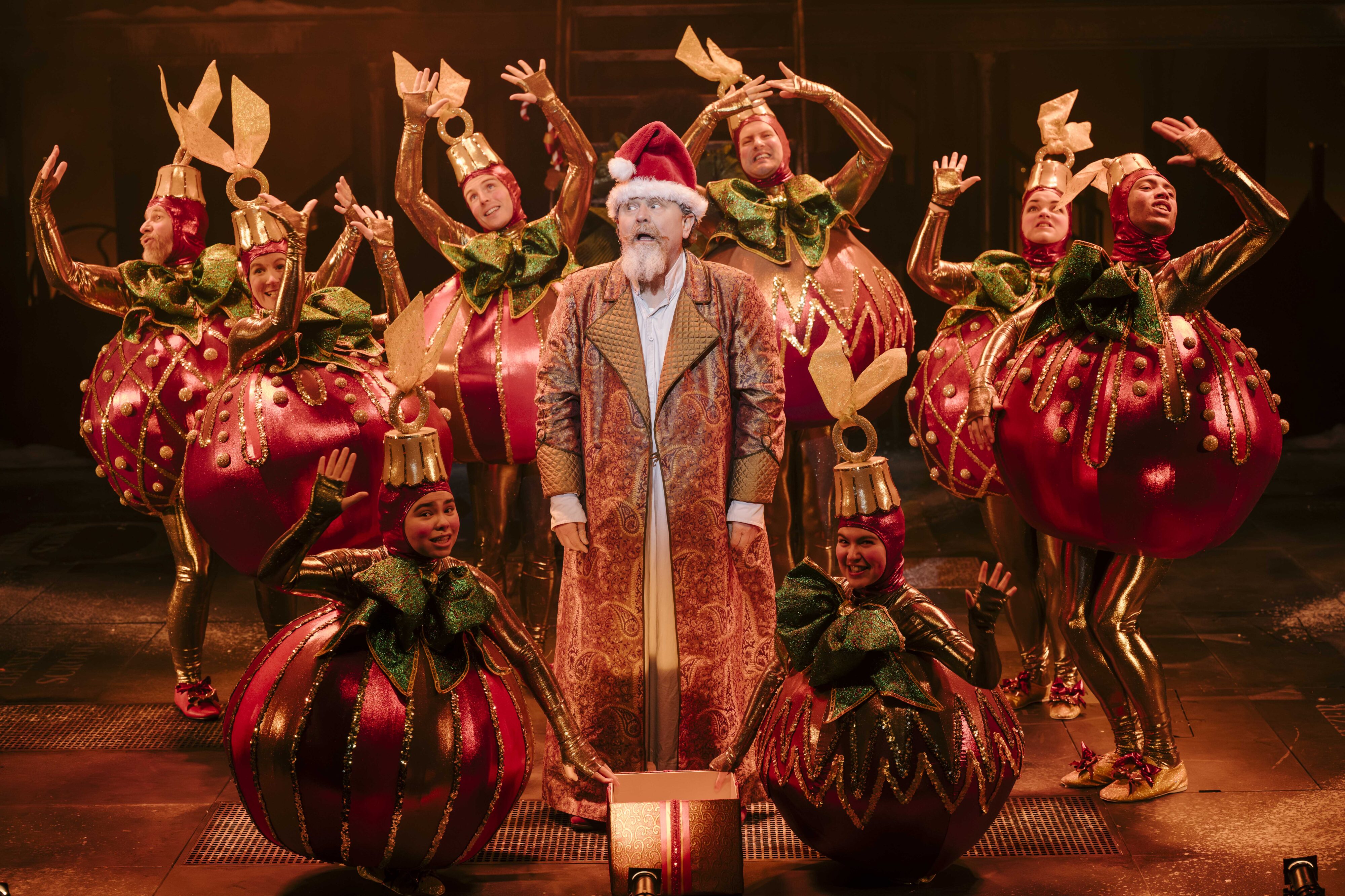
A Christmas Carol by Charles Dicken adapted by Deborah McAndrew, Leeds Playhouse
By Sean Sable
I always find it faintly amusing that A Christmas Carol so often ends up as the very thing it warns us about. The story is a warning about greed and performative sentiment, yet every year we’re treated to productions so filled with forced cheer that they could be the spoofed production (complete with bazookas) in Scrooged. It’s practically become its own trope. So, I will admit that when I sat down at Leeds Playhouse, already knowing the story by heart, I was ready for the usual “tick off the list” comfortable retelling. You can imagine my excitement when I found a production that was so fresh that it felt practically new again.
As a certified Yorkshire Lass™, I was thrilled when I found we were not in Victorian London, but rather industrial Leeds. The moment the stage lights came up on the mill workers and that massive industrial scaffold with “Scrooge & Marley” blazing above the smokestacks, I thought: oh, this makes perfect sense. Dickens belongs up North. The grit, the frost, the humour, the graft—it all fits. And the northern setting was more than just a wink to the audience. It gave the production a whole new heartbeat. With gantries, metal walkways and looming smokestacks with “Scrooge & Marley” stamped above them, I must admit to wondering how Dickens missed such an obvious backdrop for a story about the way wealth builds calluses on the human heart.
This version is adapted by Deborah McAndrew and directed by Amy Leach, whose work at Leeds Playhouse has become something of a calling card for bold storytelling. I still think about her production of Animal Farm earlier this year. I gave it six out of five stars, and I meant every decimal. Her layered, fully integrated approach to theatre is so ambitious and textured that it has all the gravitas of some of the biggest West End productions.
The night’s performance hadn’t even begun and I was already impressed. The set is a two-storey framework of metal grates, ladders and gantries—one part mill floor, two parts Dickensian fever dream. Behind the main structure, smokestacks rise out from the shadows, belching out the occasional cloud of atmospheric haze. Overhead, a giant illuminated clock turns slowly, punctuating the time travel we’re about to witness. There’s real heft in the design that feels like you are stuck in the clockwork gears of the machinery.
The lighting design had depth, layering in spectral blues with blistering oranges that felt at times as if the fires of the industrial world were little more than reflections of the hellfire that awaits Scrooge if he refuses to be touched by the evening’s message.
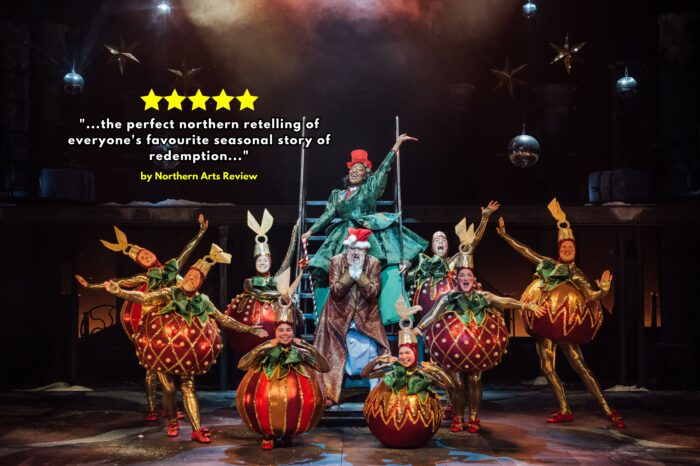
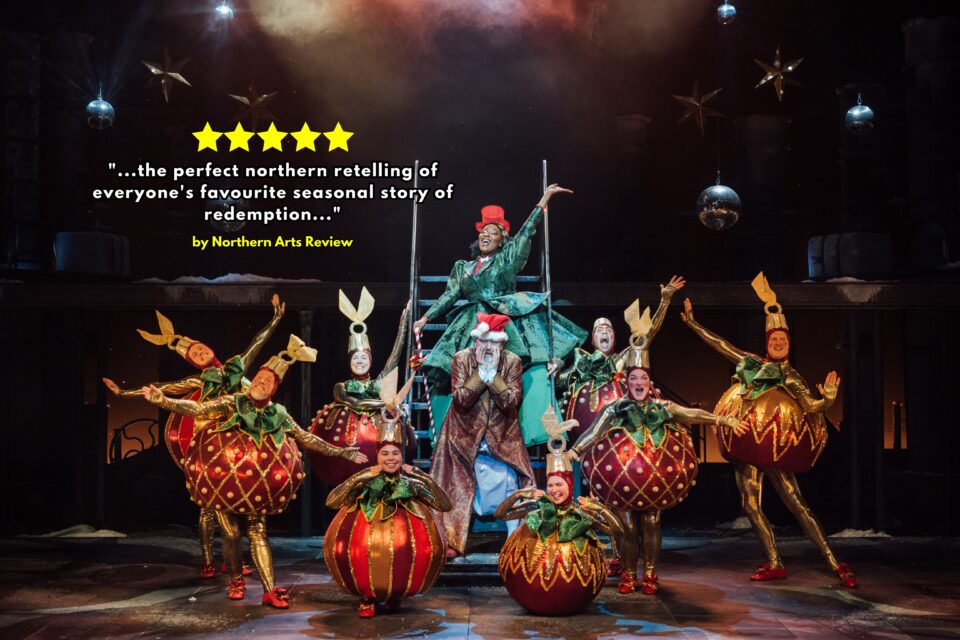
In a production that centres around language, the costumes spoke in colours. Fezziwig’s party bursts with jewel tones and the blind man’s bluff of Fred’s house party is festooned in the bright pastels of youthful exuberance. But my favourite costumes of the evening were the cabaret dancing baubles that heralded the arrival of the Ghost of Christmas Present. A stage full of gold-lamé dancers kicking their way into Scrooge’s sleep is as ridiculous as it sounds and exactly the sort of joy a Christmas production deserves.
No discussion of last night’s performance would be complete without mentioning the integration of BSL and Deaf actors into the production. Several of the performances I have seen this year at the Leeds Playhouse (including Amy Leach’s Animal Farm) have featured fully embedded BSL and some of the best Deaf actors the country has to offer. This is inclusive theatre at its finest.
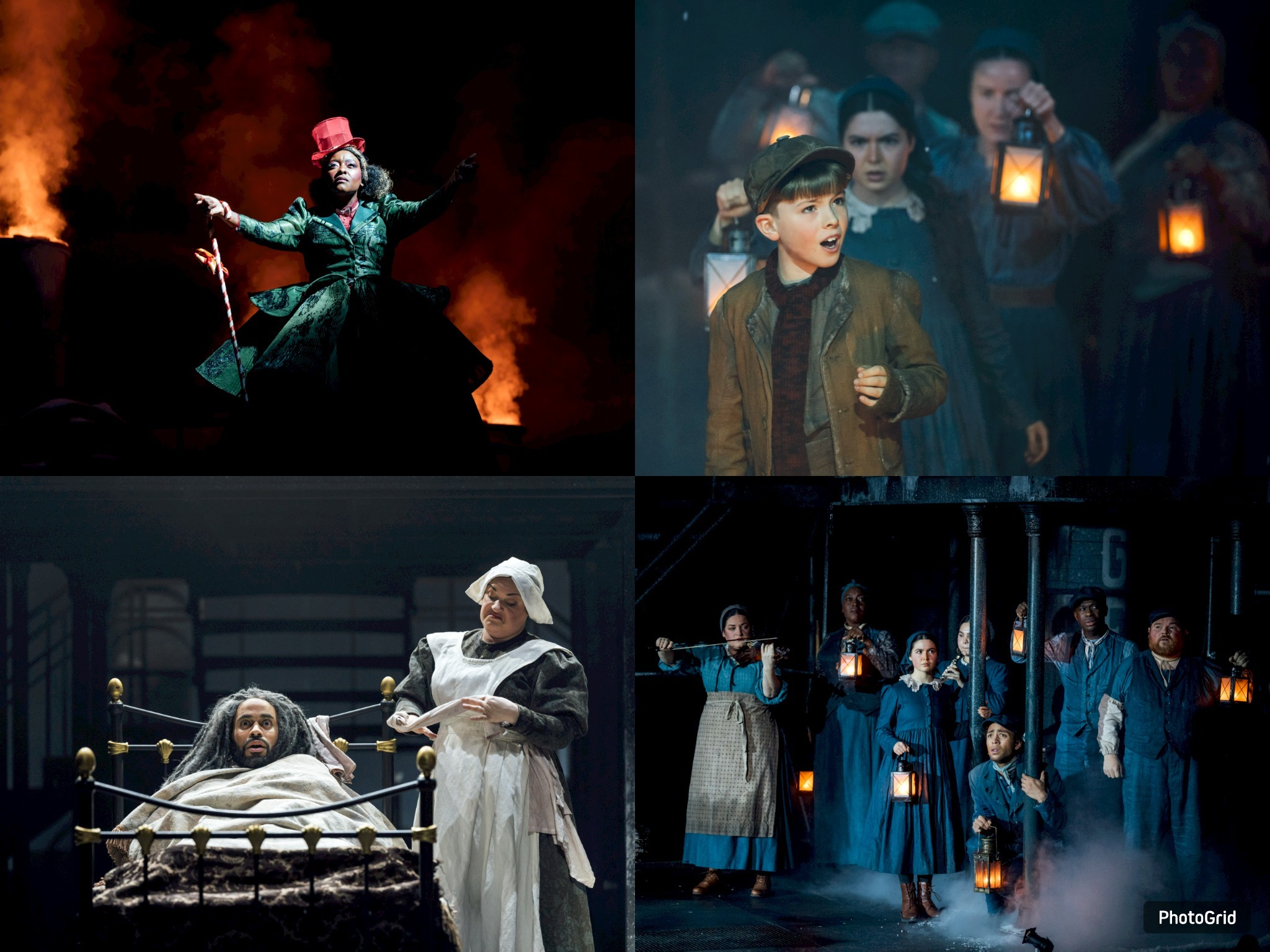
Bob Cratchit, played by Stephen Collins, and Mrs Cratchit, played by Nadia Nadarajah, sign throughout, each with their own relationship to vocalisation. Watching Mrs Cratchit sign without speech altered the rhythm of her scenes in a way I didn’t expect. Everything quietened and you had to watch a little more closely. You were invited to participate in language, not just receive it. And it gave me something small but important: a sense of what it might feel like to be outside the primary language of the room, relying on context to catch the thread. And this added context could be hilarious. When Mrs Cratchit signed an opinion of Scrooge that read him to filth, she had the audience absolutely howling.
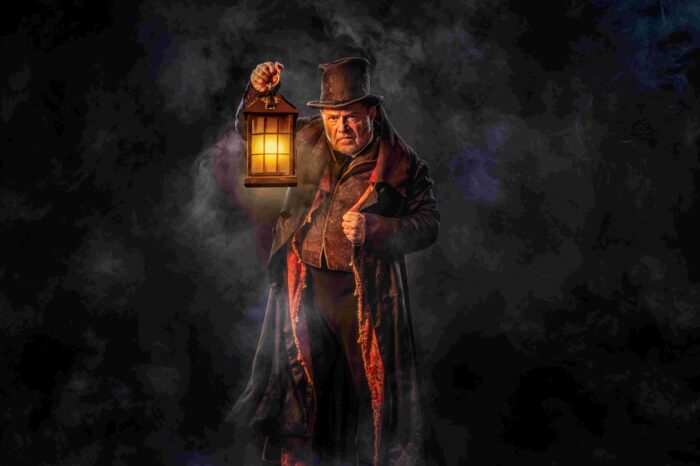
The cast was surprisingly small considering how large the production feels. A bit like stepping into a room of mirrors, every person seemed to double and treble themselves until they filled each scene with energy and movement. Reece Dinsdale’s Scrooge has just the right level of grouchiness, making him pitiable rather than unlikable. Tiny Tim, performed last night by Lucas Kerr, was so warm and fresh-faced it was hard to believe this was his debut. And whilst every member of the company delivered, I would be remiss not to mention Stephen Collins. Most versions of Cratchit lean into a flinching, browbeaten sort of man, yet Collins was so bubbly he was almost effervescent.
The musical numbers were a fantastic addition to the storytelling without venturing into full musical territory. The opening number, a new arrangement of Rossetti’s “In the Bleak Midwinter,” sets the tone immediately. I’ve always loved that carol, but I’ve never heard it done with such an edge. Several cast members play instruments as well as sing and we were treated to live flute and clarinet, offering an extra textural element that recorded sound often misses.
Leeds Playhouse’s A Christmas Carol is the perfect northern retelling of everyone’s favourite seasonal story of redemption. Don’t wait until you are visited by three ghosts to see the error of missing this festive delight.

A Christmas Carol plays at Leeds Playhouse until Saturday 17 January 2026. Tickets are available here.
Sean Sable is a Yorkshire-based freelance writer and editor specialising in Young Adult and Horror fiction, frequently at the same time. When she isn’t buried under a pile of books and manuscripts, she is looking for her keys and having extensive one-sided conversations, in Swedish, with her deaf cat. You can find her online at: www.seansable.co.uk
Trending Now

Review: Enlightenment at People's Theatre