Interview with John Kendall and Emily Terndrup for Juliet & Romeo
 Shannaz
Posted On November 1, 2026
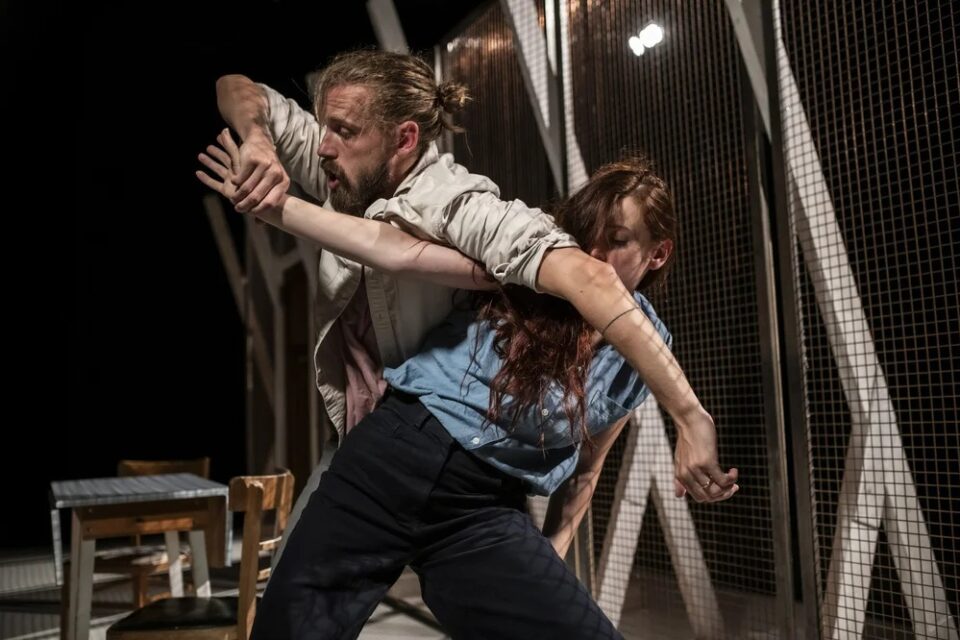
Emily Terndrup & John Kendall on teenage obsession, the school run and why happily ever after is complicated.
By Sean Sable
Shakespeare’s Romeo and Juliet have been held up as the gold standard of romantic love for more than four hundred years. But let’s be honest, their relationship lasted all of three days, involved an alarming amount of teenage impulsivity, and ended with a rather unfortunate double suicide. Not exactly the blueprint for a successful marriage. But what if things had gone differently? What if the star-crossed lovers had survived, married, had a child and discovered that happily ever after isn’t a real destination?
That’s the premise behind Juliet & Romeo, a dance-theatre production from Lost Dog, the award-winning company founded by Ben Duke and Raquel Meseguer in 2004. Blending contemporary dance, spoken theatre and comedy, the production takes Shakespeare’s most famous couple into middle age, where the humdrum of marriage has rather taken the shine off their legendary romance.
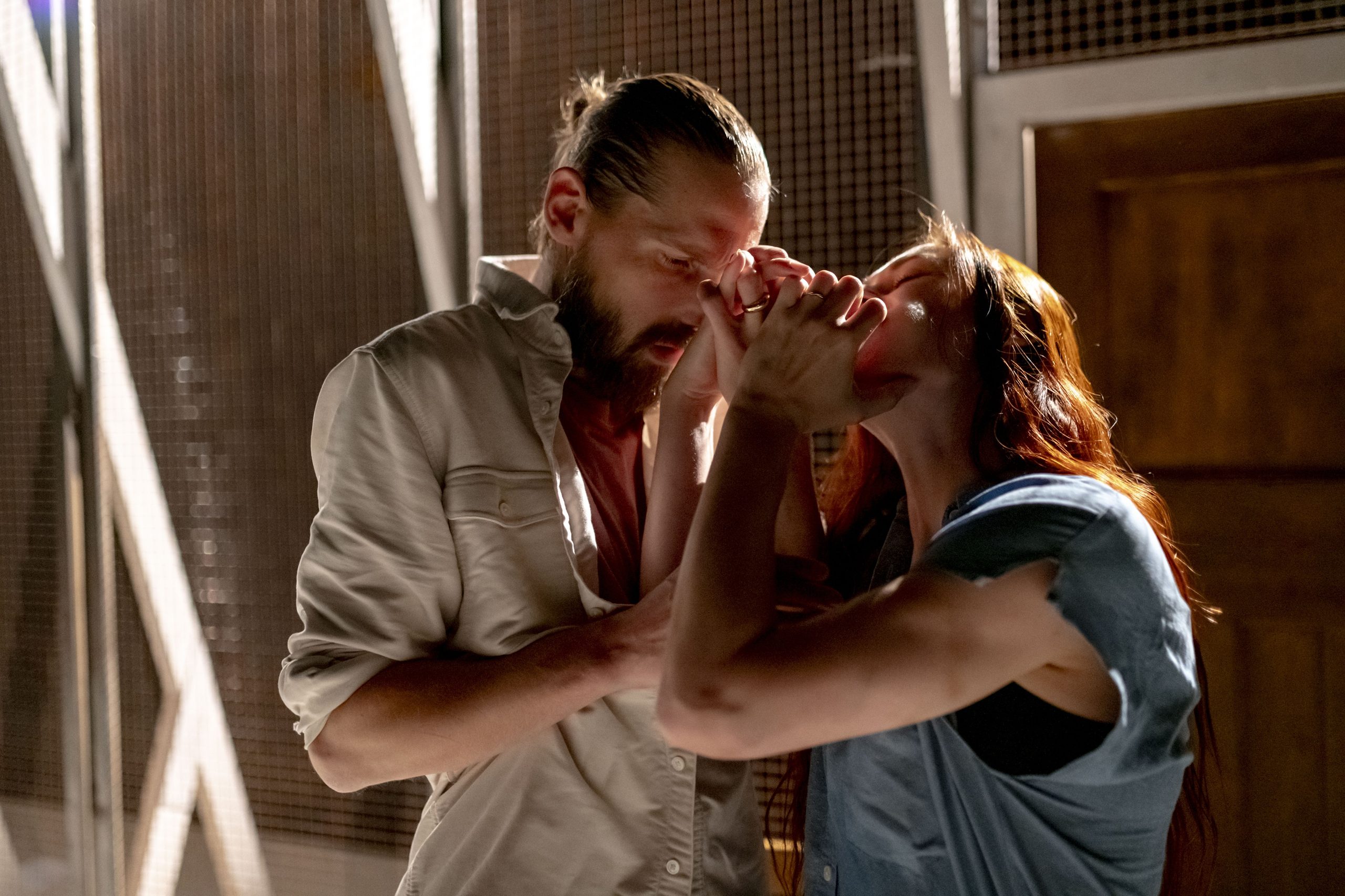
Ahead of the show’s arrival at York Theatre Royal this November, I sat down with performers Emily Terndrup (Juliet) and John Kendall (Romeo) to talk about dance-theatre, the unique pressures of blending dance with spoken theatre, and what happens when the greatest love story ever told has to contend with the school run.
Before we get into the production itself, could you both tell me a little about your backgrounds as dancers and how you came to work with Lost Dog?
John: I’m from Newcastle originally, although I moved to London this year. I trained as a dancer in Dundee, in Scotland, and then went to London Contemporary Dance School. I’m now a freelance dancer-performer.
I first met Ben when I was 22, working with Edge, a graduate dance company. He made a small commission for us, and that was my introduction to his work. I’ve known him for a long time now and later worked with him on A Tale of Two Cities. I joined Juliet & Romeo last year, and I’m still learning new things from the show every time we do it.
Emily: I’m from Iowa originally, in the States, and also trained as a dancer. After college I moved to New York and joined Punchdrunk for Sleep No More and that was my first experience with more theatrical dance involving speech.
Someone joined the company who’d previously worked with Ben, and I watched her in one of his productions. I was amazed by both her and the work, so I had my eye on him. I remember seeing Paradise Lost about ten years ago, and it totally changed my life.
John and I took over Juliet & Romeo from Kip and Solène, who were performing it previously.
For anyone unfamiliar with the show, what is Juliet & Romeo actually about, and where do we find these characters?
Emily: Juliet & Romeo is Ben’s thought experiment about love and long-term relationships.
The concept is that Juliet and Romeo didn’t die. They woke up in time, which, when you’re reading the original play, you want so badly to happen! So what if they escaped to Paris, had a kid, and now it’s twenty years later and they’re approaching forty? What would that look like?
It looks pretty complicated.
They’re having marital problems, and the audience becomes a sort of couples therapist. We sit down and do a little re-enactment therapy, talking about how we got where we are. It’s Juliet who’s trying to put the show together. For some reason, she thinks performing their problems in front of an audience is a good idea, which it’s not!
John: They’ve already tried various things to fix the relationship, and none of them seem to be working. Now they’re trying this, which is totally ridiculous. Why would doing this in front of all these people work any better than anything else?
It’s unusual to encounter dance-theatre for adults with this much spoken dialogue. What does language give you that movement alone cannot, and does working across those disciplines present particular challenges?
John: When I first met Ben, he introduced me to the idea that dancers could actually speak on stage. There’s always this strange thing where dancers want to dance, and the speaking part is like, that’s not what we do. But now I sometimes find it slightly confusing watching shows where there’s no text. If it’s pure dance or something conceptual, that’s fine, but sometimes I struggle with dance theatre when it’s not going too far one way or the other.
Juliet & Romeo has a lot of text. It’s a play, really, but having movement and text broadens the possibilities of what can happen within theatre. Sometimes conventional theatre feels a bit stiff to me, like there isn’t enough happening in the body.
Working with Ben has also made me realise how technical voice and text are. The movement is often driven by a feeling, emotion or state. It’s not as though the dancing is just pasted on top. We understand that through dance training, but with text you have to think about where you breathe, where you pause and how you deliver the lines. In that sense, it’s no different from movement.
Emily: I think we’re both really interested in text and acting, which isn’t true of all dancers. What I love about text in Ben’s work is that it offers a really direct line of communication with the audience. It allows you to be specific. There’s a gorgeous poetic ambiguity to movement and abstraction in dance, and that ambiguity can be really productive. But when you can cut through and speak to each other or to the audience, you can do something different.
I really like theatre. I like stakes, drive and characters. Ben has this gorgeous, natural way of using text, and then we lift into pockets of abstraction, movement and memory that don’t need words, where the body is the best language for it. But certain things in the show, dance just wouldn’t be the language for them. It couldn’t be.
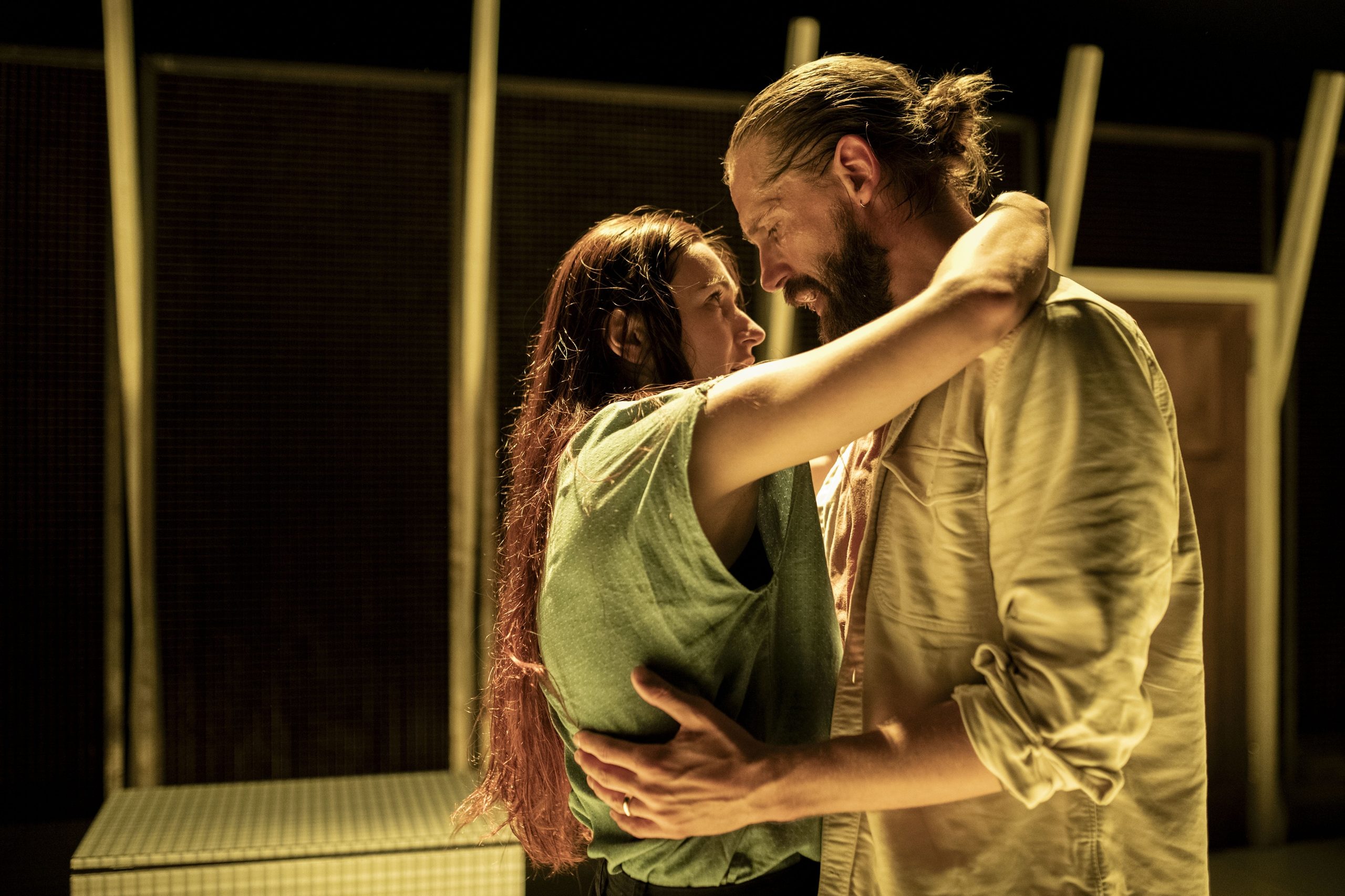
Juliet and Romeo are supposed to be the greatest lovers of all time, but they’re ageing into very different expectations of adulthood. Emily, how does Juliet experience that shift from romantic icon to wife and mother?
Emily: One of the things that’s very specific to this Juliet is her awareness of, and investment in, their love story, particularly the way Shakespeare portrayed it. We’re a contemporary couple, but in a funny little jump, the original play exists within our lives. There are also expectations of her as a mother, and some very recognisable dynamics that I think a lot of women will understand.
Something that really struck me when we started was that this is held up as the greatest love story of all time, and it took place over three days between two teenagers! We all know people who got together very young and have never been with anyone else. That can go lots of ways, but I think there’s sometimes a stunting quality to it.
For Juliet, growing up into a life full of mundane, pedestrian responsibilities is a real source of friction. She starts investing deeply in reliving their love story and holding on to this famous, desirable young woman, this fourteen-year-old with all that promise, who found a man who loved her so much he was willing to kill himself for her.
And how difficult that blush of love is to hold over twenty years. There’s this tension between her slight obsession with the story she tells herself about their love and the day-to-day reality of school pick-ups, filling the fridge and running errands. It’s what she thought her life would be versus the life she’s actually living.
John, Romeo seems rather less interested in preserving the great romantic myth. How does his perspective on the marriage differ from Juliet’s?
John: I think he’s much more willing to move forward in a realistic sense—less inclined to look back at this teenage romantic thing. He’s going through something closer to a midlife crisis and doesn’t want to dig up all the old stuff. Juliet wants to revisit their love story, but Romeo just wants to get on with the relationship as it is now, in a more normal, less theatrical way.
Emily: And that’s partly why he’s so reluctant to take part in the show. Juliet’s convinced that revisiting their past is going to help them, but Romeo’s not at all sure. He doesn’t particularly want to be doing it in front of an audience either.
The original Romeo and Juliet have become an almost untouchable romantic ideal. Does bringing them into an ordinary, imperfect marriage challenge the audience’s ideas about love, or is the uncomfortable part recognising themselves in the characters?
Emily: People might arrive thinking we’re going to perform Shakespeare’s Romeo and Juliet, which has happened before. But we speak in contemporary language, wear modern clothes and live modern lives. We’re people you know. We’re bits of you. We’re your neighbours.
Romeo and Juliet is a gorgeous jumping-off point because they’re such an iconic romantic couple, but the original play bypasses all the pedestrian difficulties of growing with someone over time. They don’t have to see each other year in, year out. They don’t have to deal with rent, a mortgage or a child. This love story that leaves out all of life isn’t necessarily a great thing to hold up as the paragon of love.
I think we’re really doing a dissection of a modern marriage that happens to have this funny, dramatic thread running through it. The bubble that gets popped is more about how we treat our own partners and how we show up in our own relationships, rather than challenging our perception of Romeo and Juliet themselves.
John: And audiences always have questions about what happens next. We’ve done Q&As where people ask, so what’s the solution? What’s the crack? Are you still together? Do you split up? They really want to know what happens after the show ends.
You’re inheriting roles originally created by other performers. How much freedom do you have to make them your own in a show that’s already been touring for years?
John: I didn’t see Kip perform it, but I saw Ben do it originally. I’ve worked with Ben before and know him as a person, which helped me understand how he acts, performs and makes work.
When we took over the show, Ben and Solène were amazing about handing over their version, but Ben also gave me the freedom to bring myself into it. Even though the show was made for him and is already a complete piece, he’s open to things changing.
I’ve got a Geordie accent, he’s got a southern accent. We’re different people from different parts of the UK, and I was allowed to bring that into the character.
He’s always tinkering with the show. Every night we deliver the same production, but he encourages us to play with it, so it always feels live rather than going onto autopilot. You know you have the licence to find a different way of delivering something or bring a little of yourself to it.
Emily: We weren’t involved in devising the original show, but we spent some days in the studio making new scenes that aren’t in the production. That part of Ben’s process is important for finding yourself within the characters.
He lets you bring a lot of yourself into the work. In auditions, you might improvise, tell memories and stories, and physicalise them. Those exercises help you find your own way into an established role.
Romeo and Juliet have a daughter in this version. What does parenthood bring to their relationship?
Emily: Having a child massively increases the stakes. Even if they decide not to stay together, a child ties you to someone for life. The relationship might look different, but they’ll still be in each other’s lives.
There’s the weight of their history and of being parents together. It makes everything more complicated. There’s this gravitational pull around the void between them that’s filled with their responsibilities and the life they’ve built. In a society where relationships and connections can increasingly feel disposable, having a child means there are responsibilities you can’t simply walk away from.
Having the child is also the threshold that forces them to become adults. I think we all secretly feel we’re younger than we actually are, and we don’t necessarily feel that different as we grow older. But becoming a parent changes your life and your role so much. For Romeo and Juliet, it’s separated them from those youthful versions of themselves, and that’s part of their struggle.
You’ve spent a great deal of time performing a relationship that’s coming apart. Has anything from the production crossed over into your personal lives, or changed the way you think about relationships?
John: Not in my own relationship, but something happened when I first started learning the show. I was on the train to Brighton for the first day of rehearsals when a really good friend told me that he and his wife were getting divorced. They were both very close friends of mine, and it was a massive shock.
I went straight into the studio, and that situation was in the room with me throughout the whole process of learning the show. It was still very much in my mind when we started touring. When we had the big argument at the end, there were moments where I thought, oh, I’m him now.
It was really strange, but although I was devastated for them, it was helpful in terms of source material for the work. They both came to watch the show separately as well, which was quite something. You’re always taking things from your own experiences, or things you’ve read or seen, and they fuel the work.
Emily: I think anytime you’re inhabiting a character for a long stretch, it can’t not be present when you leave the stage. I’m married. We just had our fifth wedding anniversary the other week, and there aren’t many ways I’d want to adopt Juliet’s tactics! They’re dramatic and hilarious and fun to watch, but I don’t think they’d be particularly productive or nice in a real marriage. I’m also not married to Romeo, I’m married to someone else!
But the show has made me think a lot about how I show up in my marriage, how I communicate, and how I see my partner. It’s made me think about the space we give each other to grow into the people we want to become, and how that’s a two-person process. It’s made me more aware of taking ownership of myself as a person within a relationship, and giving space to the person I’m living my life with, not for.
There’s a measure of dependency between Romeo and Juliet, which is understandable because they got together so young. They didn’t know who they were yet. I met my husband a bit later, but we all keep growing, even if we still think we’re sixteen.
Shakespeare’s original story is a tragedy, though we often remember it as the ultimate romance. Does Juliet & Romeo still have something of that cautionary tale about it, despite being a comedy?
Emily: That’s the theatrical convention of tragedy, which Romeo and Juliet is. In some ways, it’s a cautionary tale. You watch things happen on stage that might be things not to do, even though they’re really fun to watch. But it’s not a lecture. We’re not saying, this is how to have a good relationship. That wouldn’t be the basis of a great play with lots of drama!
The original story is one form of tragedy, and even though our show is really funny, physical, bright and witty, there are still elements of tragedy that come through. And I think those can resonate in the everyday experiences that audiences recognise.
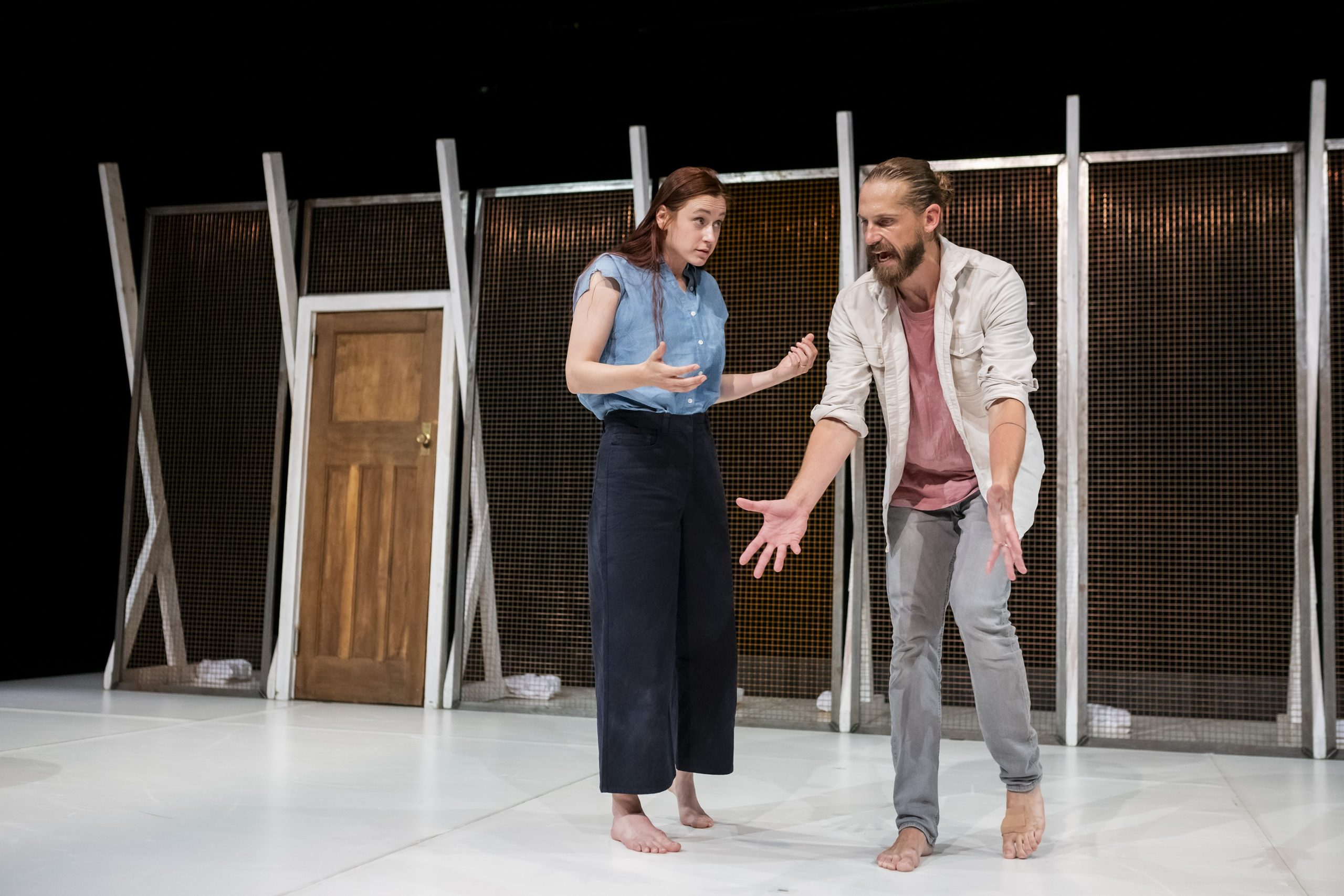
Juliet & Romeo plays at York Theatre Royal Fri 20 Nov – Sat 21 Nov. Tickets are available here.
Sean Sable is a Yorkshire-based freelance writer and editor specialising in Young Adult and Horror fiction, frequently at the same time. When she isn’t buried under a pile of books and manuscripts, she is looking for her keys and having extensive one-sided conversations, in Swedish, with her deaf cat. You can find her online at: www.seansable.co.uk
Trending Now
Review: A Christmas Carol at Leeds Playhouse
You may also like