“…a celebration of three men whose humour shaped a generation…it leaves you with a smile….”

The Last Laugh by Paul Hendy, Grand Opera House York
By Sean Sable
“Comedy is simply a funny way of being serious.”
That Peter Ustinov quote came to mind last night as I watched The Last Laugh, and it hasn’t quite left me since. Written and directed by Paul Hendy, the production is an affectionate tribute to three titans of British comedy – Tommy Cooper, Eric Morecambe and Bob Monkhouse – and it rides a fine line between slapstick and nostalgic melancholy. Hendy’s original script imagines a backstage meeting between the trio as they wait in a ramshackle dressing room to perform—one final time. There’s no real plot, per se. Instead, it’s a reflective hour and a half of gags, song snippets, and philosophical musings about timing, legacy, and the addictive nature of chasing the next laugh.
If you grew up with these men on your TV, you’re likely the show’s ideal audience. Although I have always understood the men from a distance as giants of comedy, my familiarity with them comes more from cultural osmosis than devotion—Tommy Cooper’s infamous onstage death, Bob Monkhouse’s game show days, Morecambe’s “glasses thing”. So, I went in curious to see whether the show could connect with someone lacking the nostalgic touchstones many others in the room clearly shared. And on balance, I’d say it did.
It’s clear from the outset that this is a show made with deep admiration and care. The script doesn’t concern itself with biography or scandal but focuses on capturing the essence of these men: their timing and their camaraderie. The “sad clown” trope is present, yes, but handled with a light touch and there’s no denying that The Last Laugh leans heavily on existing affection. Some punchlines don’t quite land unless you know what they’re referencing. But what carries it through, even for the less initiated, is the universality of the questions it raises. What does it mean to sacrifice some of your own life to making others laugh? Who really owns a joke—the writer or the performer?
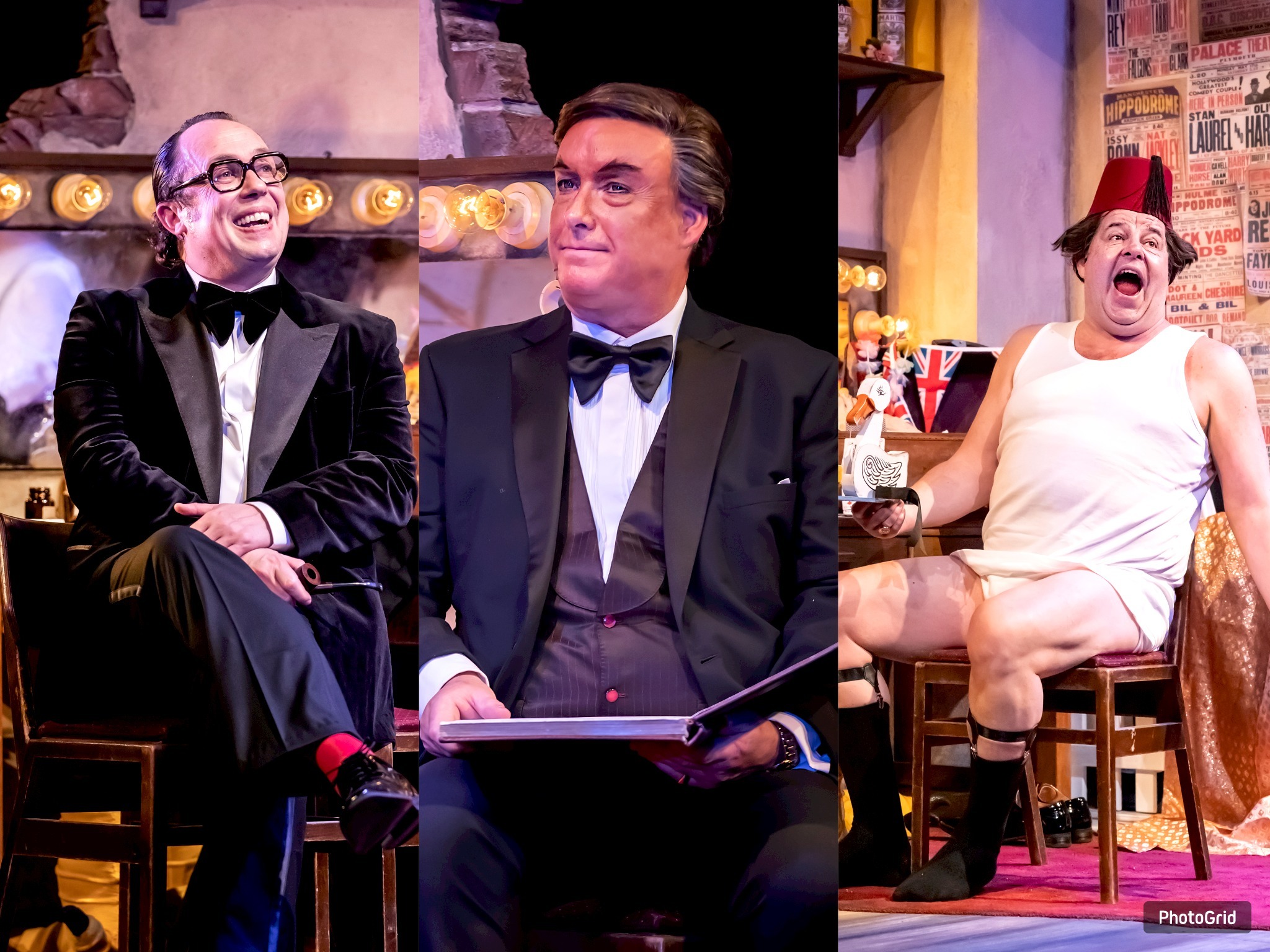
The play is more homage than narrative and, structurally, it’s closer to an extended stand-up set with pauses for poignancy. That could easily become tiresome, but Hendy paces things smartly. At just over 90 minutes with no interval, it never outstays its welcome. The best moments come when the show lets us in behind the façade—when Cooper admits he can’t not be funny, even when broken, or when Morecambe confesses that he missed his children growing up. These moments don’t dig especially deep, instead giving us just glimpses behind the mask.
The production design serves the sepia-toned nostalgia perfectly. Lee Newby’s set, a faded dressing room lined with brittle posters and black and white portraits of comedy legends, oozes atmosphere. The cluttered space feels like the ghosts of variety halls past are watching from the wings. Lighting by Johanna Town adds subtle emotional tone. I particularly enjoyed the dramatic use of blackout, which has been less featured in productions in recent years – I think due a comeback. Callum Wills’ sound design is effective, though it occasionally leans a little too hard into melancholy underscore, flirting with becoming an instructive reverse-laugh track.
The performances, however, are what make this production work. Bob Golding’s Eric Morecambe is made from twinkle and charm, and Damian Williams captures the chaotic grace of Tommy Cooper with eerie accuracy. All it took was one lifted brow or wonky stumble and he brought the house down. But for me, Simon Cartwright as Bob Monkhouse was the triumph. His stiff, waxy physicality, coupled with a voice like varnish and wit honed with a ‘chisel’, captured the strange contradiction of a man who approached comedy like a mathematical equation. It’s a more restrained performance than the others, and all the more effective for it.
Unexpectedly, it was the musical numbers that took me most by surprise. They’re short, yes, but wonderfully delivered. Like all the best things in life, they left me wishing there were more. Each performer has serious vocal chops, and those brief bursts felt like windows into another version of the show that might have leaned a little more into this kind of theatricality.
The Last Laugh doesn’t try to deconstruct its subjects or mine them for pathos. Instead, it opts for something softer: a celebration of three men whose humour shaped a generation. It offers the comfort of well-worn gags, warm performances, and a deep affection for the craft of comedy. For long-time fans, it’s a heartfelt reunion. For those coming in with fresh eyes, it’s an evocative introduction to a golden era of British comedy. Either way, it leaves you with a smile.
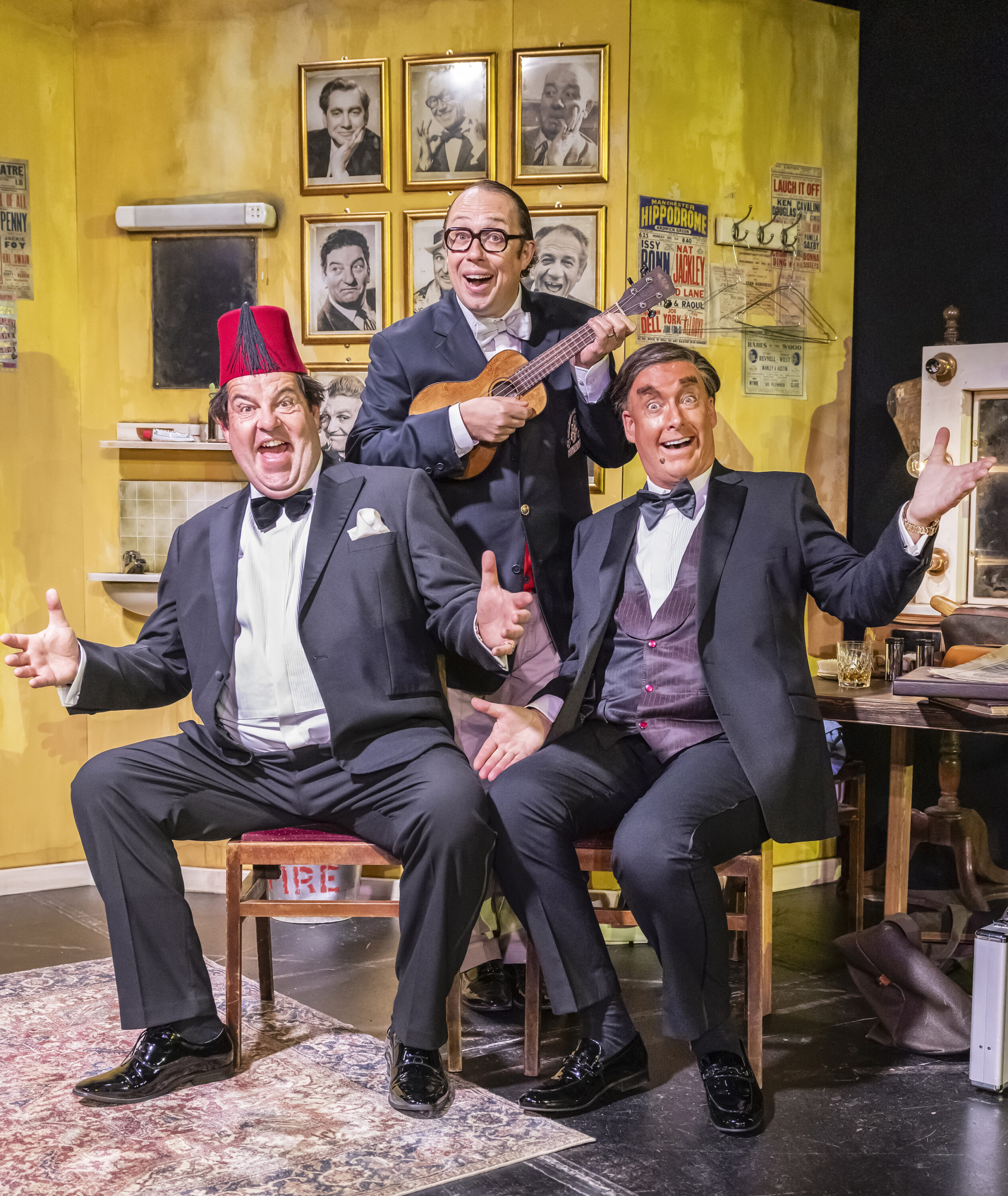
The Last Laugh plays at Grand Opera House York until Saturday 14 June. Tickets are available here.
Sean Sable is a Yorkshire-based freelance writer and editor specialising in Young Adult and Horror fiction, frequently at the same time. When she isn’t buried under a pile of books and manuscripts, she is looking for her keys and having extensive one-sided conversations, in Swedish, with her deaf cat. You can find her online at: www.seansable.co.uk
Trending Now
Review: A Christmas Carol at Leeds Playhouse
You may also like