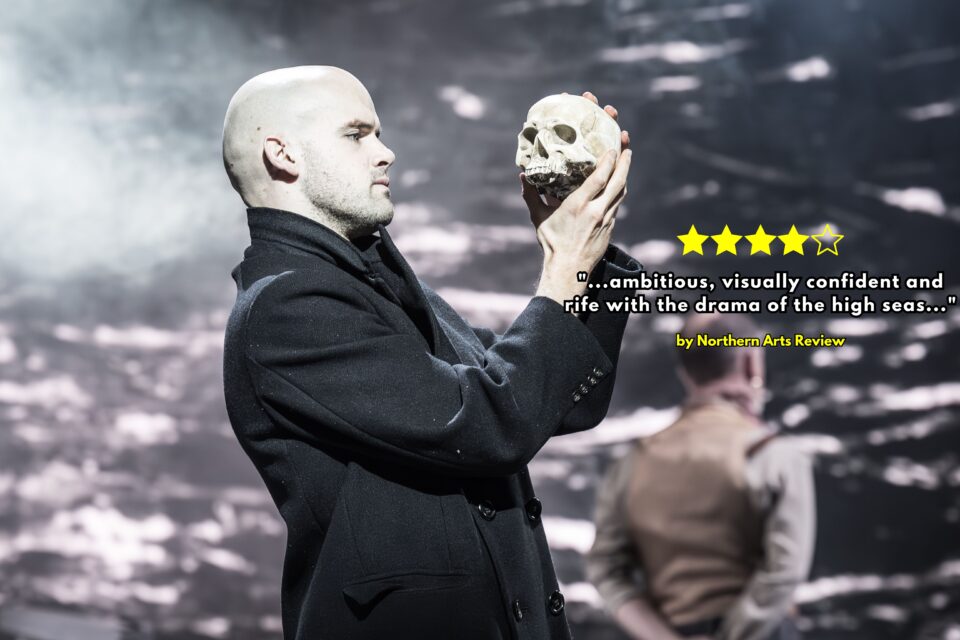
“…ambitious, visually confident and rife with the drama of the high seas…”
Hamlet by William Shakespeare, York Theatre Royal
By Sean Sable
Hamlet has long been treated as something of a blank canvas. Whilst this is broadly true of all Shakespeare plays, I think there is something special about the story of the Danish prince that compels us to make our own mark on it. Last night’s production of Hamlet by the RSC was the ninth time I have seen the play as an audience member (in addition to having played Gertrude myself back when Methuselah was young) and I am yet to encounter two versions that look even remotely alike. Hamlet in space. Dystopian Hamlet. Hamlet set in a botanical paradise fit for Titania herself. It’s a narrative so deeply embedded in the zeitgeist that it stops being a plot and becomes more like a frame. Walking into the theatre, the only question on an audience’s mind is: what has the director decided to put inside it? Last night’s RSC production answers that question with a ship—specifically, a vessel sailing directly toward catastrophe on the night of 14 April 1912.
Rupert Goold’s production began life at the RSC’s Royal Shakespeare Theatre in Stratford-upon-Avon in early 2025, where it ran to considerable critical attention before transferring to a national tour in 2026 under Revival Director Sophie Drake. Goold has a track record of high-concept Shakespeare with his Las Vegas-set Merchant of Venice still talked about fifteen years later. It’s a legacy of bold (sometimes divisive) choices that continues into last night’s performance.
The premise of Hamlet needs little introduction. Prince Hamlet’s father has died, his mother has married his uncle indecently quickly, and his father’s ghost arrives to confirm what he already suspects: that there’s been a murder. Soon, we embark upon a revenge story so tangled with grief, philosophical paralysis and collateral damage, that by the end few are left standing. In last night’s production, the court of Denmark is transplanted aboard a luxury liner, and although never confirmed, we are presumably aboard the Titanic on the fateful night of her demise. It’s an intriguing premise—the claustrophobic environment and the natural drama of the high seas are a fitting location for such a tumultuous story and I genuinely enjoyed the pathetic fallacy on full display, reaching a near Lear-like quality.
To accommodate the construct, Goold tightened the script. Removing Fortinbras was a necessity as a sunk ship cannot be brought back to its glory, even under the strong hand of the crown prince of Norway. Other parts were truncated to create swifter pacing as modern audiences aren’t generally keen on a full four-hour production. One could say that it is almost a requirement that Hamlet be ruthlessly edited, which leads me to my central question: with a narrative already so dense that it requires hedge trimmers instead of pruning shears, does it really need to be layered on top of another story?
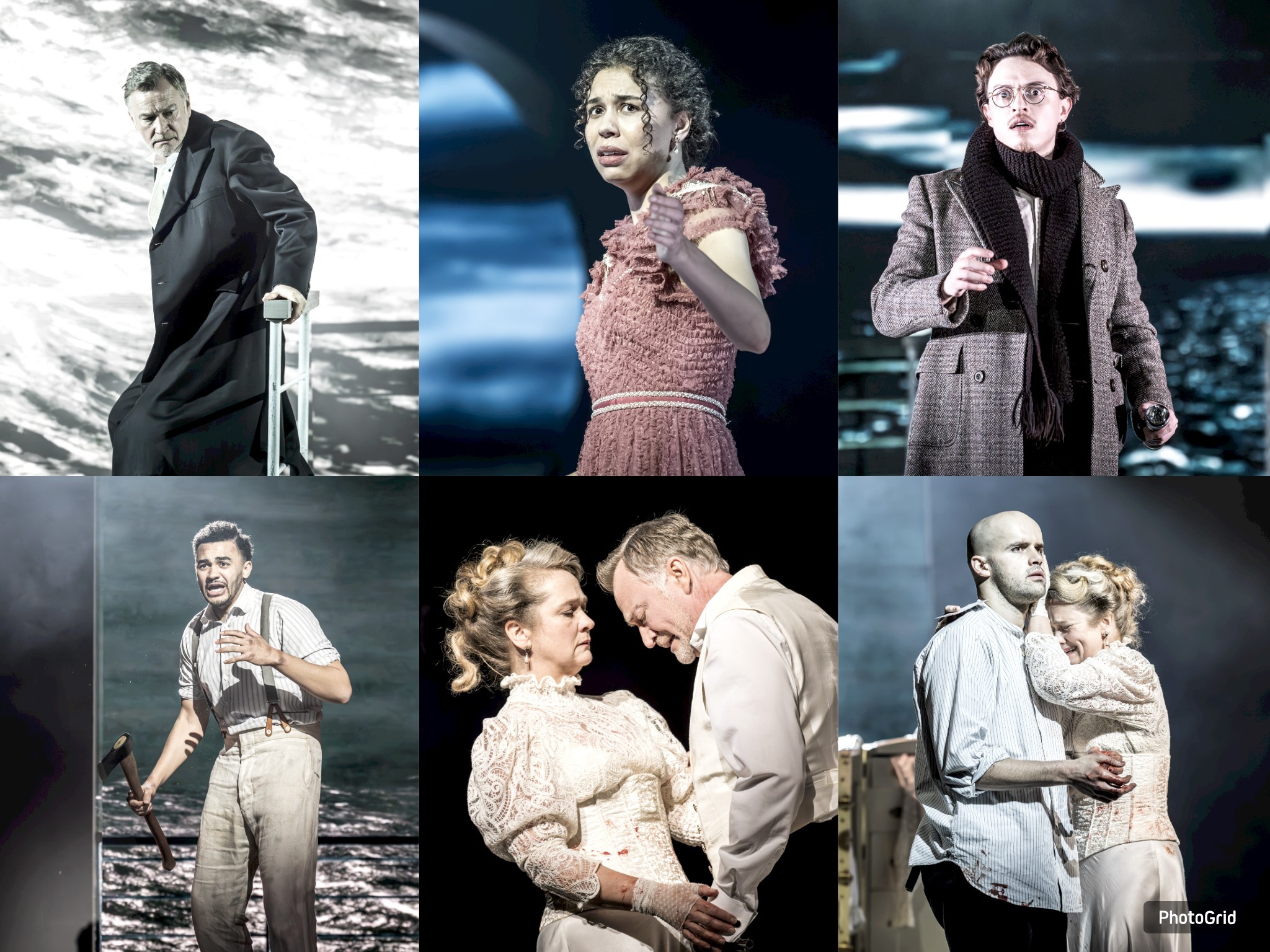
In some ways, the merging of the story of the Titanic and Hamlet makes good sense. They are both slow descents into destruction enabled by people whose self-interest outweighs their duty to protect their citizens. But in practice, the production’s central problem is that it cannot quite decide how far it wants to commit to the Titanic layer of its concept. I spent most of the train ride home trying to work out when, or indeed whether, the ship had struck the iceberg. The programme offers no help: there is no director’s note, no explanation of the concept, no acknowledgement of the Titanic at all. Instead, the audience is left assembling the pieces from context alone, and for much of the evening that assembly process runs in parallel with the play rather than enriching it. When I want to be drawn in by the bittersweet heartbreak of Ophelia, I am instead wondering why she is being floated through the air in slow motion as the contents of the ship move around her. Is this the moment we hit the iceberg? Maybe—but I don’t know because I don’t have the Titanic’s timeline committed to memory. I wanted to love the concept but found myself returning home and Googling the timeline of the Titanic disaster instead.
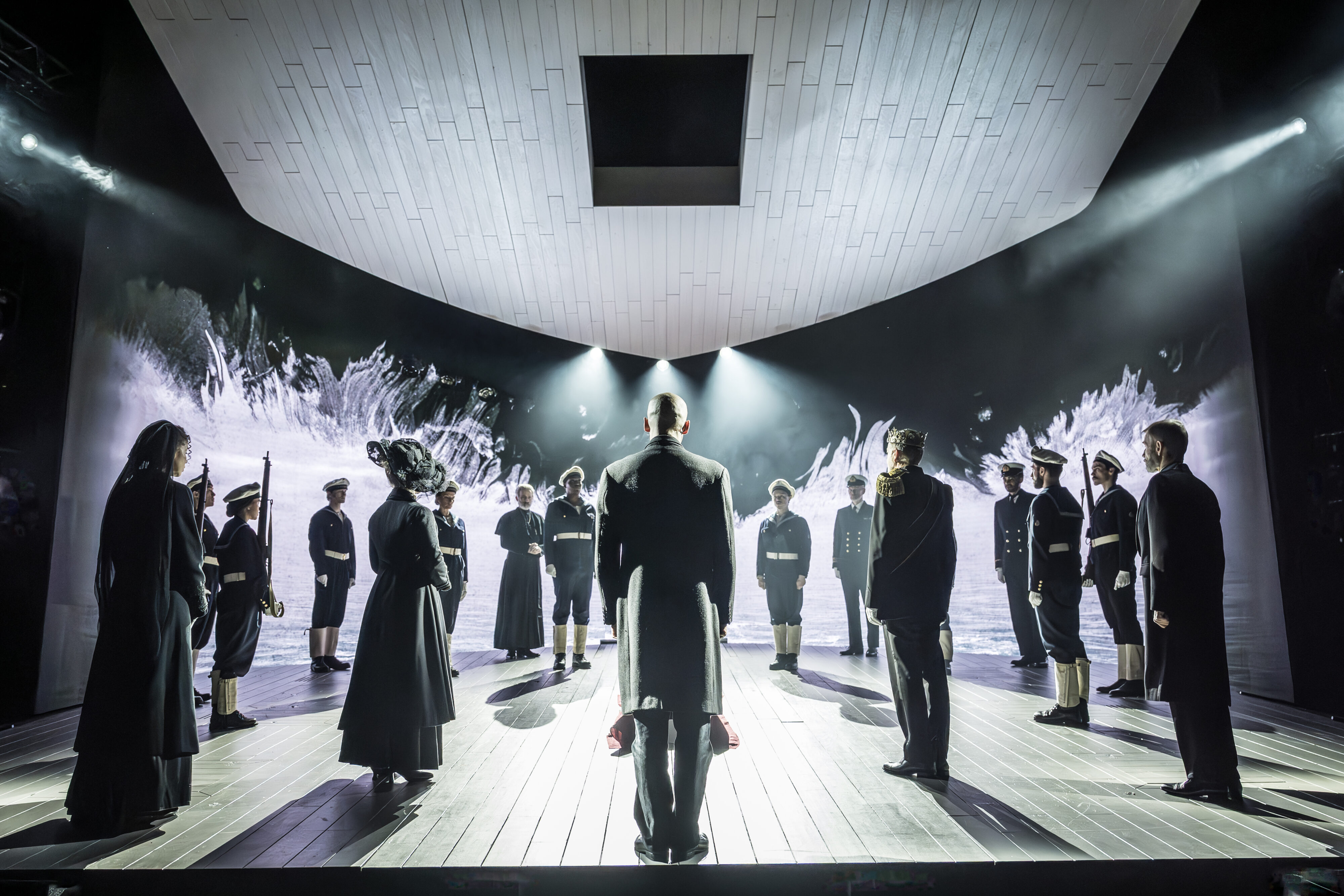
The production itself is stunning, with Es Devlin’s set giving us the slightly pitched prow of a ship, spare and raked, sitting against a projected backdrop that cycles between open ocean and the deep mechanical glow of the engine room below. Adam Cork’s sound design is masterful, with the groan of the ship and the slap of the sea never far away. It’s the beauty of understated sound on full display: relentless churning, moving us full steam ahead towards disaster.
Jack Knowles’ lighting is dramatic in all the right ways: cold directional spots in the night scenes, a slow creep of red that bleeds across the stage when Hamlet watches Claudius pray and the innocence of white as Hamlet terrorises his mother in the closet scene. Keeping fairly firmly to blue, red and white, it was a constant reinforcement of the nautical conceit.
Evie Gurney’s costumes are the production’s most confident element. Period accurate within generous margins, they situate us firmly in 1912. Crisp maritime uniforms and smart Edwardian tailoring provide a fantastic contrast when we see Hamlet, once in all black, gradually deteriorate into a holey jumper and undergarments. It’s a visual representation of mental fragility that feels surprisingly modern.
I was truly captivated by Ralph Davis’s Hamlet once his feigned madness kicked in, but I must admit it was a little slow going at first. In the early scenes, where the frayed edges of Hamlet’s grief should be most exposed, the delivery feels held at a slight remove. But once he lets loose, the performance is consummate and the timing of his delivery feels restless, chaotic and deeply human. Richard Cant’s Polonius is the production’s standout. Polonius is often played as a pompous fool, but instead we are given a warm, slightly doddering academic. This softer, more generous interpretation makes his death arrive with a pang of sadness I am not used to feeling in the closet scene.
Yet for all the ways the production excels, I couldn’t escape from the sense that the framing was working against all its finer points. This can most clearly be seen in the fencing match in the final scene. Kev McCurdy’s fight choreography is genuinely fabulous, but gets lost beneath the mechanics of the sinking ship as actors are pitched to and fro. The commotion swallows the emotional beats whole. Gertrude’s death, which should have weight, disappears into the noise. Laertes’ fatal wound barely registers as bodies are rolled into a fissure in the deck. And Horatio, who in every other Hamlet survives precisely so that the story can be told, goes down with everyone else, which leaves his cradling of the dying Hamlet oddly empty and perhaps unnecessarily punishing.
Hamlet is a play so fixed in the cultural canon, that it almost feels like the furniture of theatre. The excitement isn’t just about the shape, but how it gets reupholstered with each retelling. The 2026 RSC’s newest high-concept Hamlet is ambitious, visually confident and rife with the drama of the high seas. For those who love Shakespeare and enjoy watching a bold idea wrestle with a great text, it is well worth an evening.
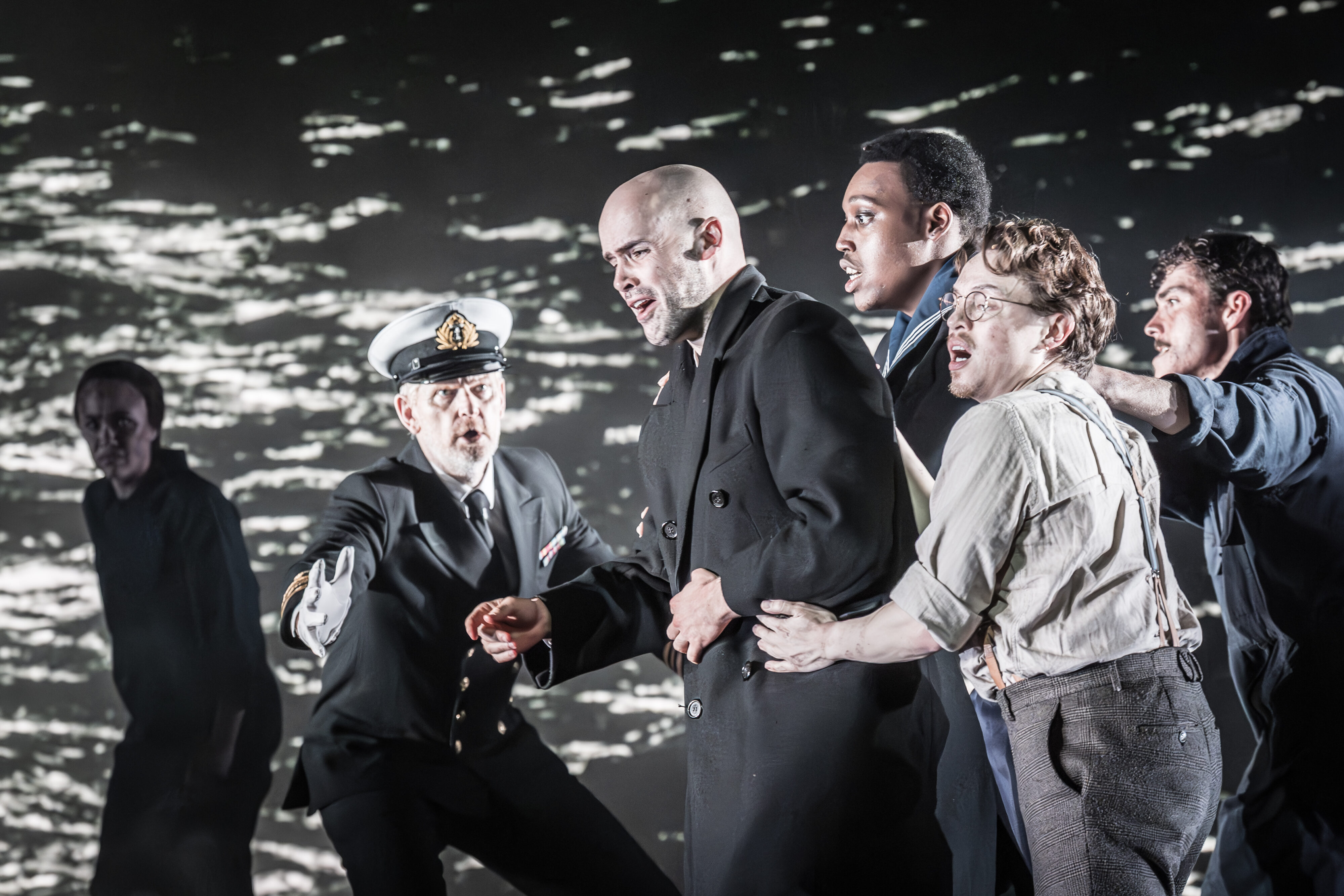
Hamlet plays at York Theatre Royal until Saturday 18 April. Tickets are available here.
Sean Sable is a Yorkshire-based freelance writer and editor specialising in Young Adult and Horror fiction, frequently at the same time. When she isn’t buried under a pile of books and manuscripts, she is looking for her keys and having extensive one-sided conversations, in Swedish, with her deaf cat. You can find her online at: www.seansable.co.uk
Trending Now

Review: To Kill a Mockingbird at Leeds Playhouse

Review: Night Collar at St Helens Theatre Royal
You may also like