“…for those who enjoy a little nightmare in their dreams…”
A Midsummer Night’s Dream by William Shakespeare, Leeds Playhouse
By Sean Sable
Take Thomas Kidd’s The Revenger’s Tragedy, throw in Kubrick’s clinical white spaces, add Shakespeare’s A Midsummer Night’s Dream, and blend. The result would be astonishingly close to this striking co-production from Leeds Playhouse, Shakespeare’s Globe and Headlong Theatre. It’s a production that understands something I’ve long suspected: A Midsummer Night’s Dream is a darker play than we typically allow it to be, and leaning into that darkness reveals textures the usual manic pixie interpretations miss entirely.
I’m the first to admit that my relationship with A Midsummer Night’s Dream has always been complicated. Despite spending a lot of my drama and literary career in love with all things Shakespeare, I’ve often found productions of this play to be a let-down. There’s just something about the story that compels creatives to mistake zaniness for charm. There’s tyranny in this text alongside forced marriage, romantic betrayal, stolen children and failing crops. Yet so often interpretations are whimsical to the point of empty-headedness, and the result is a bizarre attention-seeking jester mode that makes me count the minutes until the interval. So, when I heard Headlong was taking a darker, almost horror-inspired approach, I was genuinely excited. Could this be the Dream I’ve been waiting for?
The play keeps to the familiar beats: Hermia loves Lysander but her father demands she marry Demetrius or face death. Lovers flee into the woods where the fairy king Oberon and queen Titania are in a bitter quarrel over a changeling child. Puck, Oberon’s trickster servant, is dispatched to fix everyone’s romantic woes but immediately makes everything worse. Meanwhile, Bottom and his friends rehearse a play for the Athenian Duke’s upcoming wedding. In Roughan’s adaptation, the mechanicals become palace staff preparing for the nuptials of Duke Theseus and his captive bride Hippolyta, with Bottom as the executive chef and Puck appearing as a sommelier.
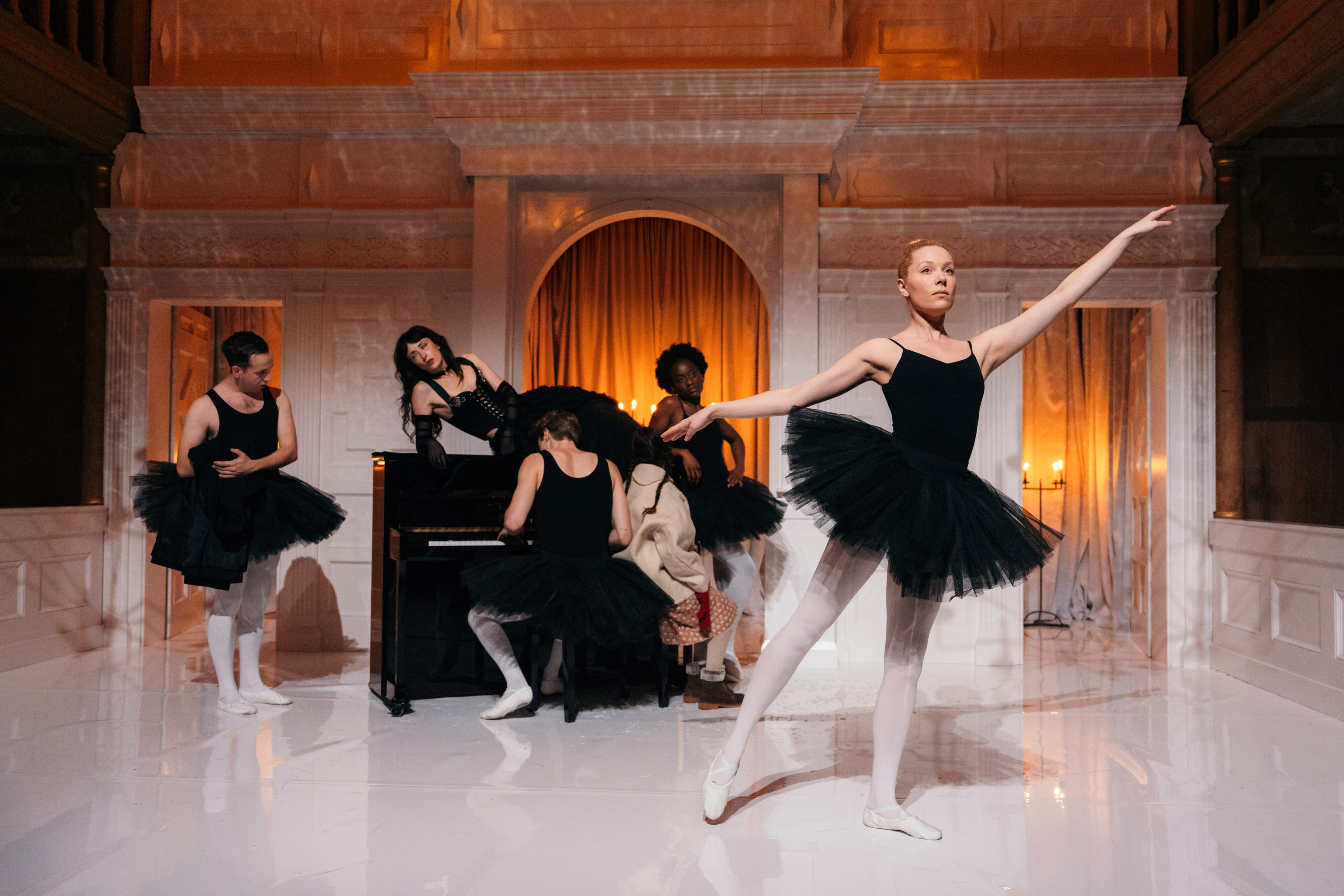
Visually, the production was arresting. Max Johns’s all-white ballroom set had that Kubrickian quality, uncomfortably sterile and gleaming—an otherworldly space where colour stands out with unsettling intensity. The play opens with Puck perched on a banquet table in tense silence, eating a banana in the most menacing fashion possible. What follows is Gordon Ramsay-inspired Hell’s Kitchen chaos escalating into violence. Food is scattered, tables are overturned and weapons are drawn. Later, when the furniture clears, the space becomes a blank canvas that can be anything, and in this production, it is a nightmare.
The costume design embraced a punk ballet aesthetic that perfectly encapsulated the “chaotic neutral” nature of the fairy world. Puck wore a tutu, white tights, and a partially deconstructed black tailcoat. The fairies appeared as ballerinas, occasionally sporting donkey masks with their leotards. Titania’s Kate Bush-esque corset and long lace dress were an ethereal testament to 1980s mystical goddess fashion. There’s something about ballet that sits comfortably alongside horror. There is a tension between fragility and strength that this production understands and harnesses. The Athenian court wore furs and occasional military dress that nodded toward 1920s robber baron opulence with a fascist edge, though the overall aesthetic never pinned itself to one era.
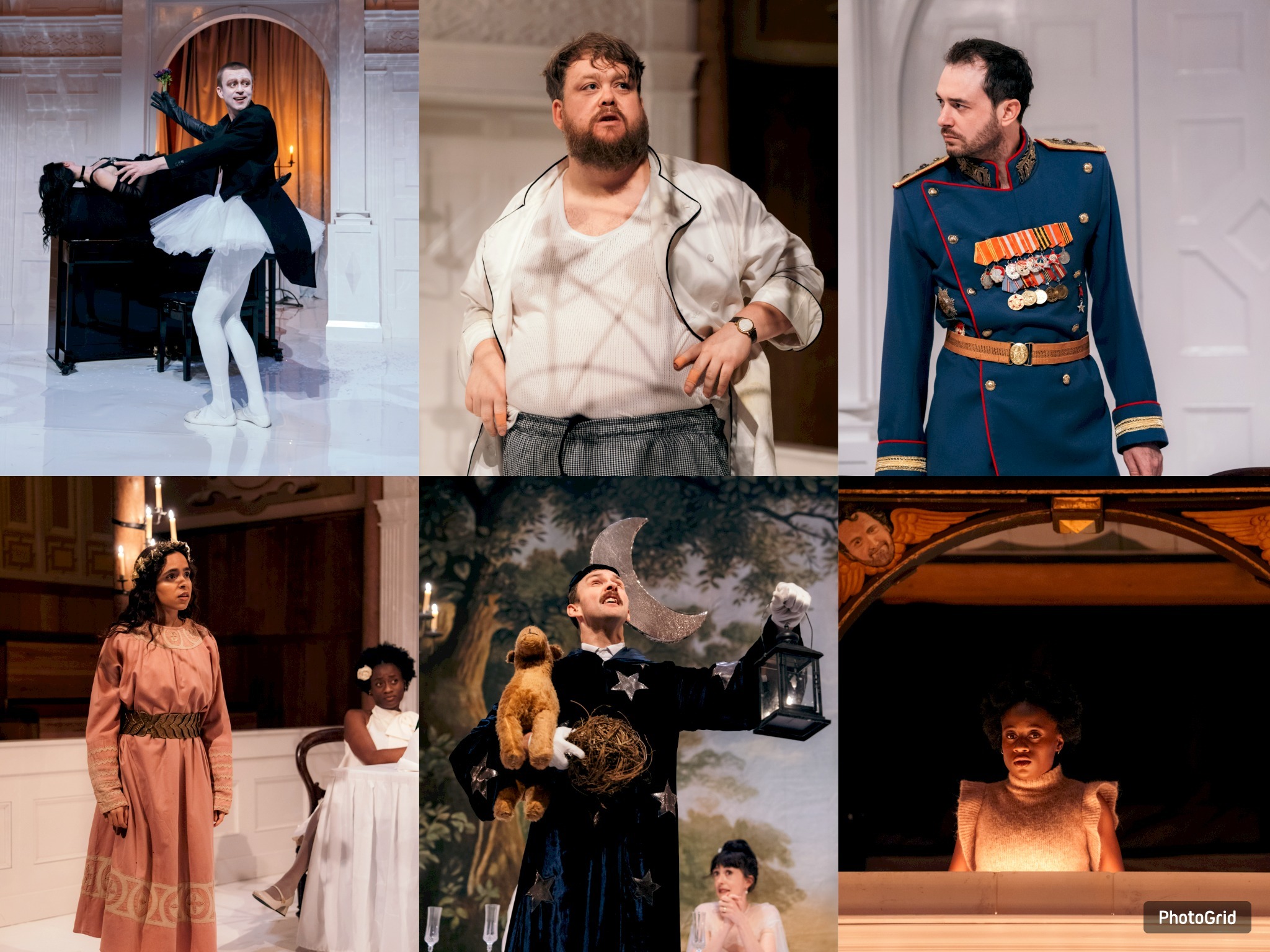
Danny Kirrane’s Bottom was the standout of the evening. I’ve seen Bottom played lecherous, pathetic, or buffoonish to the point of unwatchability, but Kirrane found something more charming and sympathetic, like Dogberry if Dogberry had genuine warmth beneath the bluster. He was intensely likeable, providing much-needed comedic relief (which is wild to say about a comedy). His metamorphosis into the ass, achieved with cloven hoof shoes and committed physicality, was a genuinely frightening study in body horror.
Michael Marcus’s Theseus was unhinged in a way that reminded me of Joe Pesci in Goodfellas crossed with Richard E. Grant in Hudson Hawk, and I couldn’t help but feel mesmerised by his unpredictability. Hedydd Dylan’s Hippolyta was equally unhinged, their power play seeming to be less about dominance and submission and more about two contenders wrestling for control—both convincingly capable of violence.
Sergo Vares gave Puck a darker, grittier edge reminiscent of Christopher Eccleston’s turn in the 2002 film adaptation of Revenger’s Tragedy. This was a stick-it-to-the-man punk, not a playful sprite, and I found it a compelling interpretation. The four lovers were universally good, though the first fifteen minutes felt rushed, lines delivered too quickly in favour of physical energy. Once they settled into the woodland scenes, their delivery became naturalistic, using modern intonation and tone in ways that made the story and emotion immediately accessible.
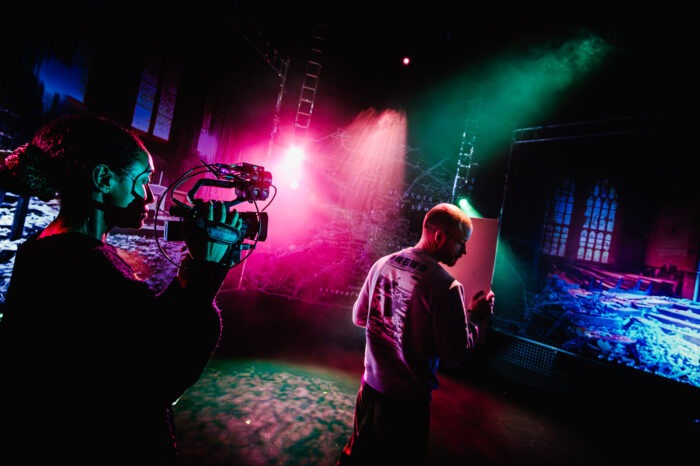
Joshie Harriette’s lighting design was well considered. Cool washes lit the moonlit winter scenes and practical lighting was employed with lanterns carried by actors, and a series of art deco style chandeliers. The actors used the full body of the theatre, including aisles and multiple entrances, and I happened to be seated near several of Puck’s entrances and exits, which added to the unsettling intimacy.
Nicola T Chang’s sound design was a mixed bag. The horror scoring was brilliant, particularly the squealing, thriller-y violins during Bottom’s transformation. But the volume modulation of some scenes was a genuine problem. Multiple people in my row covered their ears during certain sequences. I understand the desire for shock value, but it was more uncomfortable than effective. The musical interludes, including covers of Billie Eilish and Tears for Fears, hit me sideways in a tongue-in-cheek way that I enjoyed in the moment, but never seemed to fully settle into the story.
I would be remiss if I didn’t mention that this particular production is heavy on adult themes, sometimes bordering on the hypersexualised. That’s not to say that they didn’t work—they absolutely did. Anyone who has spent time with the Bard knows he was a dirty birdie, and this felt like a homage to his bawdier instincts. But it’s worth noting for anyone expecting family-friendly fare: the guidance says 12+, but as a mother, I probably wouldn’t take anyone under sixteen.
Their philosophy about adaptation has been described as approaching the text “like work that landed on our desk today,” prioritising audience experience over rigid fidelity. That philosophy is very evident throughout. The production added sprinkles of contemporary language, blended lines from Romeo and Juliet and Hamlet, and generally treated the text as living material. For the most part, this worked. Unfortunately, where it didn’t work was the ending. Without giving away specifics, the final ten minutes descended into hyperviolence reminiscent of The Revenger’s Tragedy‘s senseless massacre. In the eleventh hour, it shifted the production from dark comedy into tragedy, and I felt it was a miscalculation.
Last night’s production of A Midsummer Night’s Dream is one of the more intriguing interpretations I’ve seen in recent years, and for those who enjoy a little nightmare in their dreams, it’s absolutely worth your time.
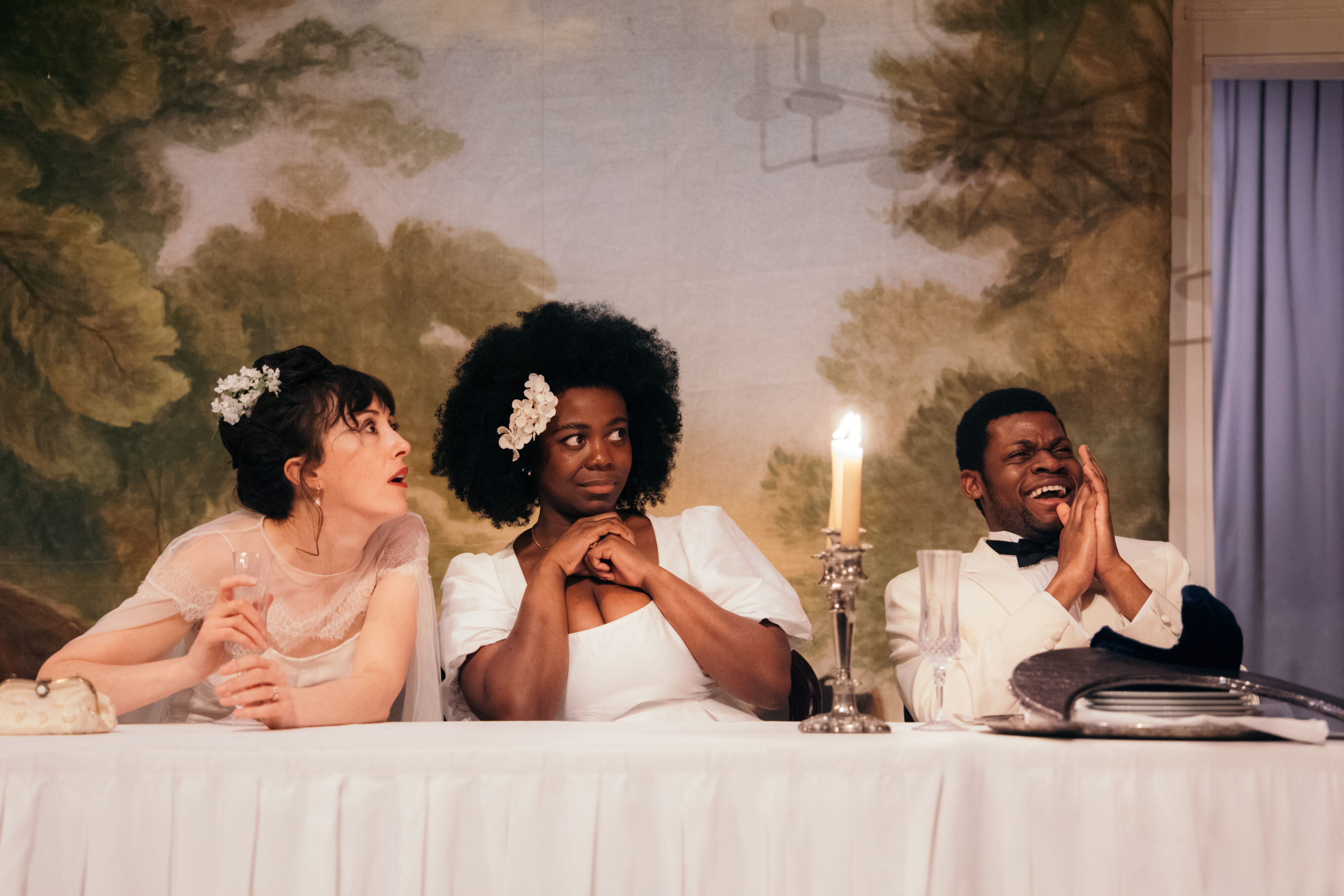
A Midsummer Night’s Dream plays at Leeds Playhouse until Saturday 28 February. Tickets are available here.
Sean Sable is a Yorkshire-based freelance writer and editor specialising in Young Adult and Horror fiction, frequently at the same time. When she isn’t buried under a pile of books and manuscripts, she is looking for her keys and having extensive one-sided conversations, in Swedish, with her deaf cat. You can find her online at: www.seansable.co.uk
Trending Now

Review: To Kill a Mockingbird at Leeds Playhouse

Review: Night Collar at St Helens Theatre Royal
You may also like