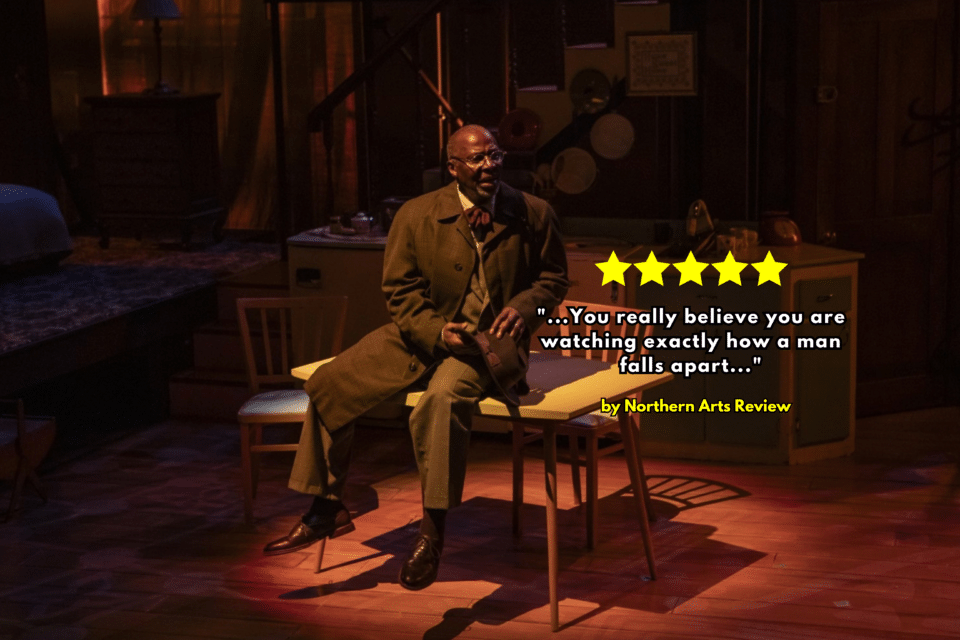
“…You really believe you are watching exactly how a man falls apart…”

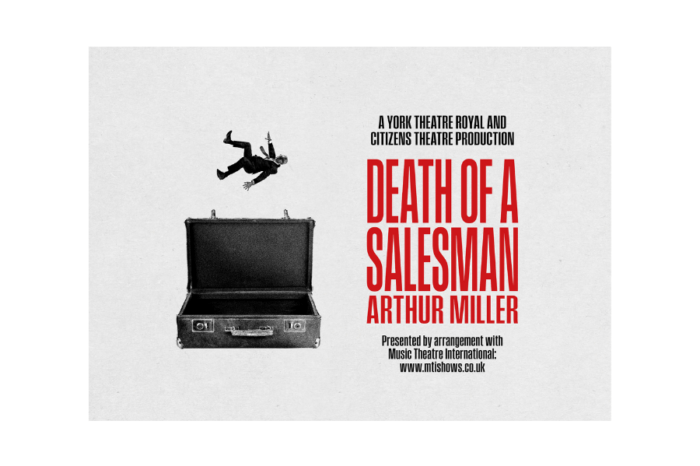
Death of a Salesman by Arthur Miller, Liverpool Everyman Theatre
By Melissa Molloy
Arthur Miller’s Death of a Salesman is one of those plays that theatre companies return to again and again. The question often in the audience’s mind, when watching a classic, is always what a new production will bring to this play. We waited to see what director Tristan Fynn-Aiduenu would show us at the Liverpool Everyman.
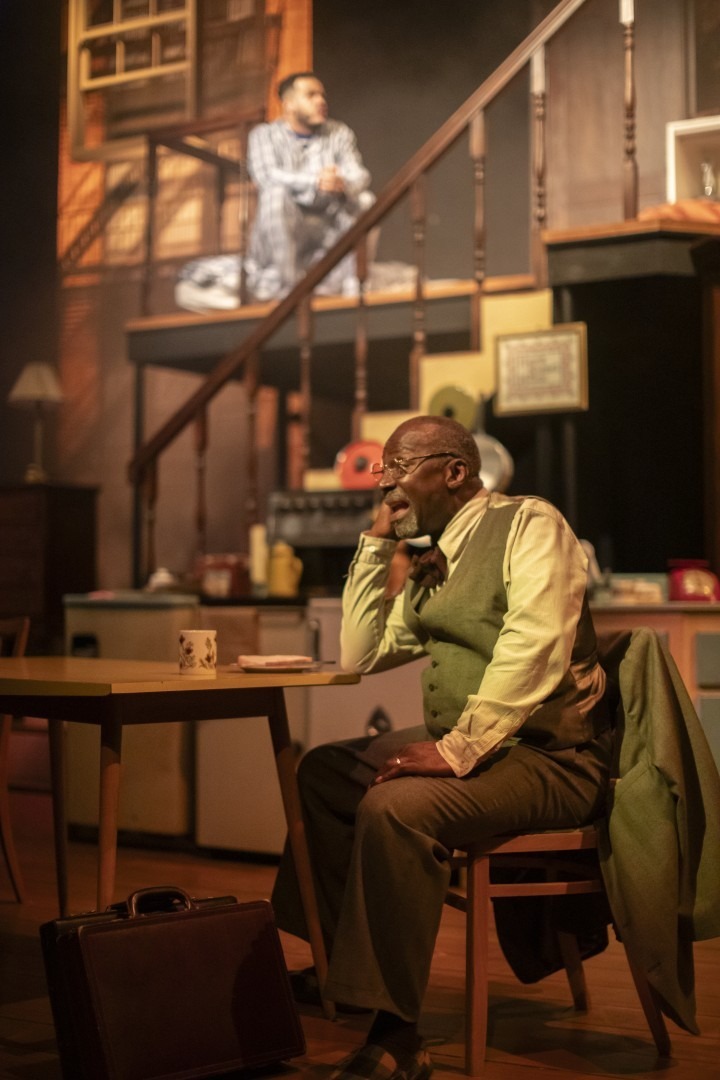
We watch as Willy Loman slowly collapses under the weight of a dream that was never really his – a feeling all too familiar to us in our modern lives. Cyril Nri, playing Loman, carries the production with considerable skill. This is not a shouty, table-thumping Willy as in some productions; instead, Nri plays him as a man running on fumes, held together by habit and delusion. This means the moments of fury are all the more poignant for how quickly they collapse back into something resembling hope. There is real precision in the work, particularly in the quieter scenes where Willy’s grip on reality begins to loosen. You watch him and really believe you are watching exactly how a man falls apart. It is not overtly dramatic, but incremental, and with a kind of dignity.
Another two performances worth a mention are Biff (played by Laurence Ubong Williams) and Happy (played by Kiren Kebaili-Dwyer). Biff provides the play’s emotional spine. The strained relationship between father and son is where Miller’s writing cuts deepest, with the resentment, the love, and the exhaustion of being somebody else’s dream made flesh. His scenes with Nri in the second half are the best the production has to offer. Williams manages to show this emotion perfectly without overplaying it. Happy, on the other hand, is breezy on the surface, quietly lost underneath, and again, Kebaili-Dwyer plays the character so well that the contradiction is easy to believe and the audience is fully invested.

The set and costume design are both by Georgia Wilmot and deserve attention. The staging is clean and unfussy. The changes to set and costume were flawless, and the Everyman lends the whole production an intimacy through its small rooms that suits Miller’s claustrophobic world. Costumes clearly show the culture as well as the period and are not afraid to be bold, helping to carry a visual consistency as well as a nod to the era and culture. Nothing feels like an afterthought.
The lighting does significant work in shaping the play’s mood. The shift between Willy’s present-day deterioration and his memory sequences is portrayed largely through light: warm, amber-tinged for the past; cooler, harder for the reality he cannot face. It is effective, and occasionally genuinely beautiful. The lighting almost had as much of a part in the play as the characters and really enhanced the whole production.
The musical score was not overwhelming, which is harder to achieve than it sounds in a play this emotionally loaded. The gentle notes of the flute softened the atmosphere and helped to deliver the mellow tone. The decision to incorporate the Igbo language into moments of the production added a layer of cultural texture that works. It roots Willy’s identity in something specific and earned, rather than leaving him as generic.
At over three hours long, it is a commitment – although one that is definitely worth it. The atmosphere in the playhouse never suggested the audience was waning at any point, and the play kept everyone engaged for its full duration – there were just a few more people bobbing in and out than normal.
This play has not simply been dusted off; it is a classic and has been well thought out. Tristan Fynn-Aiduenu has genuinely interrogated what this story means when the man at the centre is not the assumed default of the American immigrant experience. That is a worthwhile thing to do with Miller, and the Everyman is the right place to do it as a theatre with a long history of refusing to treat its audience as passive consumers.
Death of a Salesman plays at Liverpool Everyman Theatre until Saturday 10 October. Tickets are available here.
Melissa Molloy is currently masquerading as a special needs teacher, having previously spent 10 years teaching English, media studies and drama. In her spare time, she offers editorial reviews, beta-reads and guidance to new authors who wish to self-publish their writing. In lieu of sleeping, Melissa often finds herself with her head buried in her laptop – slowly writing her first novel. When she isn’t drowning in work, Melissa can be found paddleboarding and kayaking in local lakes, usually accompanied by at least one or two of her four children.
Trending Now