“…an energetic programme of dance with real ambition…”
Interplay by Phoenix Dance Theatre, York Theatre Royal
By Sean Sable
I have a rule about dance theatre: I don’t read the programme before I go in. It’s part of my personal ethos, and one that sits at the heart of what I believe the contract between production and audience ought to be. The choreographer, the director, the company: they make a promise to communicate something to me, and I make a promise to meet them with intention and good will. But what I’m not going to do is rob us of our journey together by peeking at the answer before I sit the exam. What I want (and what I think audiences deserve) is work that communicates its concept thoroughly enough that the meaning shines through. Not necessarily literally, or with the explicitness of a plot summary, but with enough purpose, enough shape, that the thing they are reaching for is legible from the stalls. Phoenix Dance Theatre’s world premiere quad bill Interplay is an evening of dance theatre that strives for mood over narrative, and three of its four pieces honour that bargain with zeal.
Founded in 1981 by three young Black men from the Harehills area of Leeds, Phoenix Dance Theatre has spent over four decades as one of the UK’s leading contemporary dance companies (the longest standing outside of London) and its mission has always been tied to cultural storytelling that gets overlooked elsewhere. Under its ninth artistic director, Marcus Jarrell Willis, Phoenix has been finding its feet in a new chapter. Interplay brings together four pieces by five choreographers that explore duality and connection.
The evening opens with Willis’s Next of Kin, a duet reimagined from its 2013 New York premiere, and it was my favourite of the night by some distance. A man and a woman take the stage—barefoot, in button-up shirts and khaki shorts—and what they give us, almost immediately, is childhood. Not a nod towards it, but the actual restless, bum-waggling, elbow-nudging, giggling physicality of children somewhere between five and eight years old. It was as if someone had sat with children of that age for a long enough time that they understood the language of childhood and had translated it directly into physicality and movement. Near the end, a cloaked authority figure appears briefly in the shadows. The dancers orient towards it without engaging directly, and there was a looming tension there that I really enjoyed. Childhood under the spectre of adulthood.
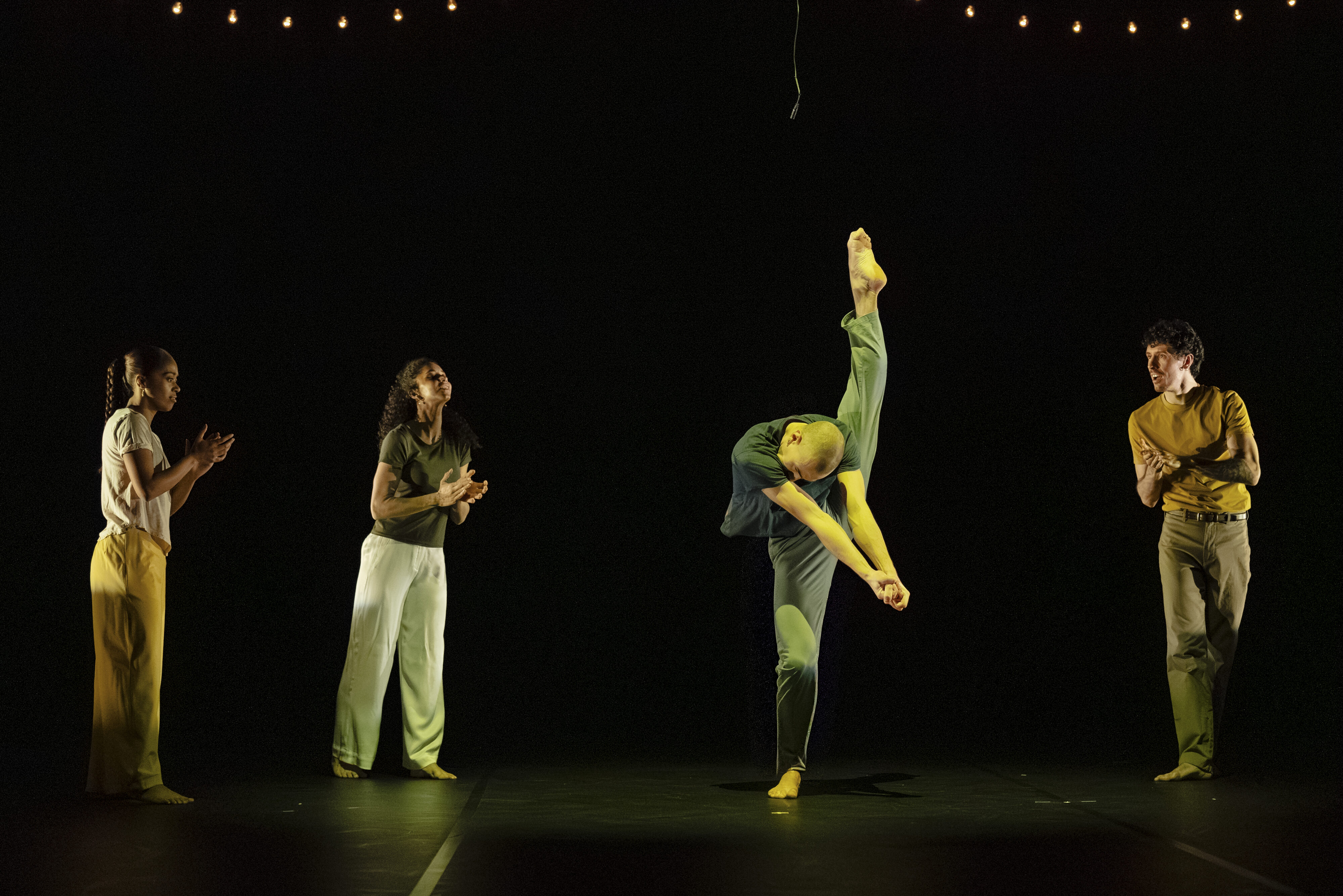
Why Are People Clapping?! by Ed Myhill, restaged here by Camille Giraudeau, opens with a fly buzzing across the stage and a woman clapping it dead. From there it morphs from a tennis match into group performance and eventually a kind of call and response that investigates the nature of the clap: release, catalyst, transformation, explosion. The clapping in this piece is not in unison but rather has a phasing quality to it. Different performers stagger through the same rhythmic pattern in the manner of Steve Reich’s Clapping Music, which underpins the whole performance. At one point they stand in a line, one person clapping at the centre, and the faces on either side change expression with each beat. The silliness of this was infectious and I could immediately sense the through-line from Next of Kin— the rhythm of a playground, the clap of a skipping game. Festoon lights overhead and an occasional blue wash kept things simple and the focus tight.
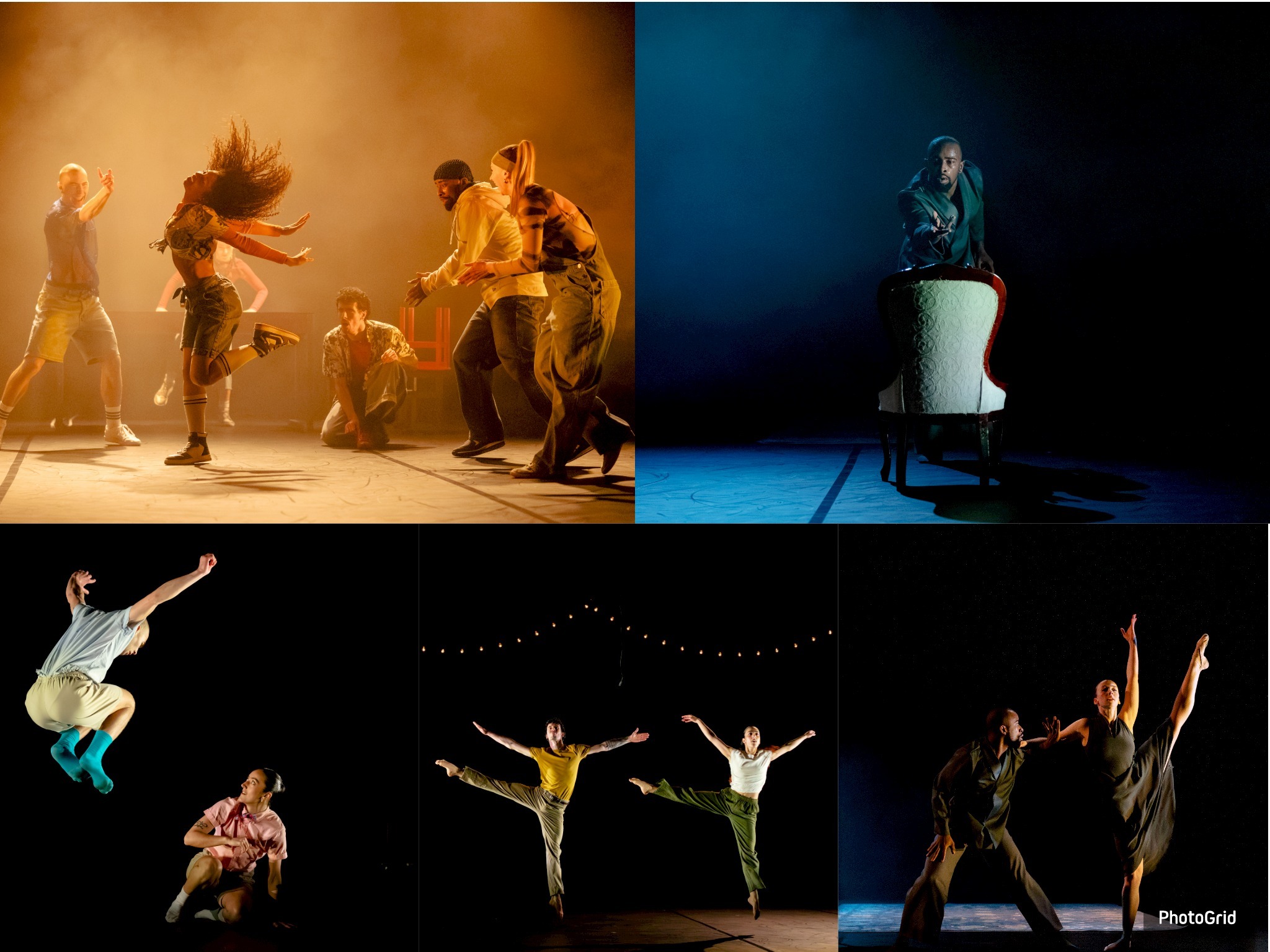
Unfortunately, Small Talk by Pett Clausen-Knight seemed to tangle the otherwise clean threading. A corded lamp, a chair, a kilim rug in blue: the domestic symbolism is clear, and I understood, roughly, what I was being shown. We were examining a couple whose relationship was in tumult, grinding itself down into indifference. Two people who want to come together but keep missing one another until they simply stop trying. A war of attrition that ends with a whimper instead of a bang. Whilst I was able to find the story hiding inside the movement, I must admit that I felt I was expected to meet it more than halfway. The movement sat in a muddy middle space that never quite made its statements clear. The rifts lacked energy and the attempts at connection never felt charged with intent. It was like emotion with the mute button accidentally turned on. There were moments of silence that seemed to gesture at significance without achieving it. Movement, at times, seemed to simply fill space rather than communicate. The conceit of the rug was interesting (the domesticity, the idea of pulling the rug out, etc.) but I must also admit that there was an ick factor to watching people roll on a place intended for dirty feet. I don’t think this was an intentional choice and, as a viewer, my response was visceral. The dancing itself was technically beautiful throughout and the partner work had an appropriate aloofness. But the piece ran long and would likely have benefited greatly by some editing.
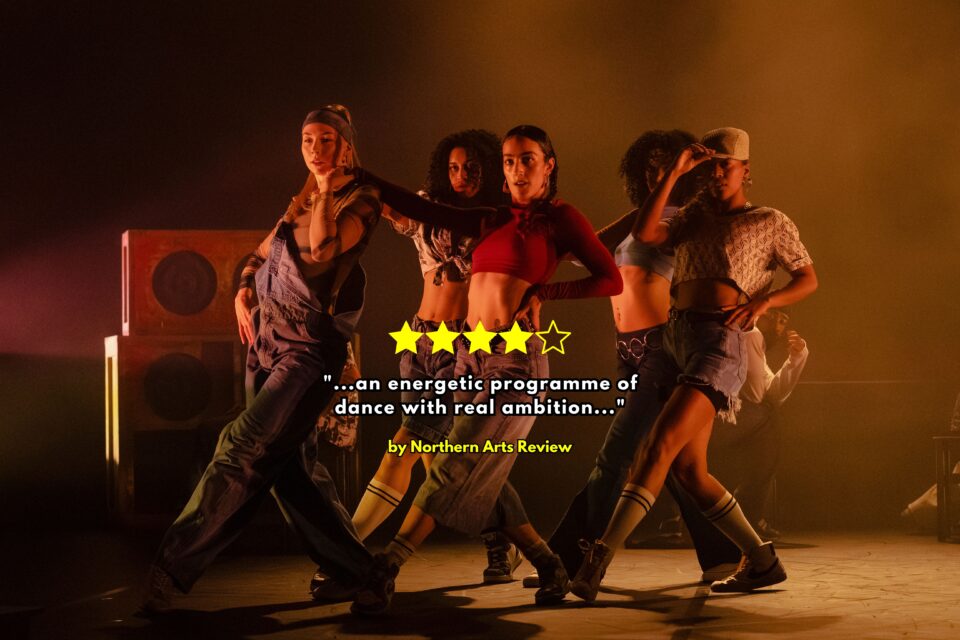
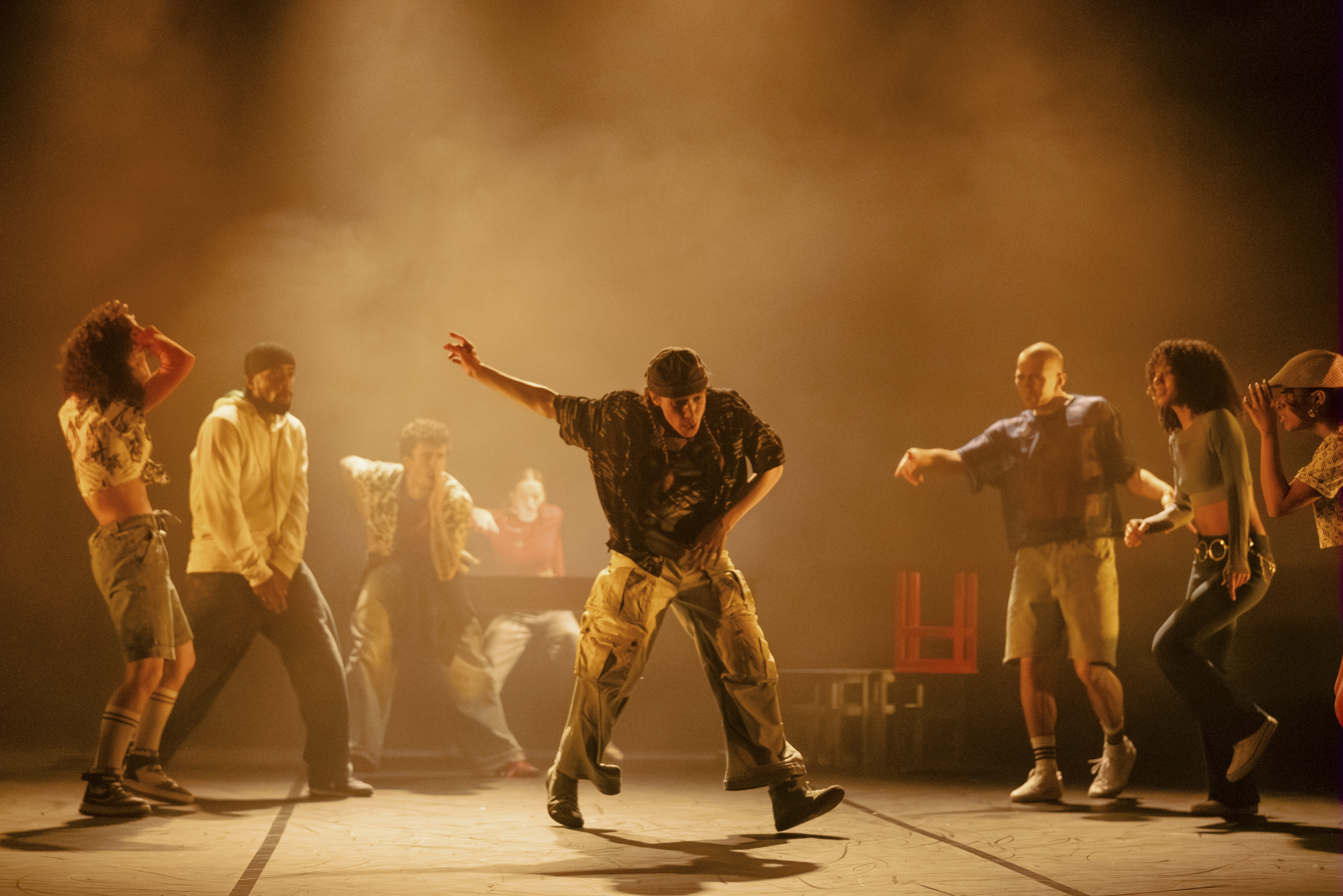
Suite Release, choreographed by Willis and Yusha-Marie Sorzano, takes us into an industrial nightclub and an evening out with our friends. Light panels on the floor, stacked speakers, colour washes cycling through blues and near-teal into something close to ultraviolet—all built a sense of energy that is immediately kinetic. The hip-hop dancing was extraordinary and was easily the company’s best of the night. There is a real sense of community between these dancers, of shared history in the body. When A Different World came through the speakers, I was delighted by the immediate nostalgia. Kendrick Lamar’s Alright and United in Grief threaded through alongside tracks rooted in house and soul, and the whole ensemble had a genuine feeling of collective joy. But the piece is lengthy and could have used a little more modulation. It reaches its destination early and stays there, and a little bit of me wanted to see it reach for more. There was still plenty of emotional space left untapped. It also ran loud and I left with my ears ringing; so, if you have a set of Loops, you might want to bring them along.
Interplay is an energetic programme of dance with real ambition. When it works, it delivers on the promise of its title: play, conversation and energy released and passed between bodies in a way that invites us in and makes us feel welcome.
Interplay plays at York Theatre Royal until Saturday 28 February. Tickets are available here.
Sean Sable is a Yorkshire-based freelance writer and editor specialising in Young Adult and Horror fiction, frequently at the same time. When she isn’t buried under a pile of books and manuscripts, she is looking for her keys and having extensive one-sided conversations, in Swedish, with her deaf cat. You can find her online at: www.seansable.co.uk
Trending Now
Review: A Christmas Carol at Leeds Playhouse
You may also like