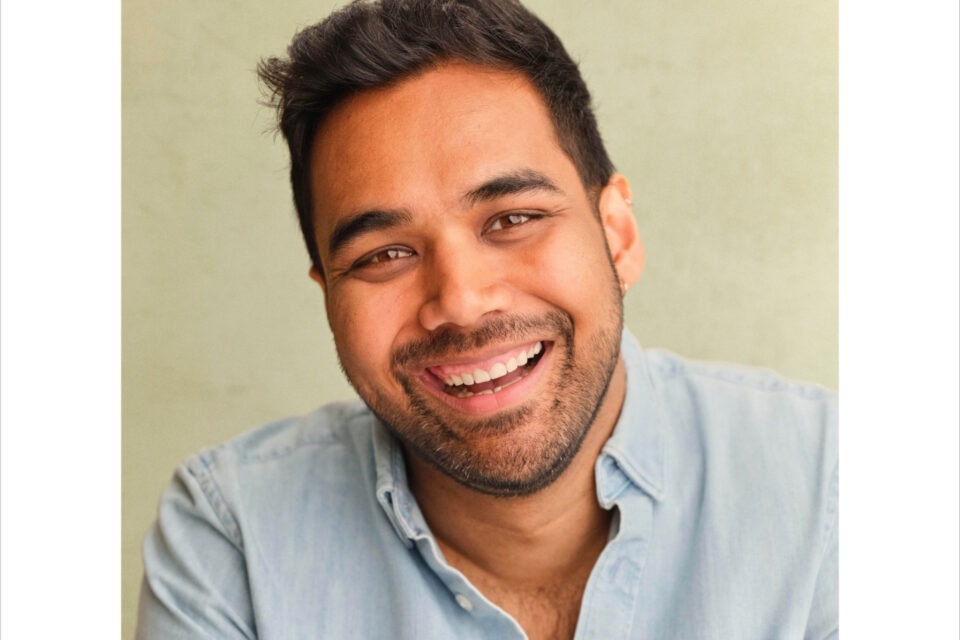
Mohit Mathur on call centres, colonialism and the cost of the British dream
By Sean Sable
Mohit Mathur is best known to British audiences as a performer, with credits including the Olivier Award-winning Life of Pi at Wyndham’s Theatre and West End musical Beyond Bollywood. Dial 1 for UK, currently on its second regional tour, marks his debut as a playwright and draws directly from his own experience of leaving India for London.
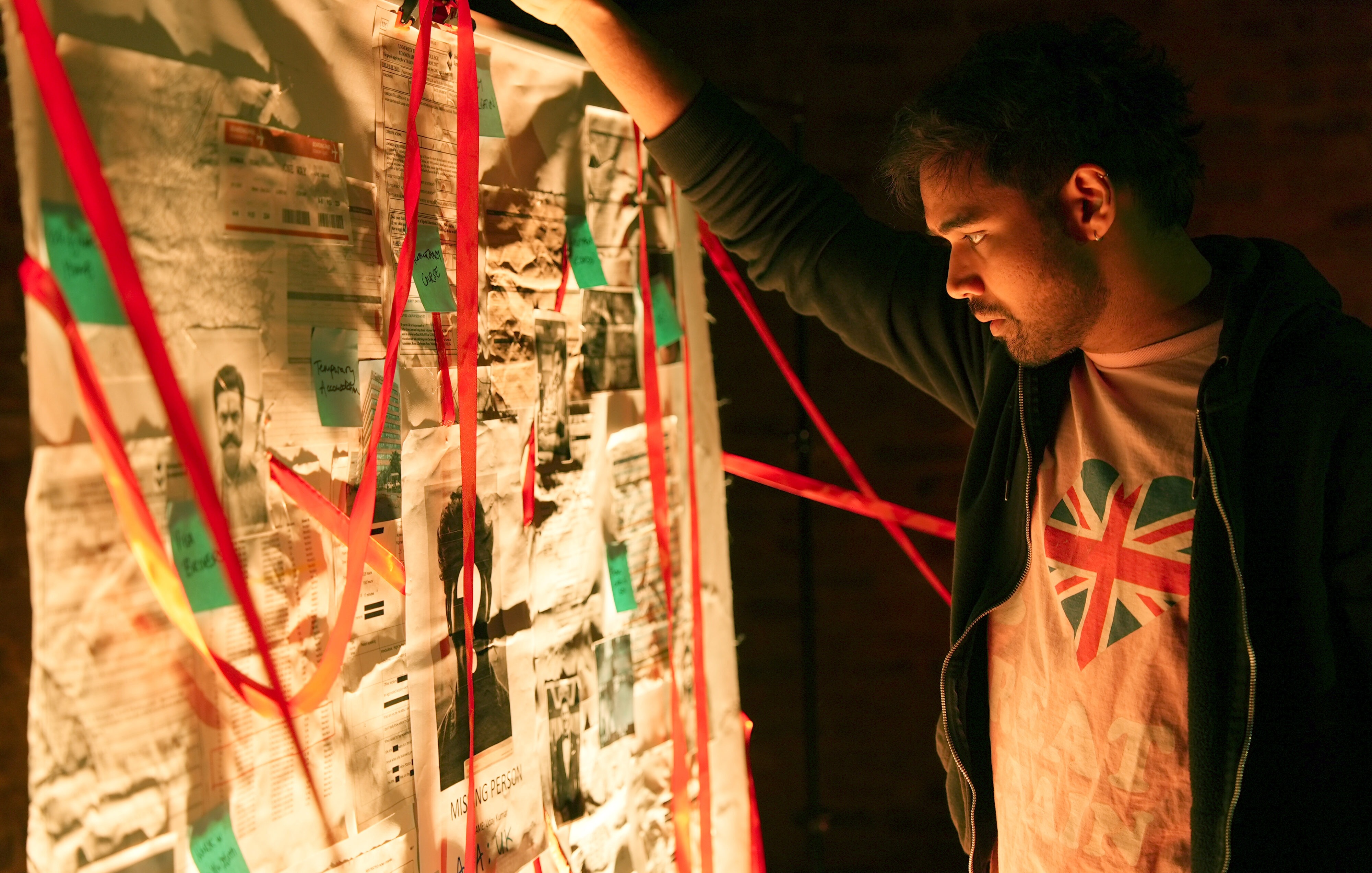
The show arrives at Scarborough’s Stephen Joseph Theatre on Wednesday 27 May at 7.45pm, and Sean Sable caught up with Mathur the morning after his York Theatre Royal performance to talk about colonial history, cryptocurrency and why niceness alone will only get you so far. Dial 1 for UK follows Uday Kumar, a late-twenties call centre worker from New Delhi who goes by the nickname UK. Having spent twelve years fielding frustrated callers while filling his YouTube channel with aspirational footage of a life in Britain he has not yet lived, UK boards his first flight with a student visa, a place on an accountancy course and his most prized possession: a mobile phone he calls Serena. What awaits him in Hounslow is far from his British dream. Warm, funny and at times challenging, it’s a one-man show about hope, survival and the complicated arithmetic of pursuing your dream.

Dial 1 for UK captures something quite particular about how India and Britain relate to each other. How do you think that relationship looks from the Indian side?
It’s really interesting, because growing up in India, we learn a lot about colonial history. There’s the Jallianwala Bagh Massacre, the Amritsar massacre that happened in 1919. I remember being in class 8, I was 13, and reading that, and thinking “I hate Britain and what they did to us”. And worse, there was no apology. I kind of let go of that at one point. But then growing up, you still have this thing about, oh, my uncle lives in Britain, and he would come and get us gifts, and you start calculating everything, because one pound is 120 rupees. So, you think, when you go to Britain, you’ll be rich because you make money in pounds. But of course, you make money in pounds, you spend money in pounds, and you forget about the rupees.
Later, I went to drama school, and I found out that the history taught in the UK and the history taught in India are very different. In Britain, you learn about the Tudors, Henry VIII, his six wives, and just brush past the colonial history. Oh, we went there—Gandhi was a peaceful guy—so it was all a peaceful thing. But there’s a whole lot of history that, in Britain, we just don’t know about. And when you don’t grow up knowing it, there’s nothing to reckon with, is there? It’s not malicious. People just genuinely don’t know.
This is your debut as a playwright. What was the push that made you sit down and actually write it?
My first ever show was really bad. I got a friend of mine to write it because I thought—I’m not a writer, I’m an actor. The idea was that I would talk about 200 years of colonialism in one hour. We directed it ourselves, working 12 hours a day, thinking we were making art. It was really bad, but that made me realise that there was something that I wanted to say.
There’s this South Asian theatre in London called Tara Theatre, where the artistic director told me: Mohit, if you want to say something, you’re going to write it yourself. It might be the worst words, but no one else can express what you want to say, and no one else can tell it the way you want to tell it. So, write it, and we’ll find a good director, and we’ll make it together.

I understand that the play changed a lot as you workshopped it and became more influenced by experiences around you. Can you tell me a little about its evolution?
The very first draft was all about the call centre and connecting with random people, living his dream through their eyes because he couldn’t make it to Britain himself. But the more I worked on it, the smaller the call centre became. But, to some extent, it’s still this guy in a cubicle, visualising fish and chips and having tea with the royals.
The scam element came from research. My dad’s friend used to work in a call centre. Around 2010, there was a huge influx of outsourcing, and all these 18-year-olds were making £400 a month, which was amazing money in India when you’re just graduating. But then they all got stuck, because the growth just wasn’t there. And then, two years ago, my dad got scammed with cryptocurrency. It was a multilevel marketing scheme, Goldmine Cryptocurrency, the same name as in the show.
And then there was a friend who worked here in Britain at a call centre. He talked to me about this one conversation where a woman just kept saying “you, you, you”, and he goes, “Why do you have to make it so personal, man? I’m not doing anything. I’m just here.” I’m like, this is great—it’s going in the show!
You’ve spoken very generously about director Phil Willmott. How did that collaboration come about, and what did he bring to the piece?
I really give credit to Phil Willmott. He’s a genius. He sees things the way no one else can. I remember going up to him and saying, Phil, I want to make this, no one else is supporting it, can you please just hear me out? So, I sat there and I read him the whole piece. And he would laugh. And then he’d go, “Oh, that’s very good, that’s very good, but…” and then he’d come up with ideas. He really helped me dramaturgically. He asked me: what if we find more? He said that UK was too nice. No one cares about nice people. We need to make him make questionable choices when he’s pushed against the wall. It added real complexity to the story.
The relationship between UK and Major Robinson is at the emotional heart of the show. How did that element develop?
I became interested in the care sector when I started working with kids on the autism spectrum. Their carers would be Indian, Pakistani, Nigerian. That’s when I decided I wanted to explore the life of carers. I found out that they only had 15 or 20 minutes with each patient before they had to go to the next place, and I wanted to add that element. In the initial draft, UK was working in a care home with different people, but he only really connected with Major Robinson. Then I discovered that there are local carers that go to people’s houses. It really took shape then. We put UK in one house and made him one person’s carer. Instead of telling a lot of different stories, we would just focus on this one story. It became a lot richer for it.
The comedy in the show is one of its great pleasures, where did you find your comedic inspiration?
I think the humour is drawn through the unknown. When you don’t know how people are going to perceive you, when you’re just honest, the humour comes from there. Humour comes from misery as well. Sometimes you don’t see yourself as a victim and you just have fun with it. There’s a lot of humour in the naivety that comes from being in a new culture. For example, British expressions. And things like “the London Eyeball”—it’s round, why would it be the London Eye? It’s a London Eyeball.
And some of it was from my own experiences coming to the country. I remember thinking that the roads were so clean that you could walk barefoot. Or when I was on the flight here. It was an Emirates flight, and they give you free alcohol. An uncle had seven Johnnie Walkers and kept them all on his tray for a three-hour flight. I’m wondering—how much are you going to drink? All of those are genuine questions that just became humorous. It comes from finding things exciting that people here don’t find exciting anymore.
For more information about Dial 1 for UK 2026 tour, click here.
Sean Sable is a Yorkshire-based freelance writer and editor specialising in Young Adult and Horror fiction, frequently at the same time. When she isn’t buried under a pile of books and manuscripts, she is looking for her keys and having extensive one-sided conversations, in Swedish, with her deaf cat. You can find her online at: www.seansable.co.uk
Trending Now
Review: A Christmas Carol at Leeds Playhouse
You may also like