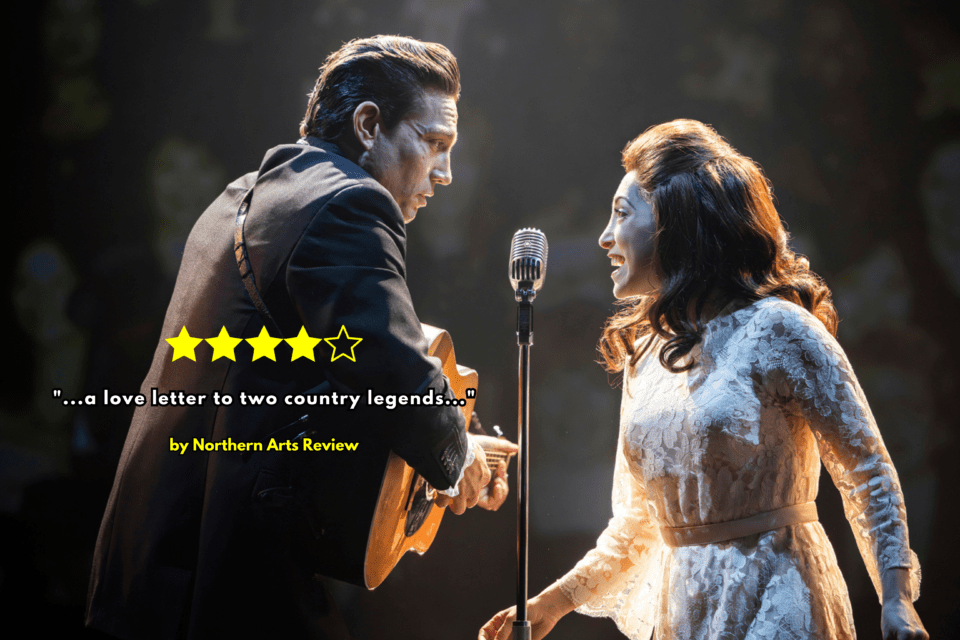
“…a love letter to two country legends…”

The Ballad of Johnny and June by Des McAnuff and Robert Cary, Grand Opera House York
By Sean Sable
I grew up on one of the finest record collections of all time. When I got my first record player, I was seven. It was a fetching shade of burnt orange, it took fat D batteries and, unlike the toy version I had before, this one could play real records. Alongside the turntable, I inherited a red box of 45s that my mother had collected during her teenage years. Inside, there were about fifty double-sided singles crammed so tightly together, it was a miracle they never warped. That box served as the best introduction to music a kid could have. From Elvis to the Beatles, Motown to Atlantic, I had immediate access to a dragon’s hoard of musical treasure.
Now, I admit that my selection criteria for my favourites were not sophisticated, generally gravitating towards bright paper designs or interesting graphics. Truth be told, I may never have listened to Neil Diamond if his records didn’t feature an explosive ‘Bang!’ coming from the barrel of a gun. So, it comes as no surprise that Johnny Cash’s I Walk the Line, with its bright yellow Sun Records logo, caught my attention. And the gloriously golden design didn’t let me down. His smooth, bourbon-soaked voice drew me right in, and I suspect that he and Leonard Cohen are jointly responsible for my love of baritone voices to this day. As I grew older, I was fortunate to live through a time of his musical descendants: Tom Petty, Nick Cave, Bruce Springsteen and the like, and it’s hard not to find his influence just about everywhere you look—even Nine Inch Nails. Yet, for as much as his music left an indelible mark on my mind, I confess to knowing little of his life outside of the 2005 biopic. When I saw the chance to enjoy an evening of Cash and Carter favourites and learn a little bit more about the “Man in Black”, I jumped at the opportunity to see The Ballad of Johnny & June at the Grand Opera House York.
The Ballad of Johnny & June is directed by two-time Tony winner Des McAnuff, whose credits include Jersey Boys and The Who’s Tommy, and is co-written by McAnuff alongside Robert Cary, with input from Johnny and June’s son, John Carter Cash, who also narrates the piece. The show premiered at California’s La Jolla Playhouse in 2024 before a run at Edmonton’s Citadel Theatre and now finds itself midway through a substantial UK and Ireland tour. Built from the real Cash and Carter songbook, the musical follows the couple’s decades-long orbit around one another, from a chance meeting on the touring circuit through the years of drugs, alcohol, fame and family that followed. Told from the perspective of their son acting as a narrator, the show treats us to both the hits (I Walk the Line, Ring of Fire, Jackson) and a look behind the curtain at the lives of the couple behind the music.
The audience is greeted with large wooden barn doors that open to a stage within a stage. Crates, stairs, tables and wooden chairs are tucked into every corner, allowing the space to transform effortlessly from the front stage to backstage with just a few tricks of the light. An interior set of barn doors opens and closes, acting as an aperture that widens or narrows our view when it’s needed. There is a rustic sensibility to Robert Brill’s set design that can shift from cosy to troubling with just the adjustment of a table or the focus of a light. When Johnny and June play for the audience, it’s easy to believe we are watching the Grand Ole Opry in miniature.
Amanda Zieve’s lighting is hardworking and narrative, its showiness kept on a low simmer until the concert numbers call for more. The locations of Johnny and June’s performances are illuminated above the stage to keep us oriented, and when the story focuses on the off-stage moments, spaces within the set are carved out to create an intimacy that never stops the propulsive storytelling. In scenes of Johnny’s childhood, he exists as nothing more than a narrow, bright spot on the floor, a blank slate to absorb his father’s abuse and his brother’s loss. Later, when Johnny sings Hey Porter, the strong beam of a train light shines into the audience, adding additional flair to an already magnetic performance. Little touches, like quick brightening and dimming and slight temperature changes during performances, add a sense of concert-like dynamics that makes the space feel alive without becoming overwhelming.
The music, arranged and orchestrated by Ron Melrose, is mostly comprised of jukebox favourites, punctuated by John Carter Cash’s original bard-like musical interludes that act as the narrative adhesion that holds the scenes together. All of the biggest favourites land at generous intervals, tracking the emotional highs and lows of the famously tumultuous love story. The entire cast sing and play instruments throughout, moving between guitar and flute, washboard and autoharp—a variety that keeps the music lively and authentic. Peter Fitzgerald’s sound design is excellent, with a well-calibrated mix between the singers and the music, ensuring that every song shines. I particularly enjoyed the small details, such as the reverb applied when speaking to the “audience” in their performances, lending a subtle sense of place and scope.
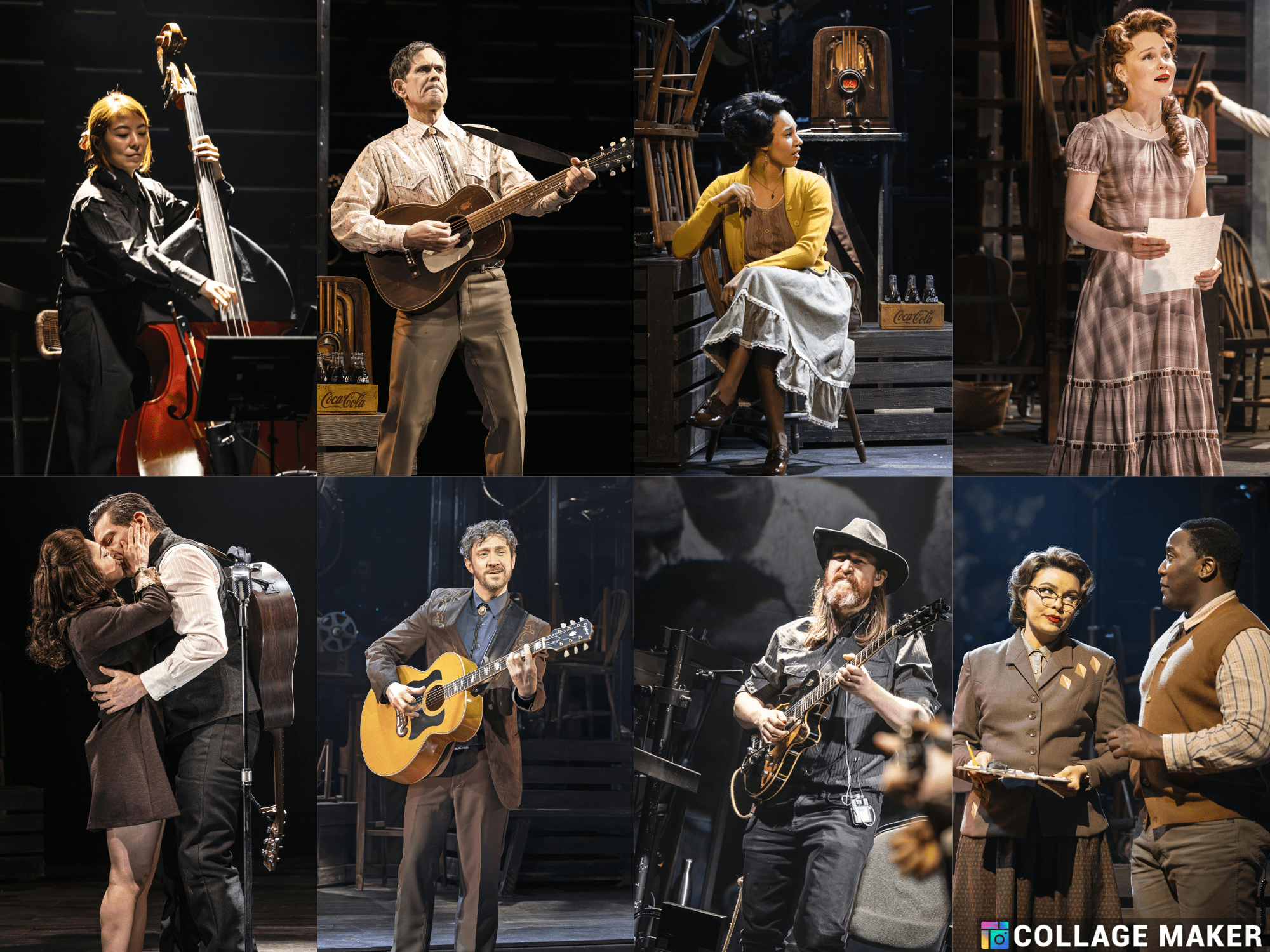
The performances were high calibre throughout, and I admit to absolutely swooning when Christopher Ryan Grant walked on stage as Johnny. His voice has the kind of resonance you can feel in your knees, and I was knocked back by how close he sounded to the real Cash. In one of his more emotional beats, he managed to inflect his singing with a manic sense of unease as Johnny descended deeper into drugs and alcohol, and the result felt as disturbing as it did authentic. It’s always difficult to watch a great talent become consumed by their darkest demons, and Grant gave Johnny a real sense of pathos. Christina Bianco’s June was an absolutely effervescent treasure, and I spent half the show unsure whether I wanted to hug her or pinch her cheeks. Her voice was powerful and clear, even in the dizzying moments of Juke Box Blues. She and June Carter are kindred spirits, each able to make an audience feel like the only other person in the room. It’s amazing to experience in real time. Ryan O’Donnell’s John Carter Cash was a surprise joy. Not only were his narrative moments touching and emotive, but his voice had a distinctiveness of character that made him a delight to listen to.
With so much input from the Cash/Carter family, it comes as no surprise that the show never really pushes the boat out narratively. That’s not to say that the story shrinks from the darker sides of the two titular figures. In fact, quite the opposite. We are told right away that John Carter Cash was the child of a “fairytale romance”—with all the horror and darkness that might entail. Yet it never really gets you past the version of the couple the world already knows. Between the 2005 biopic and Johnny Cash’s own fearless autobiography, The Ballad of Johnny & June isn’t adding much new to the landscape. All that said, I suspect that telling a new story isn’t really what this production had in mind. Instead, it focuses on celebrating the couple without recasting them as uncomplicated, and for that, it’s a thoroughly enjoyable night out.
The Ballad of Johnny & June is a love letter to two country legends, unflinchingly told through the songs that made them famous. Go and experience the joy and heartbreak they brought to every line of their music.
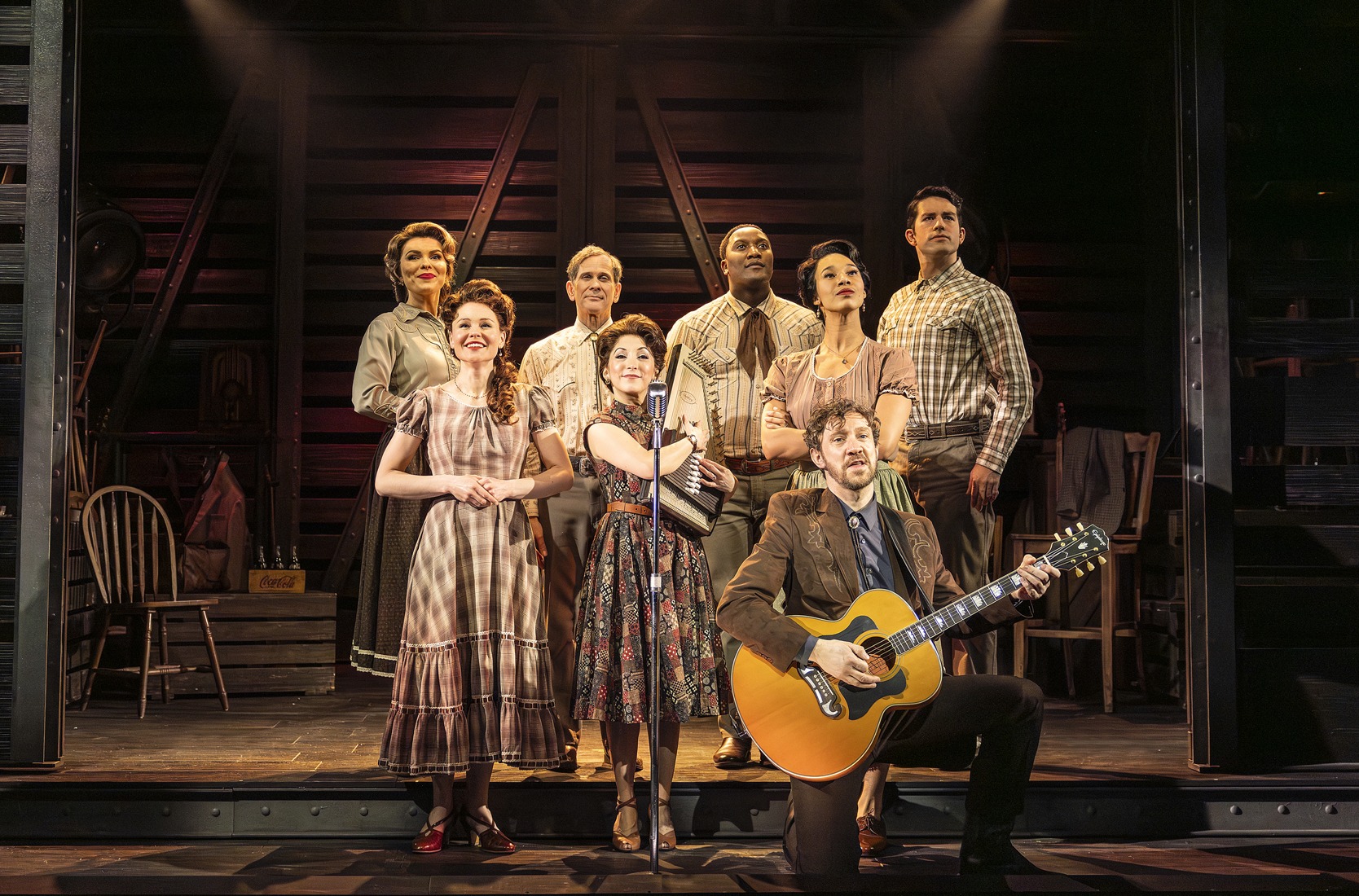
The Ballad of Johnny and June plays at Grand Opera House York until Saturday 01 August. Tickets are available here.
Sean Sable is a Yorkshire-based freelance writer and editor specialising in Young Adult and Horror fiction, frequently at the same time. When she isn’t buried under a pile of books and manuscripts, she is looking for her keys and having extensive one-sided conversations, in Swedish, with her deaf cat. You can find her online at: www.seansable.co.uk
Trending Now

Review: Enlightenment at People's Theatre
Review: A Christmas Carol at Leeds Playhouse
You may also like