“…Rowntree would have seen this production as a true testament to the people of York…”
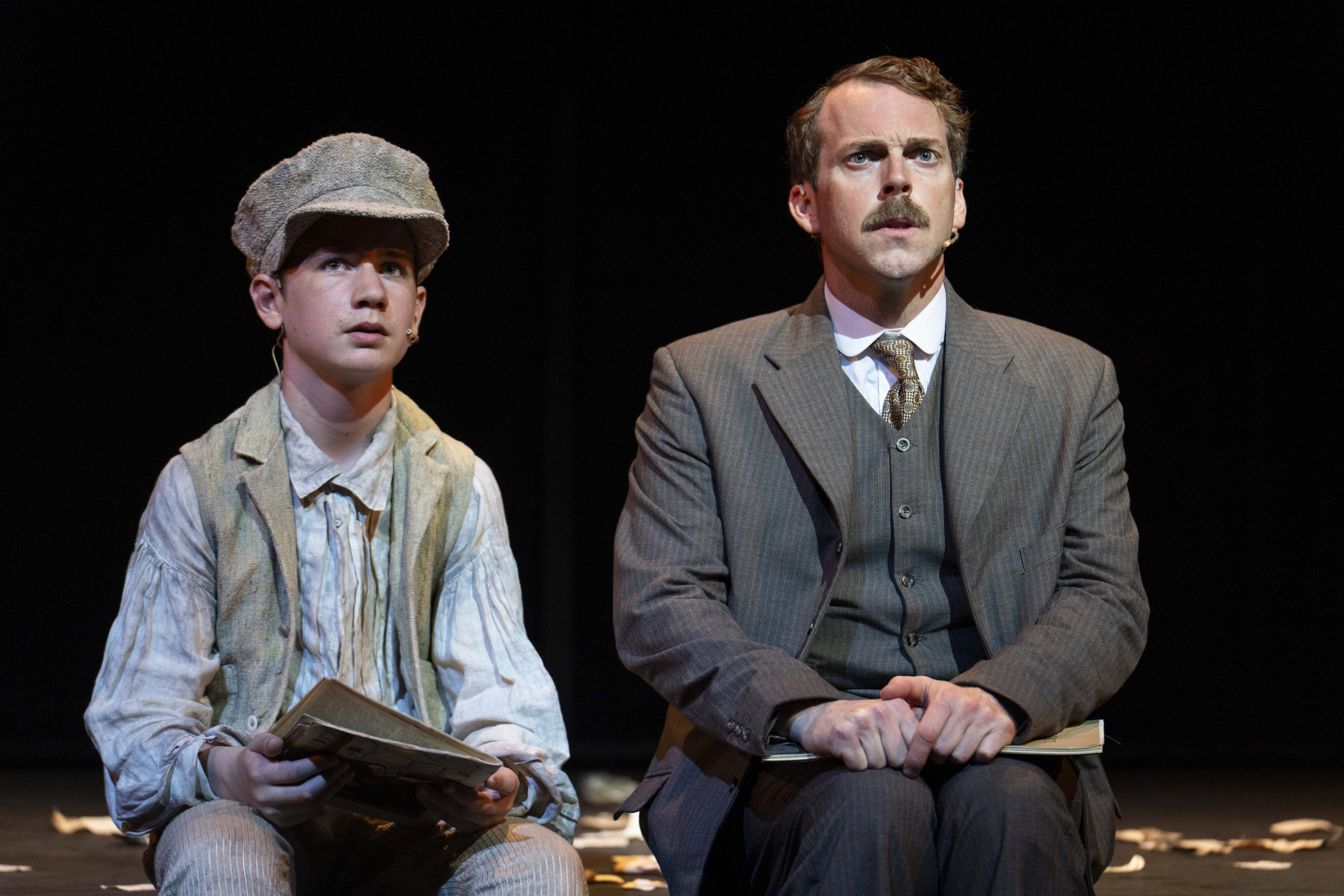
His Last Report by Misha Duncan-Barry and Bridget Foreman, York Theatre Royal
By Sean Sable
Community productions have a particular kind of magic that always tugs at my heart; equal parts ambition, heart, and sheer human effort. His Last Report captures that spirit with a fantastic sense of purpose and care. With a cast of more than 100, including over 70 community performers and a 50-person-strong choir, York Theatre Royal’s latest collaboration with Riding Lights Theatre Company explores the life and work of Seebohm Rowntree through a lens that feels at the same time expansive in scope and deeply rooted in York’s local story. It’s a deep dive into a man often overshadowed by his father, Joseph Rowntree, and I left the theatre genuinely pleased to have learned so much about a figure whose impact had, until now, largely passed me by.
Set in 1890s York and moving across time, the play follows Rowntree’s work to document the realities of poverty in the city. A Quaker and philanthropist, Rowntree surveyed over two-thirds of the city’s residents and uncovered a truth that shocked a country once convinced of its own prosperity. Nearly 28% of York’s population lived below the “poverty line”—a new concept developed by Charles Booth and later made quantifiable by Rowntree. Although not formally trained as a sociologist, Rowntree was something of a natural-born social investigator, using his limited scientific training to develop a methodology that was meticulous and grounded in statistical rigour. It laid the foundation for many of the early 20th-century welfare reforms. Yet Rowntree’s concern went beyond numbers. He believed that dignity, education, and joy were essential human needs. Although sometimes overly paternal in his efforts, he made a sincere and long-lasting attempt to improve the lives of his employees. He built workers’ housing, implemented healthcare and pensions, and even championed access to the arts.
Co-written by Misha Duncan-Barry and Bridget Foreman, and directed by Juliet Forster and Paul Birch, the production is ambitious. The script tackles a deeply detailed history and manages to do so with flashes of real levity and charm. Several of the more humorous touches elicited audible laughter and it was clear that many of the locals in the audience felt a personal connection to the story being told. Structurally, the play shifts through time and tone, blending period detail with stylised scenes that include music, dance, and even a little circus. At times, it leans into pageant territory and there are instances when the pace dips slightly under the weight of its message, but even these choices feel rooted in generosity—a desire, perhaps, to include too much story and as many players as possible.
The staging makes clever use of a two-tier set with the upper section often representing factory offices or institutional power, while the lower level flexes between the factory floor, a milking parlour, the streets of York and other depictions of “everyday” people. Screened panels, when backlit, reveal hidden scenes. This technique is used to outstanding effect throughout, whether revealing the anguish of a child dying in her mother’s arms or the sudden arrival of a choir to lift the mood. Lighting design is mostly simple, but effective, especially when those screens are used to open up or layer new visual spaces.
The musical numbers—unexpected but welcome—lend warmth and groundedness to the story’s more serious themes, and I was impressed by the volume of local musical talent on display. Costuming is a true strength of the production and one which showed a real commitment to period accuracy. The attention to textures and silhouettes gives the production a visual coherence that I really appreciated. From sailor suits to service aprons and caps, every detail feels lived-in and specific. This is no small feat with such a large ensemble.
Leading the cast, Antony Jardine brings a sense of conviction to Seebohm Rowntree. He leans into the character’s Quaker humility while remaining complex and imperfect. In one particularly memorable scene, he is hilariously coaxed into a gymnastics demonstration by Byrnhild Beson, played with great charm by Christie Barnes. It’s a moment that shows both tremendous physical commitment and excellent comedic timing. Amelia Donkor’s Gulie Harlock adds a kind of thoughtful weight to her scenes—particularly fitting given the real Harlock’s often-overlooked role as a health inspector and research partner.
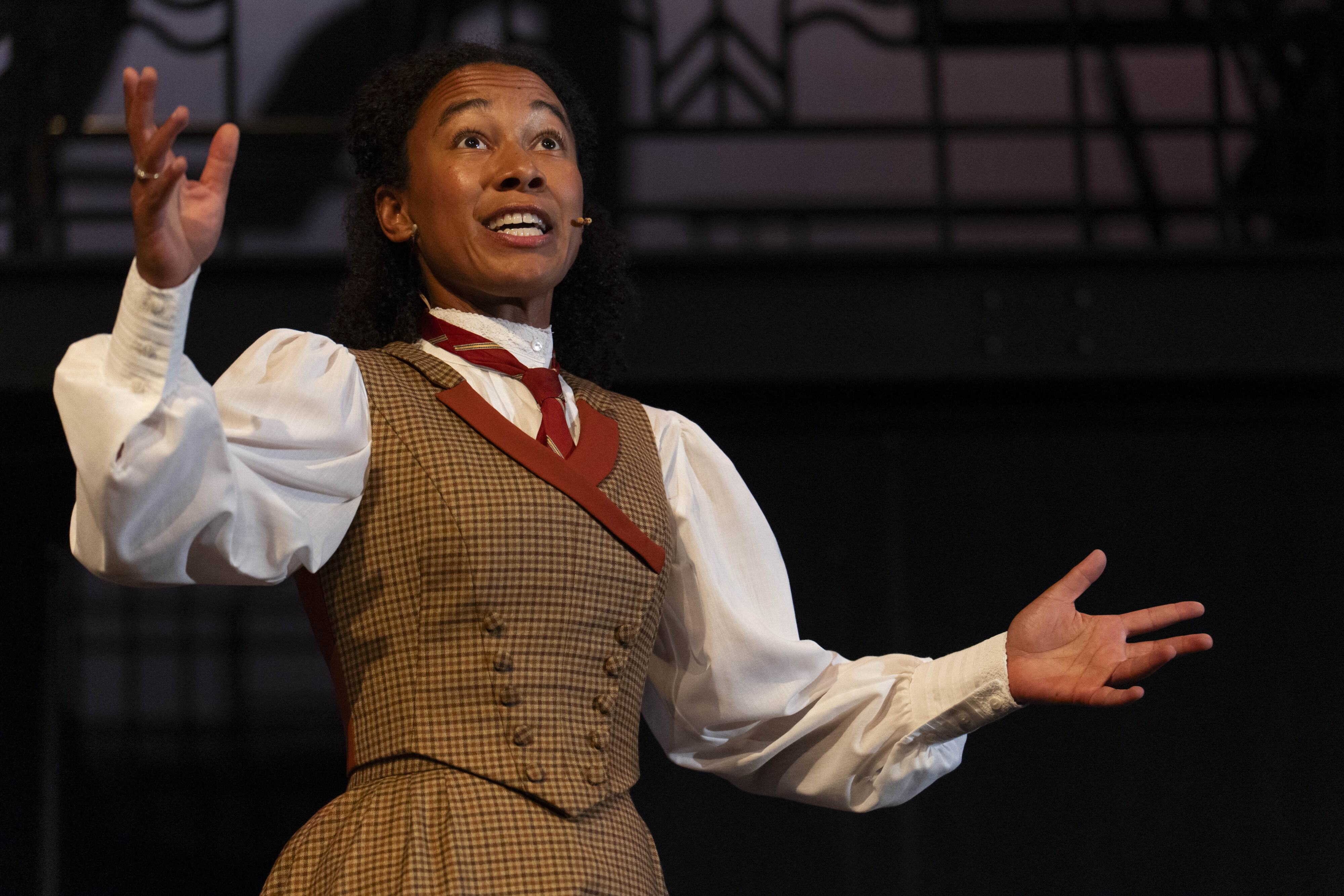
The wider community ensemble had that magical sort of enthusiasm you often find in local productions. The wide array of players brought energy and commitment to every scene. Helen Clarke is poised and believable as Lydia Rowntree. The finale just before the interval brings the full cast and choir together in celebration, and it’s one of the production’s high points.
His Last Report is about more than simply a man who surveyed poverty. It is about the value of bearing witness, acting with compassion when it would be much easier to look away and striving for improvement, even when your efforts are imperfect. Rowntree believed in the power of people to improve their lives and make their community a better place through hard work and cultural pursuit. I think he would have seen this production as a true testament to what the people of York can do when they come together.

His Last Report plays at York Theatre Royal until Sunday 03 August. Tickets are available here.
Sean Sable is a Yorkshire-based freelance writer and editor specialising in Young Adult and Horror fiction, frequently at the same time. When she isn’t buried under a pile of books and manuscripts, she is looking for her keys and having extensive one-sided conversations, in Swedish, with her deaf cat. You can find her online at: www.seansable.co.uk
Trending Now
Review: A Christmas Carol at Leeds Playhouse
You may also like