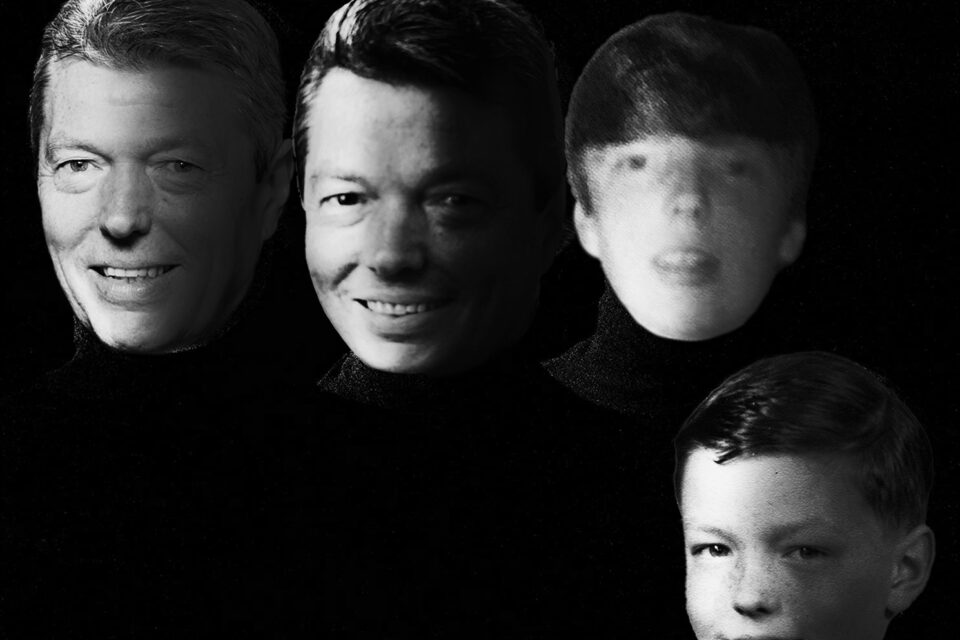
In My Life: An Evening with Alan Johnson – Carlisle, Keswick, Ulverston

By Ken Powell
“Can you hear me ok?” I ask, half shouting down the phone.
“Yes, thanks. I’m on the hands-free.”
I had already guessed, what with the crackling on the line and every other word spoken disappearing. Former Education, Health and Home Secretary, Alan Johnson, is clearly a busy guy despite having retired from politics six years ago. I’m lucky to get even this. I’ll take it.
I check my notes with him to confirm I’ve got the right dates for his talk about his life at Keswick’s Theatre by the Lake in October.
“Yes, we’re doing three dates. The Green Room in Carlisle on Monday 16th, Theatre by the Lake in Keswick on Tuesday 17th, then the Coro, Ulverston on Wednesday 18th. I’ve been to Keswick many times. They have a great literature festival – Words by the Water at Keswick. It’s a lovely little theatre and we used to go every year to the festival. I know the area well. My wife’s from Carlisle. I met her in my constituency in Hull, but she still has lots of family up there. It’s a lovely part of the world.”
He’s not wrong. There’s worse places to do a gig. But why just three shows?
“This show is based on my book called ‘In My Life’, which published in 2018. A 52-date theatre tour was arranged, which we did through 2018 and 2019, but then Covid put a stop to it. These dates weren’t actually on the original one but we’re finishing off that tour with these three lovely venues in Cumbria.”
A wise move, me thinks. I noticed the titles of all four of Alan Johnson’s autobiographies and ask why he’s taken Beatles songs as titles all the way through. I know you have a great love of music, I say, but what is it with the Beatles? What’s the attraction?
“Oh, I think anyone of my generation – and lots of them will come to the event I hope – we went through the birth of Rock and Roll, starting with Presley and Bill Haley and the Comets. We were there when that happened. We saw from when we were very young that virtually all decent music came from the other side of the Atlantic.
The British bands were all obvious Elvis Presley tribute acts. Bill Fury, Marty Wilde – they all looked and sounded like him, they all sang in American accents, and all the songs were written by professional writers in America.
The Beatles changed all that and changed the world; and to have lived through it, was amazing. No British artists, apart from the Tornados, had broken into the building and got hits in America. Suddenly the Beatles had the top five positions and fourteen hits simultaneously in the top 100. It felt almost patriotic.
But the period was so good because of the evolution of music the Beatles took us through. Simple songs like ‘She Loves You’, then three years later ‘Strawberry Fields Forever’. It was an amazing period.
It’s obvious that music is going to feature firmly in this show but what else can we expect, I ask. Given his extensive political career, will politics going to be a major subject? Or it going to be more personal?
“The second half is over to audience questions, so politics usually comes up then. The first half goes over the book: 25 chapters covering 25 years – one track from each year. From my earliest memory which was in 1957 to 1982 when I decided I wasn’t going to make it as a pop star. I had a couple of bands in the 60s, made a record when I was 17, but by the time I was 32 I decided I wasn’t going to make it as a popstar. I did think I might make it as a song writer, so I set five or six of my songs on compact audio cassette (which had just come out) and I sent them off to Elvis Costello. As I say in the book, I’m still waiting for a reply! That was a kind of nice ending for that period of thinking that in some way I was going to make it in music.”
I’m feeling the pain of someone who didn’t make and empathise – I didn’t make it either. Did Alan keep up with it as a hobby, I wanted to know.
“I didn’t do bands, that’s a huge regret looking back because I loved playing in a band. But when I was a postman there were long hours of working, you had to do overtime. What with wage cuts, I had a wife and three kids, I was working from five in the morning to eight at night. You had to work one Sunday in six, so that was all very intensive.
And I never picked up the guitar at all during the eleven years I was a government minister. But I got back into it eventually. My son teaches music and is a very good guitarist. During Covid we started playing via Zoom every week and we’ve continued that ever since.”
Eleven years without playing, that’s quite a gap. I asked Alan where this love for music came from? Was it inspired by the Beatles, or the fantasy of getting out of difficult living conditions or something else?
“It was a bit of everything. It was certainly about the Beatles. My sister was two years older than me and was already completely potty about music, which is why I write with some authority about how hard it was to hear it. You had to stick to the pirate radio stations. Until Radio One came along you could hardly hear any pop music.
My father didn’t have much of a role in my life – and we were quite pleased about that because he was violent towards my mother. He was feckless. I was eight when he left, which was good news for me and my sister, but he did play the piano. He played in all the pubs and clubs. He never learned music, but he could play really, really well. Some of that was in our DNA and, I suppose, we have to credit him with that.
We used to get the Record Songbook. It had the lyrics of whatever pop songs were around, pre-Beatles, and we used to sing Cathy’s Clown, a cappella, two-part harmony and stuff like that. I got a guitar when I was about eight from my mother and it came with a little instruction manual – Play in a Day – and that taught me to play the guitar. Not in a day I might add! It took many years.
During these theatre shows, with a lot of ‘baby boomers’ about, you see a lot of nodding heads because these are all shared experiences. Because there was no competition, you weren’t going to listen to anything but Two-Way Family Favourites on a Sunday morning on the BBC Light Programme – because there was only the BBC to listen to. No commercial, or local radio. The number of records that were released were minimal compared to now. Back then, you’d get a version from Woolworth’s on the Embassy label; a copy version for about 4/6. Everyone was buying the same things, watching the same television and listening to the same radio programmes. It might have been bad for us in terms of a bit of variety and diversity in our lives in what we listened to and what we watched, but it’s good for these kind of events because the whole of the audience starts nodding when you mention certain things – Radio Luxembourg for instance, which was the only way you could listen to pop music IF you could get through the static to 208 on Medium Wave.”

I realise we’ve strayed back to music and really feel I have to know more about Alan Johnson the political man. From postman to politician, I ask, how did that come about? Did joining the Communication Workers Union set the stage or did the political urge come before or separate to that?
“Oh, it was independent of that,” he dismisses immediately.
“When I was eighteen, I was in another band, called the ‘In-betweens’; and all our gear, like my amplifier, was on hire purchase. I had to get a proper job to pay for it, so I joined the post office and one thing led to another. I worked my way up through the union ranks, eventually became secretary, and then I was given a tap on the shoulder and asked if I wanted to go into parliament. I didn’t have that as an ambition, but I decided to try. I came into that huge Labour majority of 177 in 1997. I had twenty happy years, eleven of them as a government minister. I had huge good fortune. Some people go into politics and they never get onto the government bench, let alone make it to a ministerial position; but it went very well for me. And now I’ve moved on from memoirs – which is great because I was sick of talking about myself – and on to fiction. My latest thriller is called ‘One of Our Ministers is Missing’. “
It sounds almost as though Johnson walked into politics by accident. There must be more to it than that? According to the internet (and the internet is always right, right?), he started off with a very leftwing ideology and aligned himself with the Communist Party of Great Britain. Did he not have to compromise beliefs to be part of a famously ‘centrist’ Labour government? His answer is vehement.
“The internet keeps giving people the wrong idea. I was never – not even remotely – aligned with the Communist Party of Great Britain, nor a Marxist. I think where they confuse it is that I said I’ve read both volumes of Das Kapital. I was heavily influenced from about the age of 14 by books like Animal Farm and all of that. Of course, Orwell was a great tutor for me because he argued against extremism on either side. He argued against totalitarianism whether from the right or the left. I’ve always been a voracious reader, so his books, like Animal Farm and 1984, they educated me away from that.
One of my heroes was Jimmy Reid who was a member of the communist party. At the very time I was thinking of joining a political party he left the Communist Party to join the Labour Party, so I did the same thing. But I was never a communist. I was never on the far left. I abhor the far left. That’s not where Labour has ever been and when you want to represent the working class, don’t pretend that means in any way that it follows you’re into hard left politics.
That’s what really gets me – people mistake the working class for ‘poor’. There’s a lot of poor people and they’re more than likely going to be working class – but they don’t lead lives of drudgery where some middle-class leader had to come and rescue them from it. The communities I lived in on a council estate in Slough, there was vibrancy, there was culture, there was enjoyment, there was happiness. And to think there was no agency for us to speak up for ourselves is very, very extremist on both sides. It’s not the real world, certainly not the one my wife grew up in on an estate in Carlisle.
It was a centrist government that introduced the minimum wage; that took the hospital waiting time from nine months to an average of nine weeks; that was building schools for the future; that negotiated the Good Friday Agreement in Northern Ireland. We had a lot to show for our thirteen years in power. Our ambition had been to abolish child poverty within a generation, and as Sir Michael Marmot, the great expert on this, said, we got a long way with that; had we stayed in power we probably would have achieved it. I was very, very proud of all this. So, centre-left maybe, not centrist.
But the second half of the evening is open to the audience to ask whatever they like. No pre-written questions in advance like on the radio programme, ‘Any Questions’. There’s no given notice – they can throw anything at me!”
It will be interesting to see what a Keswick audience does throw at this politician who retired from politics some time ago. Things have changed. Or have they? Are things different from when he was a young man getting into politics in the 80s and 90s? Are we really living in a Boris-Johnsonesque post-truth world? Or is it the same as it has always been, just with new faces and new dressings?
”I’m not sure actually. Politics is a blood sport. It was never Marquis of Queensbury rules. I wouldn’t say things have changed that much in the twenty years I was in parliament apart from the fact you used to get handwritten letters and the odd postcard and some typed letters; you ended up just getting emails – and tons of them. You had more contact with your constituents and that’s a good thing. Whether you’re on social media or not, they could contact you and being able to contact their MP is a good thing. In that sense it is better.
The Trump stuff and the Johnson stuff, well that’s just been appalling wherever you stand on the political spectrum. There are many people I’ve spoken to in the Conservative Party who are at their wit’s end for what’s happened. Not the referendum, over Europe – there are many conservatives who support that – but the Trump stuff that, in the end, I think Johnson swallowed so he just said the most outrageous things and thought he could get away with it.
I know I would say this remembering that we were in power for thirteen years, but the Tories have now been in power for the same period. I’ve told you some of the things we’ve achieved – I could have gone on for half an hour. I don’t know what the Conservatives will say they’ve achieved in their time. Austerity? Brexit? I mean, what is there to be proud of? We’ve gone backwards on child poverty, gone backwards on practically everything. There’s a level of incompetence that’s difficult to comprehend. So, I’m happy to compare those thirteen years I had with the thirteen that followed.”
Well, that leads to smoothly to the obvious next question: Do you think we’re going to get another thirteen years of Labour with the next election?
“I don’t know about that. Keir Starmer has been very careful about saying he’s planning not just for a short term, four or five years, in office. According to the polls we should be back in power, but the polls said that in the run up to the 1992 election. I was just about to be elected as the leader of the communication workers union and my predecessor had never worked as a Labour Prime Minister, he’d been shadow secretary for twelve years. We had eighteen years of the Tories and then thirteen years of Labour. So, I certainly think we’ve got the right leader. I think in 2019, when we were wiped out and lost seats like Bishop Auckland, we were deserted by the working class as well as every other social class you could name. We’ve built back from that, from 36 points behind to now a very strong lead. We should win it, when the election comes, but then we have to plan. You can’t do anything short term in government. You need two or three years to turn things around.”
I’ve asked more than enough questions, but I have one more I must ask. Alan Johnson said he did some playing with his son over Zoom during the covid period. Is there still time for to make a band? Perhaps with ex-MPs – a Beatles tribute band or something like that? Or is it absolutely too late for that music career?
“I think it’s too late! I do look the age of Paul McCartney, but I’ve given up on the career. I’m happy just to play with my son over Zoom. He’s had a great career as a recording engineer and as a musician. He’s worked with all kinds of great artists. So, I’ve lived my musical live vicariously through him.”
We won’t ever get to see Alan Johnson: The Musical then?
“No!” he laughs. “Seeing me on the 16th to 18th October is the closest you’ll ever get to that.”
In My Life: An Evening with Alan Johnson takes place at the Green Room Carlisle, Monday 16th, Theatre by the Lake Keswick, Tuesday 17th and The Coro Ulverston, Wednesday 18th
.
Trending Now
Review: A Christmas Carol at Leeds Playhouse
You may also like