Review: English National Ballet – Romeo & Juliet at Palace Theatre Manchester
 Shannaz
Posted On October 22, 2026
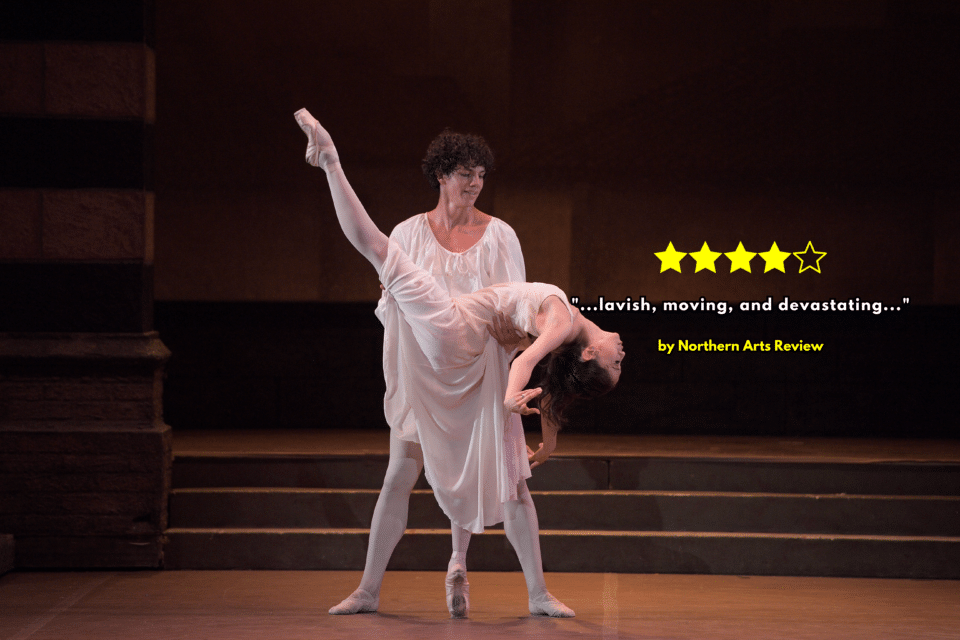
“…lavish, moving, and devastating…”
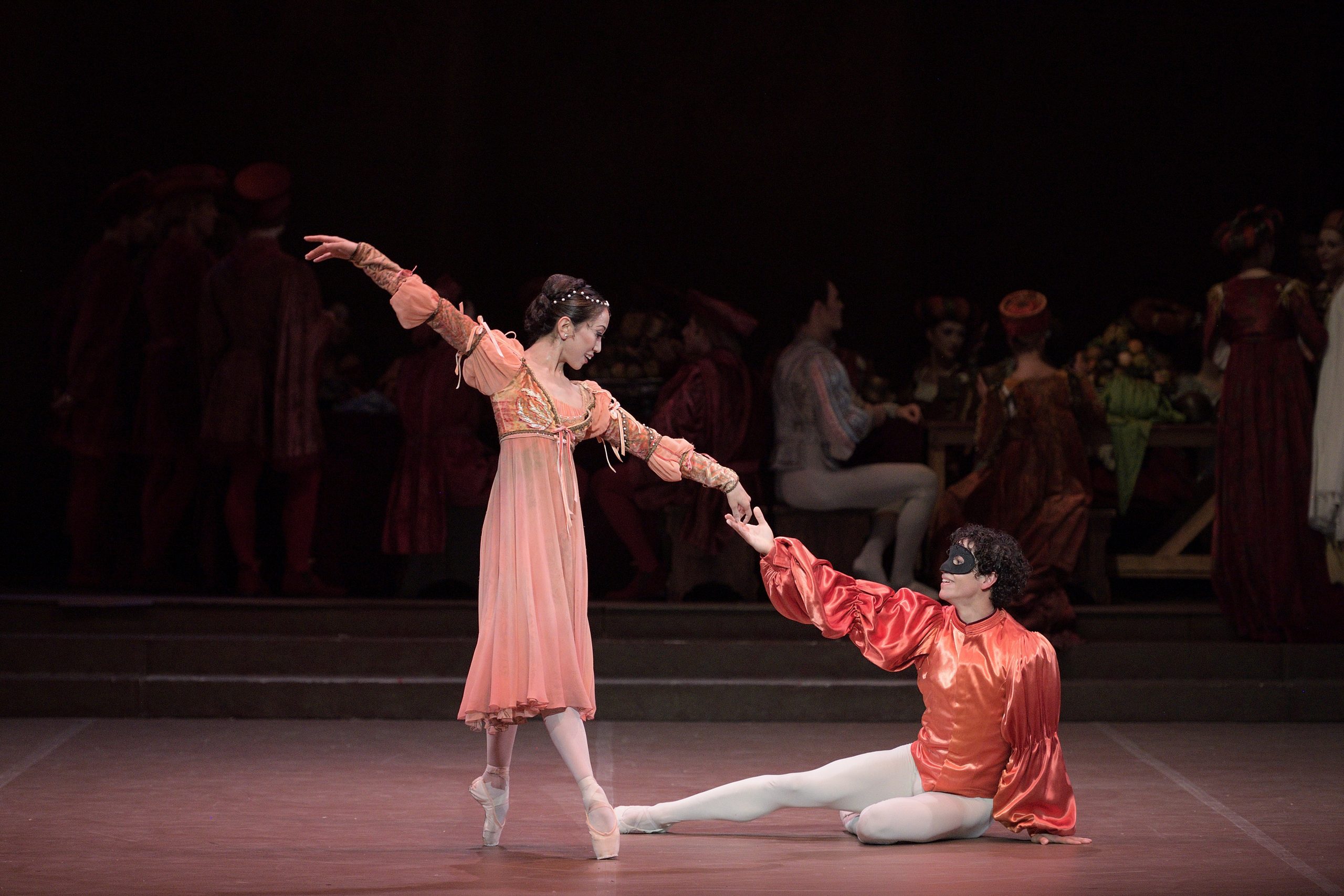
English National Ballet – Romeo & Juliet by William Shakespeare, Palace Theatre Manchester
By Christopher Balmer
Some stories don’t merely entertain us; they act as quiet reckonings. We return to Romeo and Juliet not for surprises, but for the pull of an inevitable fate. English National Ballet’s staging of Rudolf Nureyev’s choreography at the Palace Theatre never treats this sorrow as an antique museum piece. It breathes hot, urgent life into every darkened alley and candlelit stone arch.
I won’t pretend to bandy about technical ballet jargon—you won’t catch me fussing over the mechanics of an arabesque or a grand jeté. But I know good theatre when I see it, and this is a production that honours its classical pedigree while thrusting the story firmly into today.
Translating a tragedy built on Shakespeare’s language entirely into a physical medium is a delicate balance. Without dialogue, everything on stage must work twice as hard to catch your attention. The company does this effortlessly. Their physical prowess and athleticism carry the story through sharp gear changes, moving from genuine tenderness to the blackest despair.
From the stalls of the Palace, the visual world crafted by designer Ezio Frigerio is wonderful. The backdrop carries the texture of a hand-painted cyclorama, moving seamlessly between sun-bleached market piazzas and the solemn, vaulted hush of the church scenes. Franca Squarciapino’s costumes bring an elegant, dusky pastel palette to the boards—soft silks and heavy velvets that feel lived-in rather than theatrical. Working in tandem, Tharon Musser’s lighting matches those tones to the opposing households perfectly, sharpening the tribal divide before pooling like cold water across the final tomb
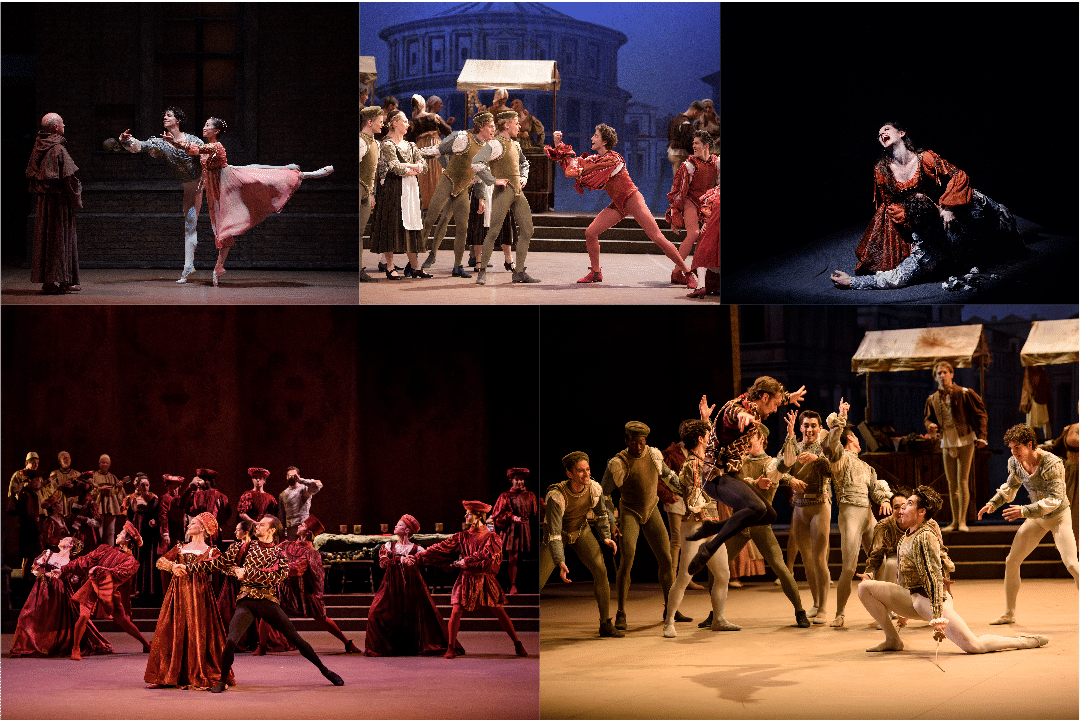
The direction understands that tragedy only lands if there is warmth and life to lose. The street brawls crackle with energy, using dance to turn stage combat into sheer mockery. Noam Durand’s Mercutio sparks with insolence, making the market square feel like young men idling away a sticky afternoon before the knives come out. A special nod belongs to James Streeter’s Friar Lawrence—an unsung hero in this story whose moral gravity anchors the chaos.
At the centre, Rentaro Nakaaki’s Romeo and Julia Conway’s Juliet bring reckless youth and heartbreaking vulnerability to the lovers. Their chemistry doesn’t rely on grand, performative declarations; it is built on hesitant glances, breathless pauses, and a lightness that makes their devotion feel real. If there is a slight hesitation, it is that Nureyev’s expansive choreography occasionally allows the market revelry of Act II to outstay its welcome, softening the dramatic momentum just before the tragedy snaps shut. When the violence finally erupts, though – driven by Fabian Reimair’s menacing Tybalt – it is brutal and sweaty; and when their quiet moments arrive, they are so tender you feel intrusive just watching.
Down in the pit, having the English National Ballet Philharmonic live under Maria Seletskaja was a genuine treat. Sergei Prokofiev’s score doesn’t merely accompany the dancers; it throbs low in the chest, pulling the tension tight across every quiet pause.
By the time the crypt claims what was promised from the start, the silence in the auditorium is total, broken only when the final curtain drops to rapturous applause. English National Ballet has delivered a triumph: lavish, moving, and devastating in the dark.

English National Ballet – Romeo & Juliet plays at Palace Theatre Manchester until Sunday 25 October. Tickets are available here.
Christopher Balmer is a Lancashire writer and lifelong theatre‑goer whose work blends northern humour, folklore‑tinged insight, and a deep love of live performance. He’s spent years telling stories in classrooms and on the page, bringing a sharp eye, a warm voice, and a distinctly northern sensibility to everything he writes. Christopher works across genres — from psychological folklore to contemporary northern‑gothic — with several pieces published across the UK. When he’s not at the theatre, he’s usually reading, teaching, or shaping his next story. You can find Christopher on Facebook and Instagram. You can peruse his books here.
Trending Now
Review: A Christmas Carol at Leeds Playhouse
You may also like