Interview with Rachel Parris for By A Lady: The Life & Wit of Jane Austen at Theatre by the Lake
 Shannaz
Posted On June 6, 2026
Shannaz
Posted On June 6, 2026
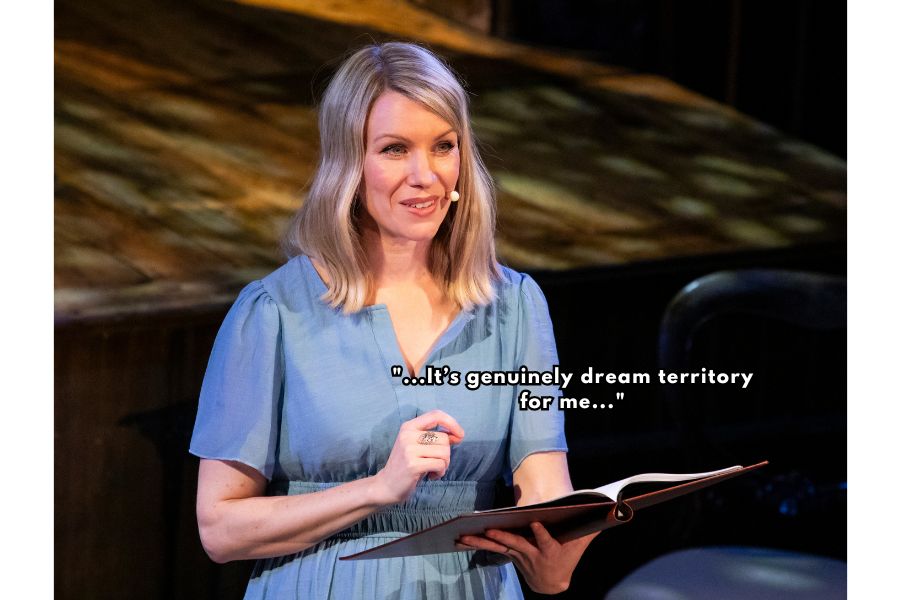
“…It’s genuinely dream territory for me…”

Rachel Parris on Jane Austen, rotting women’s brains, and the appeal of being Emma
By Sean Sable
Rachel Parris is a BAFTA-nominated comedian, musician, and actor, best known to television audiences for her viral satirical segments on the BBC’s The Mash Report and as a founder member of Austentatious, the long-running improvised Jane Austen show.
Her latest Austen outing, By A Lady: The Life and Wit of Jane Austen, sees Parris perform alongside Doon Mackichan in a live celebration of the author, with text by Deirdre Shields. Told through Austen’s own words and woven with scenes from her best-loved novels, the show comes to Theatre by the Lake in Keswick on 9 June.
Ahead of the performance, Sean Sable caught up with Parris to talk Austen, improv, dead leaves, and why she’d choose to be Emma.
For anyone coming to Theatre by the Lake not knowing what to expect, how would you describe By A Lady?
By A Lady tells the story of Jane Austen’s life through her words and scenes from her books. It’s just me and Doon Mackichan: she plays Jane Austen and I play Cassandra, her sister. But we also get to play Mr Darcy, Elizabeth, Bingley, Lady Catherine de Bourgh, Frank Churchill, Anne Elliot, Captain Wentworth, Emma. As a performer who doesn’t get to do as much serious acting as she would like, it is a total gift. I love doing the show.
It also features two talented musicians: David Le Page on violin and Nick Stringfellow on cello. The music was created especially for the show, and sometimes it’s quite funny, and other times it’s just heartbreaking, but always beautiful, and it accompanies the action from start to finish. If you’re a Jane Austen fan, you’ll love it. And even if you’re not, you can learn about her life through it and get to know her better.
You come from a musical background. Does that feed into how you work with the live score?
Music was my way into comedy. I started playing piano when I was six, and musical comedy felt like a more comfortable, more natural way of doing comedy. It still feels that way now. And I think having a musical instinct really helps with the score, because all four of us really work together to make the music come in and out seamlessly.
As soon as I got cast, I said I’d really love to sing in it if that was appropriate. Jane was a really avid musician. She would copy out music by hand to play, and I’ve been to her house and seen the handwritten manuscripts she copied out. So, I suggested singing a Robert Burns poem to a Ralph Vaughan Williams tune. It’s a slightly darker, more unusual version of “My Love is Like a Red, Red Rose.” We kept it in keeping with the show, and I think it really works.
By A Lady calls on a wide variety of theatrical skills. You’re still doing Austentatious, a full Jane Austen novel improvised from scratch every night. How much do you bring those skills into this show?
I think improv helps everything, not just performing. If you’re practised in improv—in the habit of playing with people, of supporting their ideas and listening—I think it rewires your brain in a really positive way. And certainly, as a performer it’s so helpful. We’re playing about twenty characters each, so being able to quickly swap from one to another, to feel comfortable doing it slightly differently every time, to try to feel it in the moment and respond to your scene partner: all of that is improv instinct.
And actually, the very first moment of the script is improv. Doon, playing Jane Austen, starts very formally with the most famous Jane Austen quote, and I’m meant to interrupt. Then we improvise how the interruption plays out and how we get back on track. It’s a little bit of playfulness to let the audience relax their shoulders at the start.
There’s a perception that Jane Austen is formal territory. How do you go about challenging that?
I do think with Jane Austen there is sometimes a feeling of formality. Over the years, I’ve encountered people being a little bit sniffy about her, as though Austen is formal and snobby and high-falutin. And she’s not at all.
In Austen’s time the novel format was considered lowbrow. It was looked down upon as fodder that would rot women’s brains, the equivalent of a gossip magazine. And Jane Austen was there going: no, it’s great. Women should be able to read good stories. Her early work was really adventurous. It had murders and drunks falling down dead in the street. This idea of Jane Austen as very proper is so false. So, to start the show by deliberately breaking that formality, which was entirely Deirdre’s idea, was a real stroke of genius.
You’ve spent fifteen years with Austen, including writing your novel Introducing Mrs Collins set in her world. Has that changed your sense of who she actually was as a person?
My concept of who Jane Austen is keeps changing and growing. With each new reading I feel like I get a different understanding of her. I’m very conscious not to say a better understanding, because I might not be right, and my mind might change again.
Studying Pride and Prejudice with a fine-tooth comb to write my novel, I felt like I gleaned feelings of Jane’s that I hadn’t before, particularly around Charlotte and Lizzy. There’s a quote where she said something like: “I don’t know if I could trust anyone who didn’t love my Lizzy.” She really loved Elizabeth Bennet, and that alone makes me think she was probably quite a lot like her.
But studying the friendship between Lizzy and Charlotte, and how Elizabeth behaves after Charlotte gets engaged, you start to spot the flaws in her character. She can be a bit thoughtless, a bit selfish, a bit blind to certain things. She’s prejudiced, isn’t she? That’s the point of the book. And from that I came to think: Charlotte Lucas made a choice that Jane Austen actively chose not to make. And I think Jane Austen judged Charlotte for it, the way that Lizzy does.
What have you enjoyed the most about preparing for By A Lady?
I came into this having spent fifteen years with Jane, considering myself very much a Janeite. But during the course of the show there are bits of her early work, bits of her letters, facts about her life that I had no idea about. That made it even more enjoyable, because I love learning on the job. I’ve never done a job where I’m writing texts to the people who run the show saying things like: “Thank you for letting me do this. Yes, I do want to do the next one. Please keep doing the show.” It’s genuinely dream territory for me.
If you had to live as one Austen character for the rest of your life, who would it be?
Persuasion is my favourite novel, but I wouldn’t pick Anne Elliot because I don’t want to live as a sailor’s wife. I don’t want a husband at sea. I’ve been on a cruise. Hated it. And it wouldn’t be Catherine Morland or Fanny Price, because I don’t quite buy that their partners are truly besotted with them. That’s always been my problem with those novels.
I think I’d be Emma. She’s rich, she’s marrying another rich man, it just sounds like an easy life. Plus, Mr Knightley’s hot. She’s also a woman who doesn’t have to marry, which is unusual for the time, so there’s no external pressure whatsoever. And if Mr Knightley dies, she’s fine.
And which Austen character would you find genuinely exhausting to spend an afternoon with?
Marianne. I’ve always been Team Elinor. There’s a passage I read in the show that gets a big laugh from the audience, and it really does encapsulate it. Marianne is weeping over leaving Norland, going into raptures about the trees and the falling leaves. And Elinor just cuts straight through it with: “It is not everyone who has your passion for dead leaves, Marianne.”
I know she’s really young, which I acknowledge, but she’s also quite annoying. I love her to bits, but I’m like: oh, she’s waxing lyrical about the dead leaves again.
The tour visits some unique venues. Is Theatre by the Lake particularly meaningful for you?
I come from Leicester, and our natural place to go on holiday was the Lake District. We went every year like clockwork, and Keswick was where we would always go. I grew up going to Theatre by the Lake to watch their rep season. And when I was trying to be a young actor, I sent my CV there—by post—to ask whether they’d audition me for their rep season. I never heard back, which I have, of course, completely forgiven them for. But I’ve never performed there until now. So genuinely, yes, Theatre by the Lake is a really big deal for me.
Any other venues on the tour you’re excited about?
I had no idea about the Painswick Rococo Garden in Stroud. When I heard about it, I was like: what is that string of words? And I looked it up and it’s just stunning. An Alice in Wonderland sort of place that looks magical. Then there’s Wilton’s Music Hall and Buxton Opera House. They’re all these historic, fascinating buildings. It feels like a magical tour around the country.
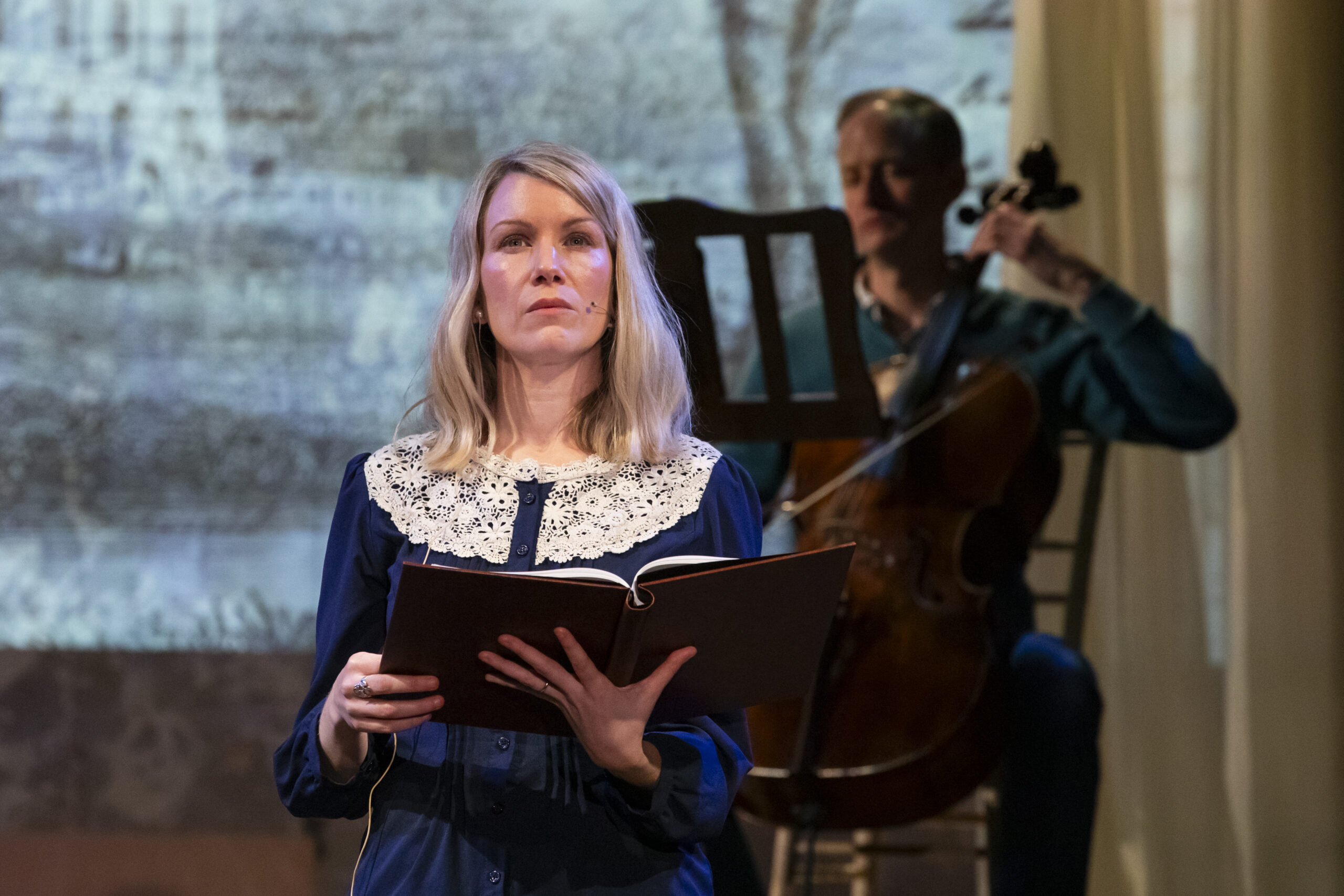
By A Lady: The Life & Wit of Jane Austen plays at Theatre by the Lake Tuesday 09 June. Tickets are available here.
Sean Sable is a Yorkshire-based freelance writer and editor specialising in Young Adult and Horror fiction, frequently at the same time. When she isn’t buried under a pile of books and manuscripts, she is looking for her keys and having extensive one-sided conversations, in Swedish, with her deaf cat. You can find her online at: www.seansable.co.uk
Trending Now

Review: To Kill a Mockingbird at Leeds Playhouse

Review: Night Collar at St Helens Theatre Royal
You may also like