“…be present—really lock in and actually listen. You shouldn’t have to pretend…”
Sam MacGregor on NHS calls, acting, and coming home to Newcastle
By Sean Sable
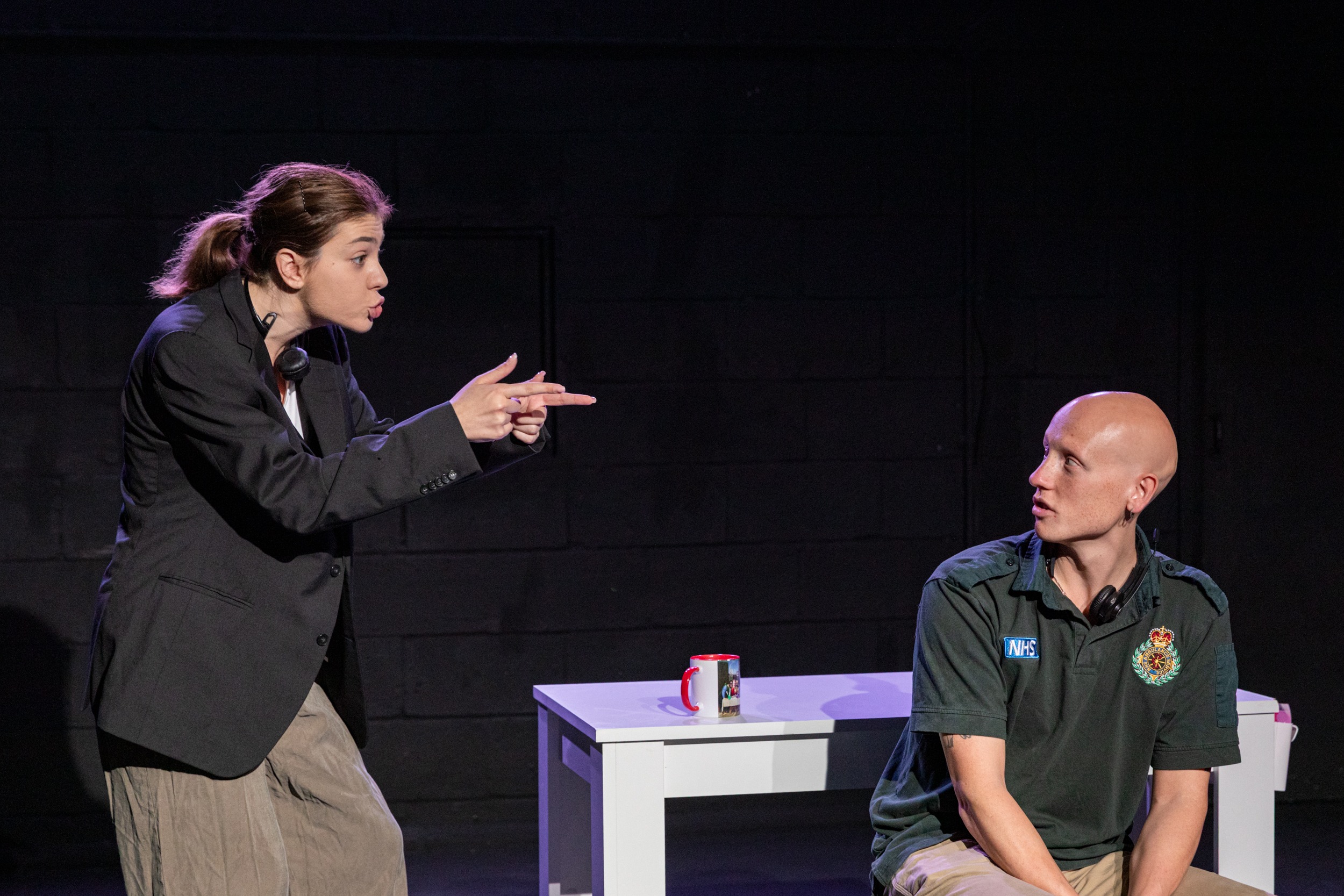
Actor-writer Sam MacGregor has spent the last six years taking calls for NHS 111 at weekends, and his second play was crafted from the inside of that experience. Hold the Line wraps its UK tour at Alphabetti Theatre in Newcastle this week and Sean Sable caught up with him to chat about staying on the call and the importance of the human touch.
Hold the Line sounds like a very intriguing premise. What can audiences at Alphabetti expect from the show?
It’s a sixty-minute pressure-cooker where the character, Gary, is having the shift from hell. Calls turn unexpectedly tragic, all whilst he is dealing with middle management and the constant pressure of taking calls. It’s drawn from some of my real experiences working within the NHS, the pressures and the number crunching. As he takes calls, we see the whole gamut of what 111 workers have to deal with: people who are worried about reasonably small concerns or just want to ring up and shout down the line at you. You never know if a call is going to be routine, a bit of a time-waste, or life and death—and you have to deal with that all inside the machinery of the NHS. In Hold the Line, these challenges are shown as Gary encounters one mistake after another, mounting up until a patient pays the consequences.
The show sounds like it’s as much about the cumulative pressure of the job as it is about any one dramatic event.
Absolutely. If you’re doing a twelve-hour shift and you’re taking call after call, and it’s really busy, the pressure builds and you feel like you have to work more. Then you might miss something because you’re tired or because you can’t focus properly. Before you know it, you’ve jotted something down wrong and there’s this snowball effect. One mistake leads to another. That kind of humanness is something that I wanted to show in the play. How hard-working people can make mistakes, even when they’re trying to help, and how people who work these kinds of frontline healthcare jobs are impacted by the calls they receive and the system they work in.
Human connection is a really important theme to explore when talking about healthcare. Have you had any moments where your own humanity has impacted your work for the NHS?
Definitely, there have been times when I’ve taken some very hard-hitting mental health calls from people like me, around my age. One particular call, the man was crying over the phone, and then I almost started crying alongside him. I had to mute myself and really focus on my breathing and ask the next question. If their voice cracks, sometimes I can feel my voice begin to do the same. My emotions come to the surface and I’m like, right—I need to keep it straight for this person. If I start to get upset, then that’s not good for the person on the phone. So that’s when it’s very challenging, because you’ve got to deal with what’s right for the patient, but then also what’s right for you.
That connection is so important in community healthcare. There’s a lot of anxiety right now about AI finding its way into these systems. Does that feed into the show at all?
Yeah, I think so, but in a roundabout way. For years, even before recent versions of AI, people already got an automated voice message, and it could take five minutes before you speak to a human. That really annoys some people, and I totally get it. It feels very detached and maybe irritating. From my perspective, I don’t think you can programme AI to empathise or sympathise with someone, and that’s key. If I relate to a person, then it encourages me to do whatever I can for them. Obviously, options might be limited, but the attention I give will be as if I were speaking to someone very personally close to me. I don’t think you can get that with anything else.
Do your acting skills ever come in handy when you’re taking a call?
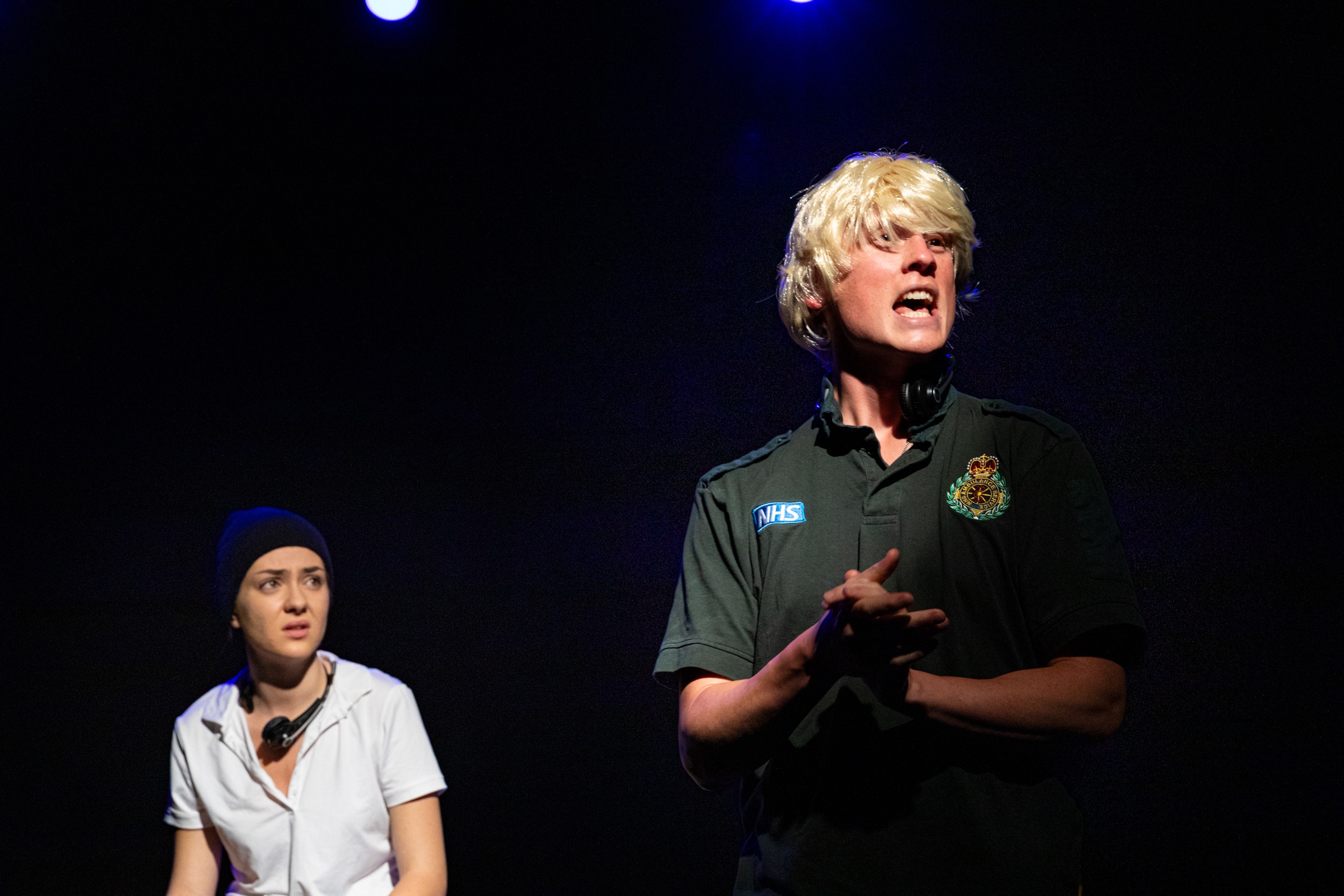
The best thing you can do if you’re on stage with someone is be present—really lock in and actually listen. You shouldn’t have to pretend. And I think that’s the same thing that applies when a patient’s speaking.
Acting also helps me know how to channel emotion at the right time and to have poise under pressure. For example, you forget a line on stage—there’s this initial moment of dread, but then another actor picks up the next line and you’re right back at it. Same with taking calls. Maybe you make a mistake or fumble something, but you sort it out and recover.
I once had a call with a really nice guy who was chatting for ages. I needed to speak with someone to help him get services, and I thought I had him on mute when I said, “I can’t get a word in edgeways.” At first, he was annoyed, obviously, but I was able to think on my feet, apologise sincerely, and get him the services he needed before they closed. When we were finished, he even told me I should get myself a pint at the end of my shift. So yeah, that quick-thinking crossover has been helpful.
The stories in the play came from real calls. How did you navigate the ethics of that?
It’s difficult, but we use fake names, fake addresses and heightened scenarios. That takes care of a lot of the ethical and confidentiality concerns. A bit like watching Casualty, you know they are pulling from real scenarios, but they’re dramatised. You don’t watch Casualty and get upset because something similar happened to you.
For example, the main call at the end is a blend of two calls. The dialogue came from a high-stakes mental health call I took, and the scenario came from a different high-stakes call my co-workers took around the same time. So, I thought: right, that could be the final beat.
One of the bigger challenges I experienced with pulling inspiration from real life was when trying to find funding. We reached out to a charity, and they asked for some changes. They wanted to be very involved in the scriptwriting process. I was happy to make some minor changes—like removing one of my jokes about the location Gary works in—and tried to explain how I had anonymised the scenarios, but they were still keen to be more involved than I was comfortable with. So, we parted on friendly terms.
Newcastle is the final stop on the tour. Why end here?
Well, I’m from Newcastle, so of course I’ve always wanted to do a show at Alphabetti. Who doesn’t? It won Fringe Theatre of the Year at The Stage Awards in 2023. And until now, I’ve never had the opportunity to act there. It’s just really exciting to be in a theatre where I’ve seen so many great shows. The tour starts in London and then stops in Nottingham—so it just makes sense to bring it home to Newcastle.
Alphabetti are helping to fund an accessible performance. Is that something you’ve been wanting to do for a while?
I’ve always wanted to integrate accessible shows. I work at the Pleasance Theatre in London, and I’ve seen all these productions with live BSL interpretation on stage or captioning and really enjoyed them.
Similarly, the last two times I saw a show at Live Theatre in Newcastle, both productions had a character on stage signing the whole time. I’ve always wanted to do the same because it opens the door for more people. But as a small production, there’s always the financial element. I may want to do it, but can I afford to? No—and that sucks.
But with Alphabetti, they’re paying for a one-night accessible performance and helping us integrate it. Massive thumbs-up to them because, at Fringe level, funding is already so tight that theatres stepping in makes all the difference.
What’s next after Newcastle?
I want to go to Edinburgh Fringe, but this time as just an actor. I don’t want to be critiqued on my writing and my ability to produce something. All I’d have to worry about is doing the show, and everything else is someone else’s problem. That’s what I’d like to do this summer. I’m currently auditioning and hoping to find a place in a show soon.
I’m also working through some ideas for non-autobiographical plays—trying something different. So, I have been cultivating two very different ideas. One looks at the similarities between COVID and the Black Death. I’m reading a book at the minute about a specific village in Sussex, and I’m going to try and create something from that. The other idea looks at how children’s TV celebrities pigeonhole performers—like Richard Bacon getting cancelled for Blue Peter. But right now, both ideas are still in the development stage.
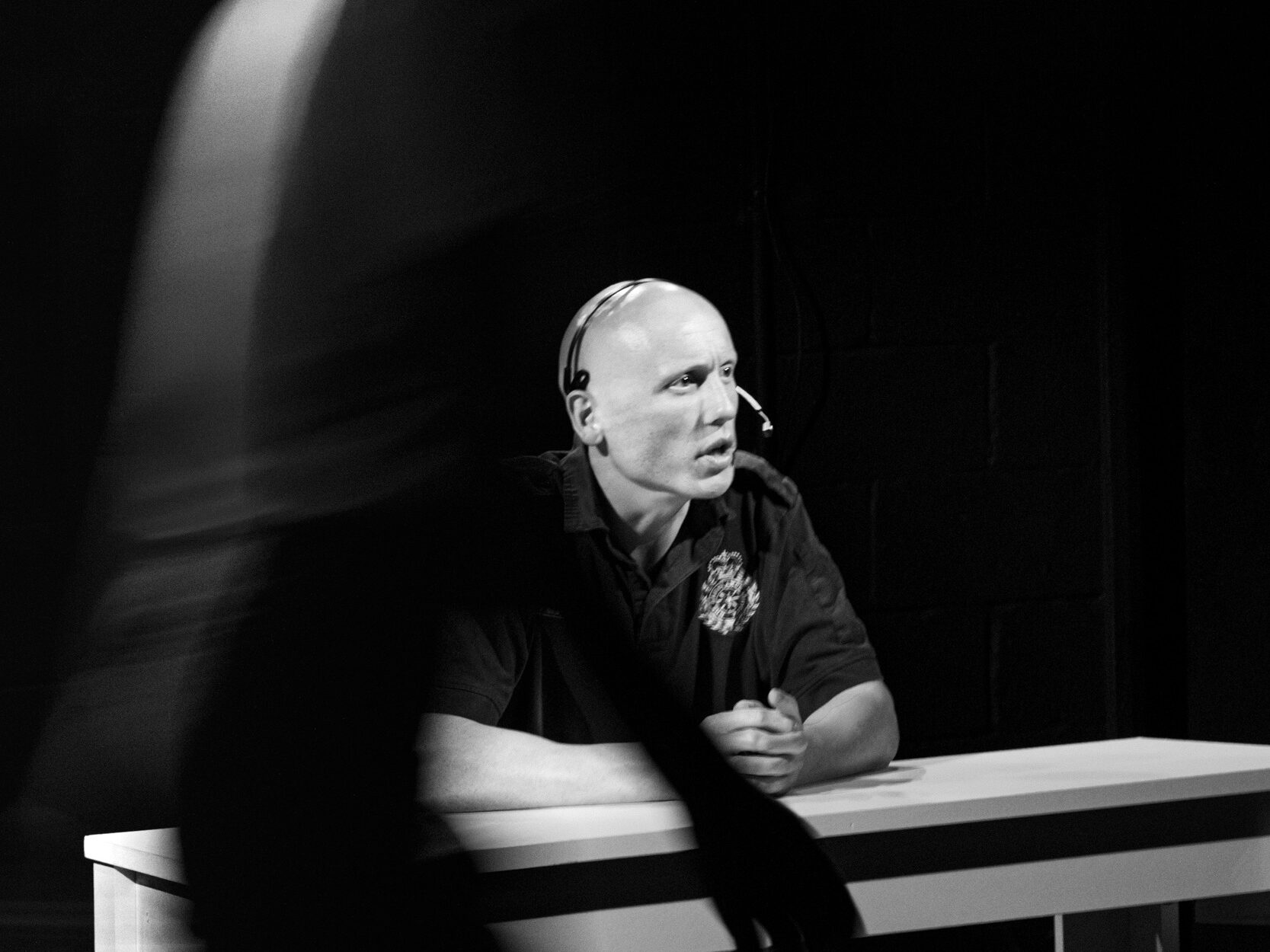
Hold The Line plays at Alphabetti Theatre Wednesday 29th April – Saturday 2nd May 2026. Tickets are available here.
Sean Sable is a Yorkshire-based freelance writer and editor specialising in Young Adult and Horror fiction, frequently at the same time. When she isn’t buried under a pile of books and manuscripts, she is looking for her keys and having extensive one-sided conversations, in Swedish, with her deaf cat. You can find her online at: www.seansable.co.uk
Trending Now

Review: To Kill a Mockingbird at Leeds Playhouse

Review: Night Collar at St Helens Theatre Royal
You may also like