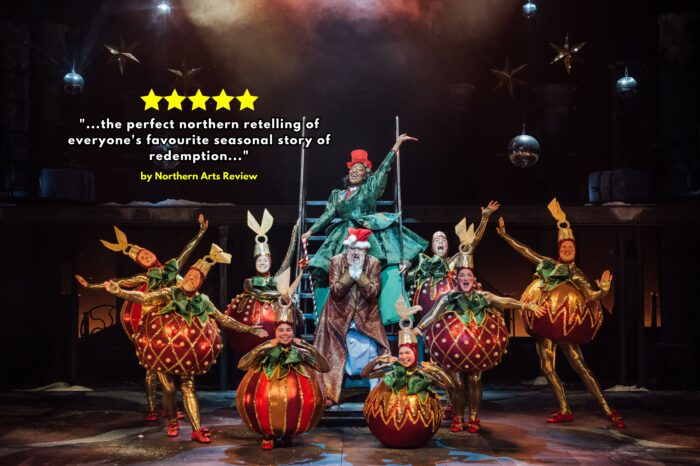
“..You can’t watch this with disinterest – the story demands your engagement…”

A Doll’s House by Henrik Ibsen, Theatre by the Lake
By Ken Powell
Taking on an Ibsen play is no easy task. That the Keswick Theatre Club decided to do so, is commendable, all the more so when their director Jocelyn Pye decided to retranslate the play (written in Norwegian and Danish when originally performed in 1879). The depths of both themes and characterisations are surely too much to ask of a local theatre group though, are they not?
It would appear not. The cast of eight, supported by five younger performers playing the roles of children and the ‘letterbox’, gave a superb performance that had me and my plus one animatedly discussing the intricacies all the way home. Those discussions would not have happened had the actors made a hash of it.
Ibsen’s story drops us into the climactic three days surrounding Christmas at the Helmers’ apartment just as it looks like their financial struggles are over. But the past is looming and its secrets threaten to break this ‘perfect’ relationship apart. The play was controversial back in 1879 with its themes about coercion, female emancipation and the human ability to change. The play remains deeply troubling and relevant now, even though the rights of women have changed immensely over the last 150 years.
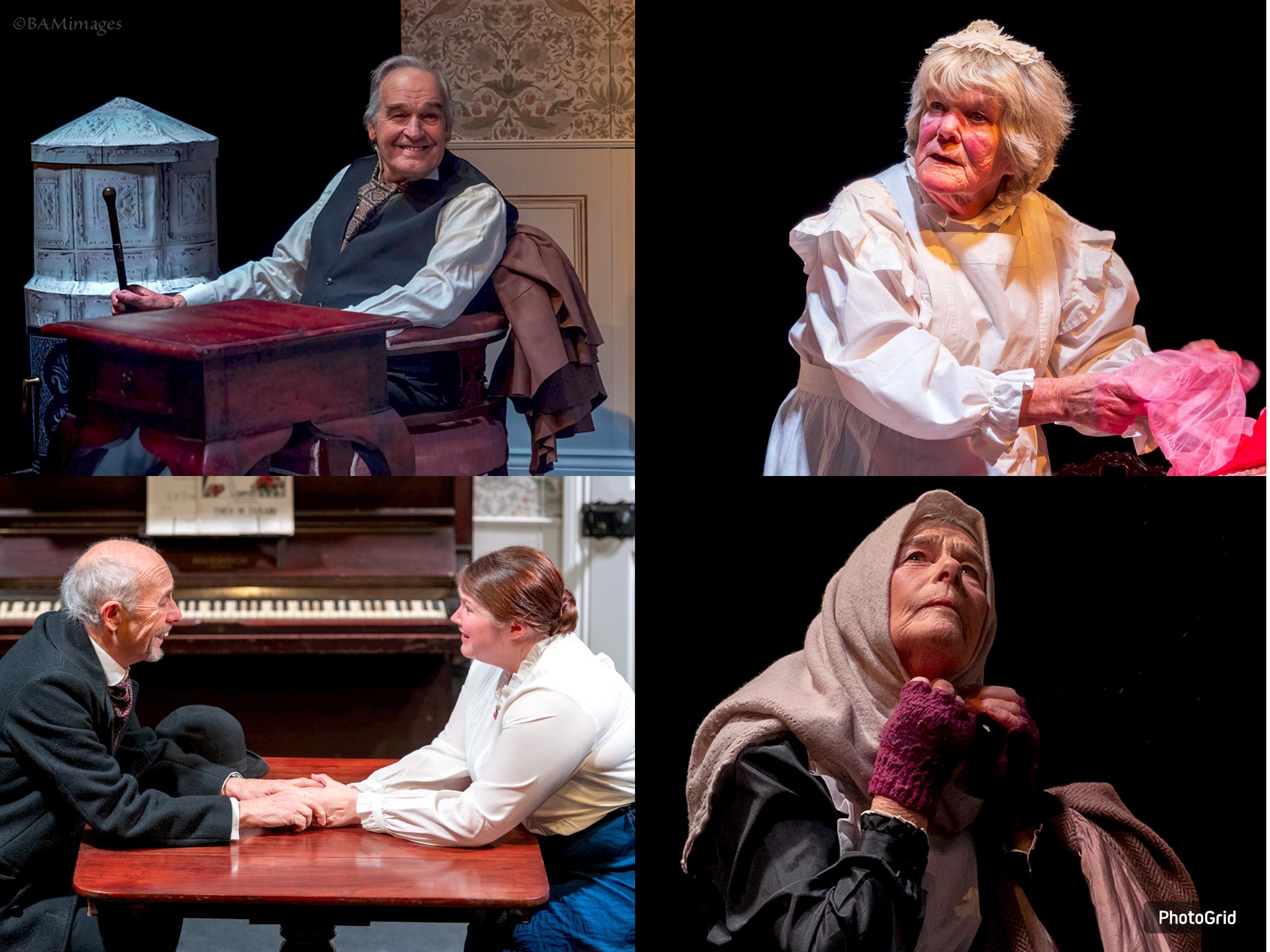
Our main focus is on the couple and Paul Davies, playing Torvald, and Fleur Wady, playing Nora, both present the failings and weaknesses of the two with exceptional skill. Davies manages to make ‘kindness’ border on evil as he treats Nora like a child and imposes harsh rules that are meant to protect but actually entrap his wife. Wady takes us on a journey as Nora grows out of her pompous innocence and realises how she’s been played ‘just like a doll’. Her portrayal is traumatic and emotionally exhausting and Fleur Wady seemed visibly shaken at the curtain call.
In many ways there are no ‘good’ characters here and there are no ‘bad’ ones either and this is one of the aspects that makes the play so complex. We can’t cheer for the hero and boo the villain. If there’s a single word to describe most characters it is ‘ignorance’. Nora and Torvald – the married couple – are ignorant of each other and themselves. Dr Rank, the family friend, is ignorant of his own health and the impact he has on the couple. Krogstad, the schemer, and Christine, the old friend of Nora’s are ignorant of the impact they have on each other. All we can do is cheer on the change that we see is capable even from characters we may have written off in our minds. By the end of this play they are all very different.
You come away from this production questioning the nature of relationships, choices in life and where control lies between people. While Pye re-translated the work to give us more natural language than previous versions, the setting is still firmly nineteenth century and the nature of coercion is couched in the fineries of that culture. What would a modernised version look like today?
Would Torvald be more physically aggressive? His invasion of Nora’s space is disquieting at times. Would this work as a lesbian couple? It is questionable if this is about subjugation of women or the nature of controlling behaviour in general. Would the ending(s) be the same in a modern setting? There’s the hint of hope at the end and certainly of redemption but is the ending still too harsh even for an audience much more used to women’s rights and the nature of domestic abuse. It is questions like these that make the play so compelling to watch.
At a time of year when others are putting on pantomimes and child-friendly frilly entertainments, the Keswick Theatre Club has bravely taken a different direction and it is refreshing to say the least. A Doll’s House makes as many demands from its audience as it does the actors themselves. You can’t watch this with disinterest – the story demands your engagement. It’s uncomfortable viewing that challenges you about how people engage with each other – both then and now. You come away suspecting, like Nora, that your eyes have been opened and that the work to really understand the truth has only just begun.

A Doll’s House plays at Theatre by the Lake until Saturday 29 November. Tickets are available here.
Ken Powell is chief editor for Northern Arts Review and is also a bestselling author and writer for various publications around the world. A former school teacher, he continues to write educational books along with fiction and travelogues. You can find all his books and various websites here including his popular TEDx talk about the Global Village. He lives with his family in a wonderfully isolated village in West Cumbria where he enjoys drinking tea, chatting with the birds and winding up his dog. You can support his work (or just buy him a coffee) here.
Trending Now

Review: To Kill a Mockingbird at Leeds Playhouse

Review: Night Collar at St Helens Theatre Royal
You may also like