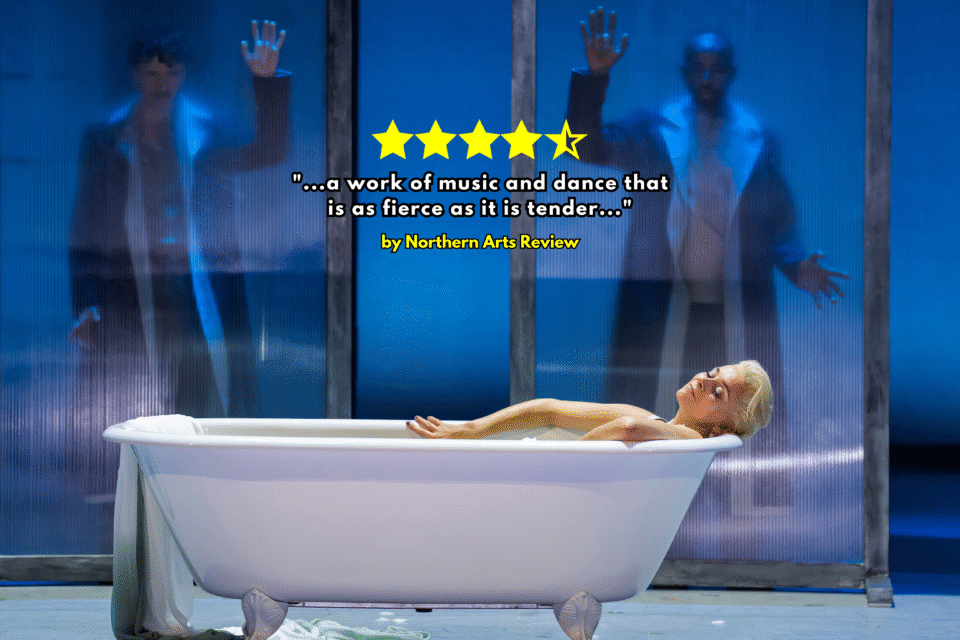
“…a work of music and dance that is as fierce as it is tender…”

Susanna by George Frideric Handel, Leeds Grand Theatre
By Sean Sable
Some evenings at the theatre unfold like casting a spell. They take their time, they gather their ingredients, and it isn’t until they have had time to steep together that they become fully potent. Susanna, performed by Opera North in collaboration with Phoenix Dance Theatre, is one of those evenings. It is a production that begins in restraint and ends in something close to transcendence. Handel’s oratorio may have been written in 1748, but last evening’s performance at the Leeds Grand Theatre felt startlingly alive: a meditation on injustice, power, and truth with a distinctly modern heartbeat.
The oratorio draws from the story of Susanna and the Elders. An account taken from the apocrypha, it is a tale of false accusation and moral courage. Susanna, a faithful new bride whose husband has been called away, is accused of adultery by two corrupt elders after refusing their advances. She faces public condemnation until the young Daniel (here reimagined as a non-binary figure) demands justice. It’s a story that could easily feel remote, but this production brings the moral drama to life and makes it bristle with tension. The audience is asked to wrestle with themes of authority, exploitation, the weight of accusation, and the complicity of community. In the end, we are left with an examination of the power of a woman’s voice, both literal and symbolic.
Opera North has long been known for its emotionally resonant performances, and I was immediately drawn in by the sensitivity and honesty of the central relationship. Anna Dennis’s Susanna and James Hall’s Joacim felt like a real couple, not just two soloists who happen to be sharing arias. Anna Dennis’s Susanna is the beating heart of the story, and her voice carries a kind of richness and unshakable conviction that brings every phrase to life. Opposite her, James Hall’s Joacim gave one of the most moving countertenor performances I’ve heard. His singing had a kind of spiritual luminosity that complemented not only the source material but brought with it a sense of tenderness and love for Susanna that felt heartbreaking. His voice was not only delicate but clear and sure. When he hears of Susanna’s troubles, we feel for him as he wrestles with his fear and guilt. And when they were finally reunited, their harmony perfectly represented both devotion and relief. It was one of those moments where everything—voices, orchestra, and movement—aligned perfectly.
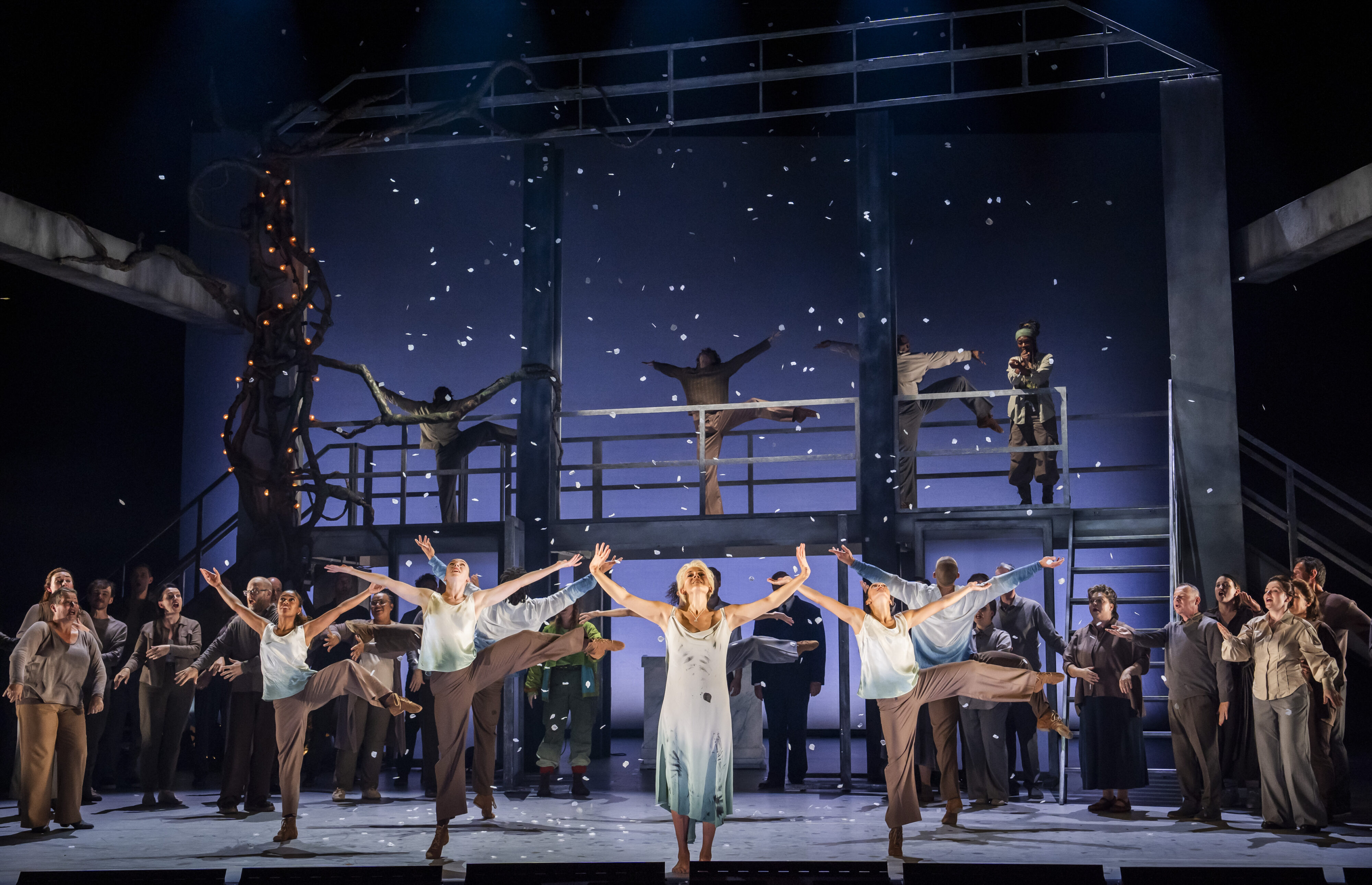
The Chorus of Opera North deserves its own praise. Notwithstanding the technical demands of Handel, they moved as much as they sang. Swarming, surrounding, accusing, celebrating: their presence never felt passive. In one remarkable passage, they pressed in around Joacim like a living tide of grief. It was a breathtaking moment that felt almost sculptural in its intensity.
Johanna Soller conducted the Orchestra of Opera North with a sensitive, responsive touch that made the music feel alive. Handel’s score can so easily become esoteric and ornate, but last night it felt supple and human. It’s easy to take fine orchestration for granted, but when every section feels perfectly balanced, you realise how rare it is when everything simply fits.
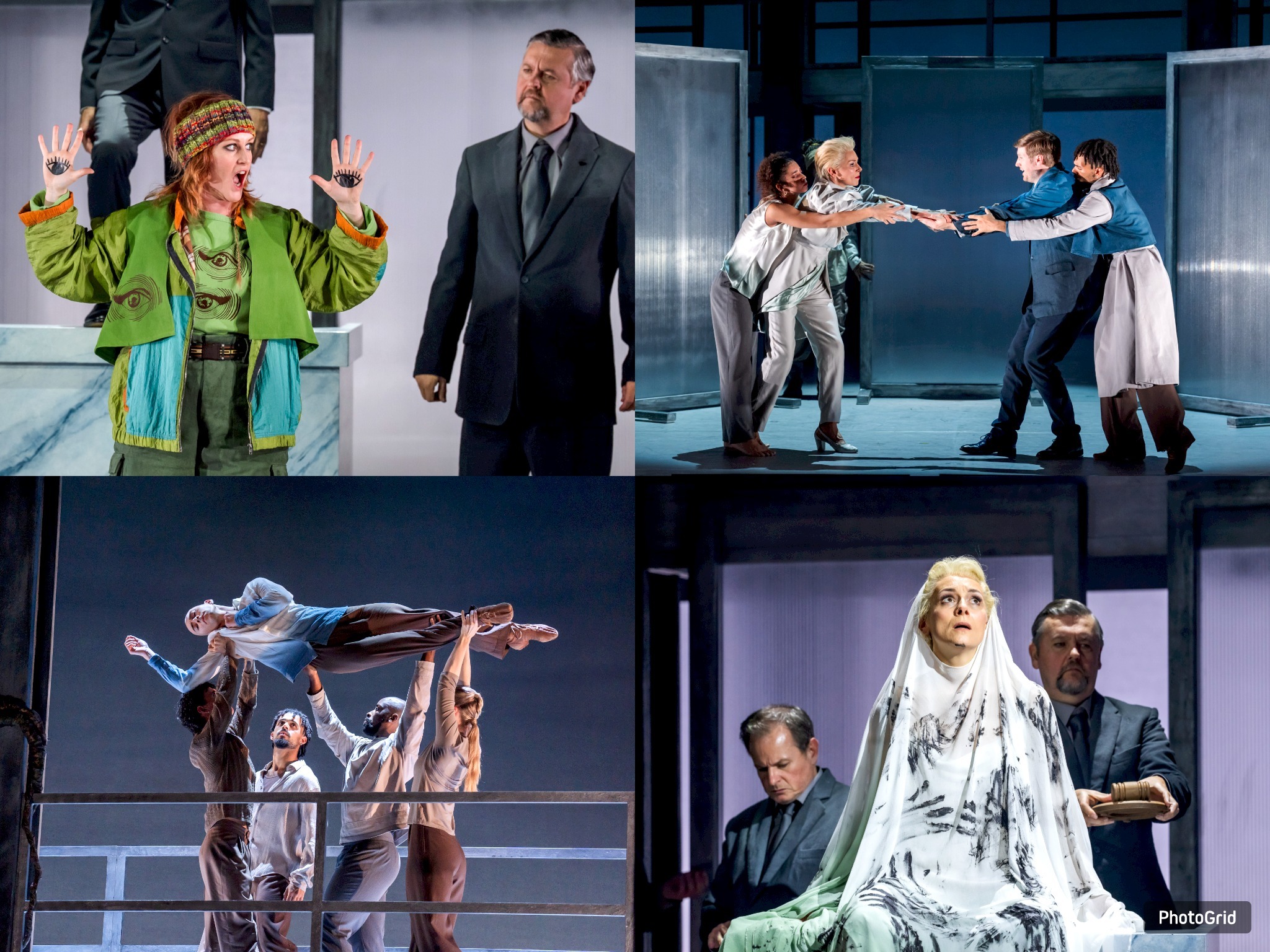
Opera isn’t often known for its gentle physicality, but the inclusion of contemporary dance allowed the audience to experience an emotional range that transcended the usual constraints of the form. The collaboration with Phoenix Dance Theatre added a genuinely fascinating layer of physical vocabulary. When Joacim must say goodbye, he and Susanna embrace, their paired dancers completing the gesture, encircling them in a kind of kinetic echo that embodied protection and longing.
Visually, the production left me feeling divided. Zahra Mansouri’s set (an industrial scaffold structure adorned with a twisting organic form) felt detached from the emotional landscape of the narrative. The corrugated plastic panels used to reshape the space seemed to sculpt without purpose and on more than one occasion, I wasn’t sure where we were meant to be. Yet, at times the screens were used to brilliant effect. In the assault scene, they became instruments of terror as the sound of the Elders scratching across the surface left me feeling viscerally uneasy. In the end, I truly admired the risk even if I didn’t always love the result.
The costumes shared a similar tension. The muted palette was beautifully considered—a genuine study in tone and light that allowed Jake Wiltshire’s dramatic lighting design to transform the stage’s mood. Yet, the overall effect felt odd, as though every character occupied the same moral and aesthetic space. I could see the intention. The “business dress code” aesthetic offered a kind of bureaucratic greyness that blurs good and evil. And it was particularly effective to see the way the elders were portrayed as a kind of lecherous everyman in their ill-fitting suits and carrying their clunky briefcases. But part of me wanted Joacim’s attire, at least, to break free. He is, after all, our constant lover, and it felt a shame that his costume didn’t carry that radiance Hall’s performance so clearly conveyed. Maybe I am too literal, but I want my handsome young groom to feel dashing, not dashed.
Olivia Fuchs’s direction fearlessly leaned into the story’s contradictions. Susanna can be a difficult work for modern audiences (myself included); its moralising language about chastity makes for uneasy bedfellows with gendered violence. But Fuchs and her team managed to find the truth in the tension. By placing Susanna’s defiance at the centre of the piece, the production reclaims the narrative from Judeo-Christian moral instruction and restores it to human experience, better serving both modern audiences and honouring its Hellenistic roots.
As I left the theatre, I found myself thinking less about the didactic tradition and more about how powerfully it speaks to now. In a post-#MeToo world, it’s important to reflect on what it means to be believed, to be vindicated, and to fight to reclaim the narrative after degradation. Opera North and Phoenix Dance Theatre have crafted a work of music and dance that is as fierce as it is tender—an excellent reminder that old stories can still tell us new truths when performed with courage.
Susanna plays at Leeds Grand Theatre until Wednesday 22 October 2025. Tickets are available here.
Sean Sable is a Yorkshire-based freelance writer and editor specialising in Young Adult and Horror fiction, frequently at the same time. When she isn’t buried under a pile of books and manuscripts, she is looking for her keys and having extensive one-sided conversations, in Swedish, with her deaf cat. You can find her online at: www.seansable.co.uk
Trending Now
Review: A Christmas Carol at Leeds Playhouse
You may also like