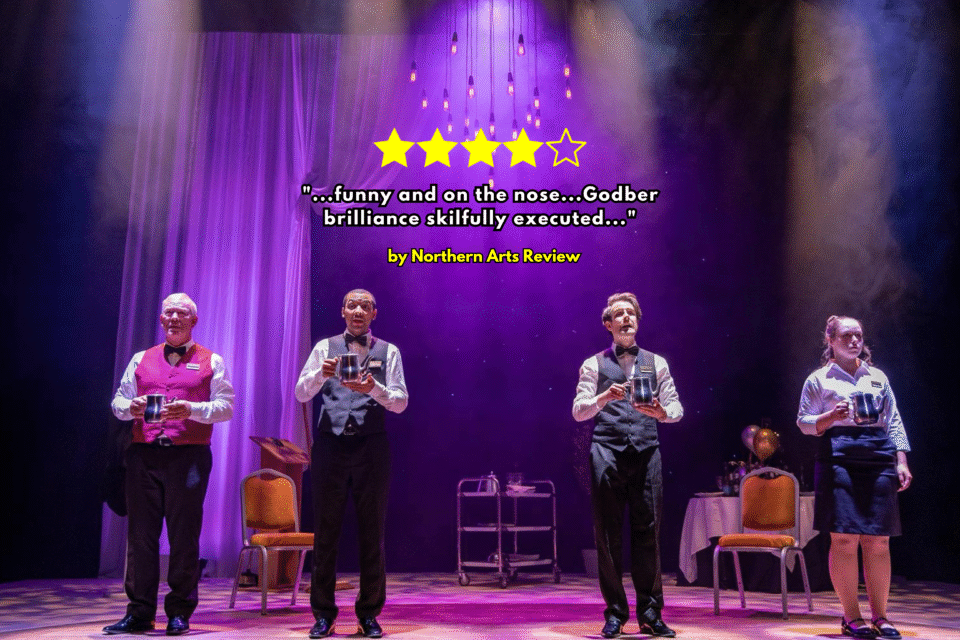
“…funny and on the nose…Godber brilliance skilfully executed…”

Black Tie Ball by John Godber, Cast Doncaster
By Grace Sansom
Lovable, Northern, damning critique of class and country… Godber’s latest play delivers as expected.
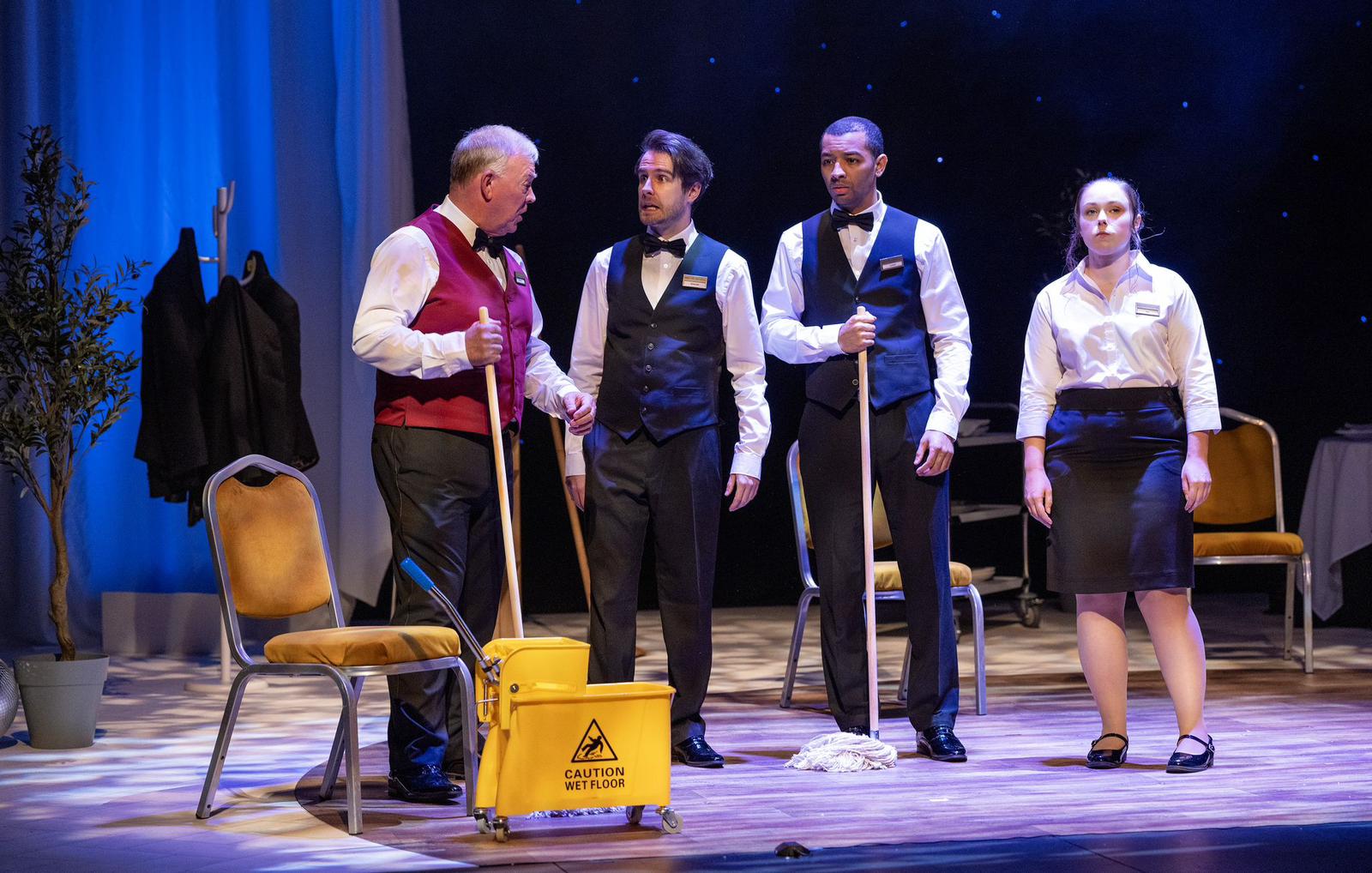
Set at the only five-star hotel for miles, the Godber-esque band of four actors play stressed, overworked and constantly confused relief staff: ex-miner and hospitality veteran Ronnie (William Ilkley), 32-year-old student Duncan (Dylan Alcock), aspiring drum-and-bass DJ and caterer Lewis (Levi Payne), and single mother and pub singer Joy (Jade Farnill). The quartet are called in to solve the hotel’s overbooking crisis: a wedding, a prom, a literary meeting, a coach trip, abandoned Dutch tourists and hotel owner John Graham’s flashy fundraising gala.
The multi-roling is funny and on the nose, the dialogue is slick, local mentions are charming, and the setting creates a microcosm, representing our country at large. We have all the tellings of Godber brilliance skilfully executed.
The hotel, an ex-stately home steeped in history and cultural heritage, is now owned by self-made, ‘Boomer’ new money who has no clue of the trials and turmoil of the working-class staff powering his ventures. The relief staff are out of their depth – in life and in this hospitality nightmare – and the underdogs repeatedly turn on each other instead of those above, who have put them in this mess. That is until a beautiful and bitter conclusion scene in the final act.
The Duncan vs Ronnie dynamic stands out as the most stellar acting of the two-hour piece. Dylan Allcock’s portrayal of Duncan is radiant, shining unlikable light in all the right places. Duncan is a PhD student, working in the hotel for the ‘time-and-a-half pay’ so that he can make his rent. He spends most of his time working, to afford his rent, and not doing his PhD at all. The art departments in universities are closing, and he didn’t get his grant. In actuality, he represents the working-to-middle-class millennial who has been repeatedly failed by the government. To Ronnie, he represents entitlement, doing everything he wishes he could.
Despite his (very) rough exterior, Ronnie wishes he had the opportunity to pursue his passions in the arts, but instead has had to keep working hard, low-paying jobs to keep things afloat. He lost everything after protesting at Orgreave and the mines closed. His rat-a-tat banter with Duncan is funny, wry, and keeps the play humorously afloat, but their opposing natures represent something much deeper: two Yorkshire generations that have been let down in similar ways (lack of jobs, funding and development) but have only come to resent each other.
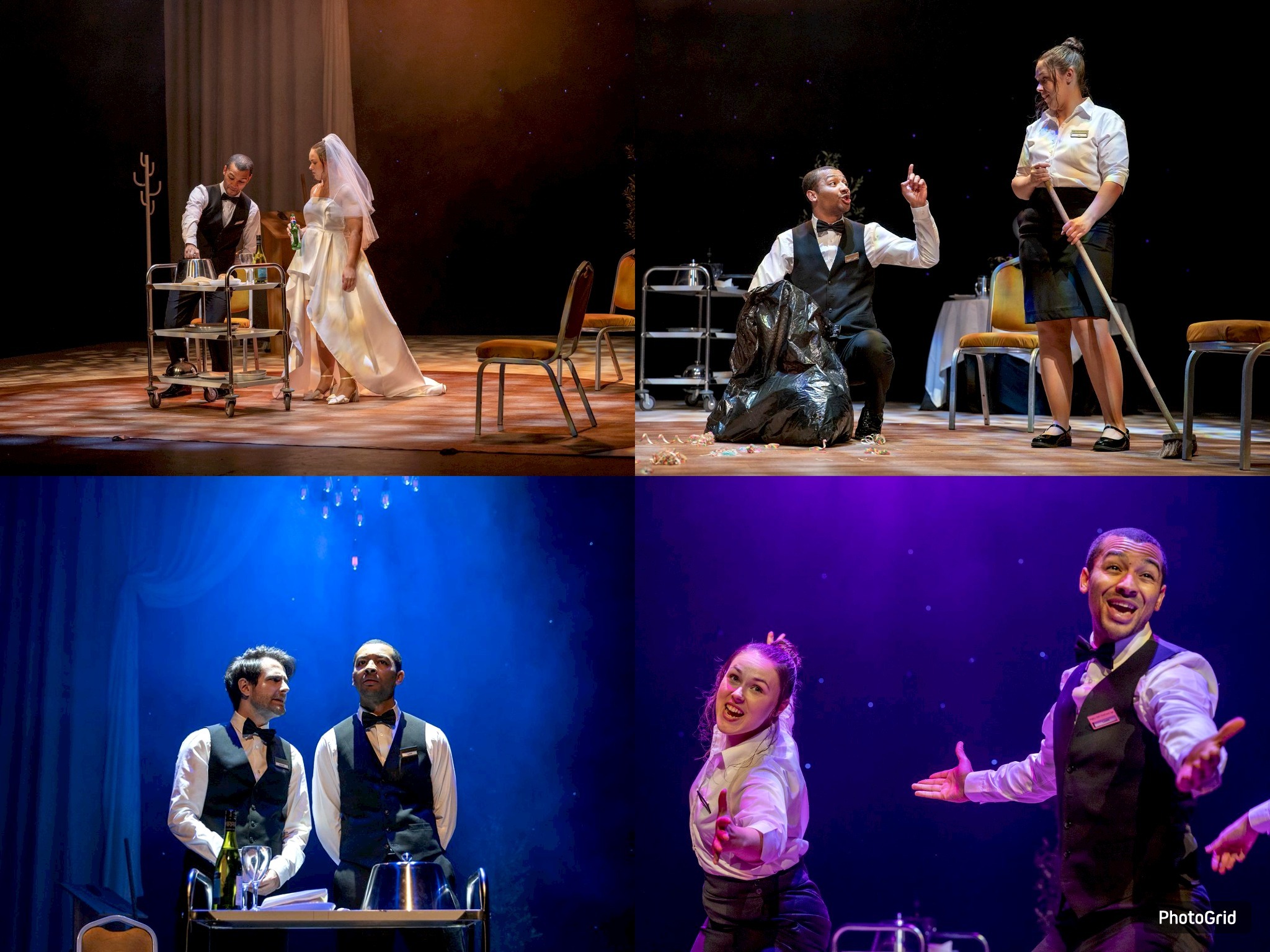
The set and costumes could cleverly be from the 1980s, just as much the 2020’s (without the references to Covid and WhatsApp, it would be hard to distinguish the decade) and this is Godber’s symbolism: informing us that we’re still stuck in stagnant economic turmoil and entrenched class warfare that are driving the North apart – in the wrong direction.
The piece’s only fault is the too chaotic a premise. The hotel, fancy guest and disenchanted staff imbalance works well, but there are too many functions on at once, causing the staff’s long rambles to suspend the audience’s disbelief. If they are so stressed and have so much to do, how do they have so much time to chat! Hospitality staff are under so much pressure and don’t underperform, especially if their livelihood depends on their nightly pay. The standing around can be frustrating, and the brilliance of their dialogue can be lost, washed away by messy logistics and circumstance. The 5-plus functions dilute the brilliance of Black Tie Ball. The point of the play would be stronger with just Graham’s fundraiser causing chaos and awakening the sense of injustice in our four heroes.
Nevertheless, the four heroes acted with punch and brought Godber’s message starkly alive. Black Tie Ball is a successful production that will be relished on its Northern tour. I hope it gets down South too.
Black Tie Ball plays at Cast Doncaster until Saturday 20 September. Tickets are available here.
Grace Sansom is a freelance theatre critic and arts and cultural journalist based in Doncaster, covering productions in Doncaster, Sheffield, Leeds and York. She has been reviewing theatre for 7 years, published locally and nationally, for digital and in print publications. In 2023, Grace won a place on the prestigious Edinburgh Fringe Society’s Emerging Critic Scheme, reviewing and commentating for The Herald. Grace has worked in arts marketing and communications for 5 years, now working in Digital Content for the Booker Prizes. Grace also runs the Doncaster Creatives’ Book Club, writing and publishing book content on their popular Substack. You can find Grace on Instagram.
Trending Now
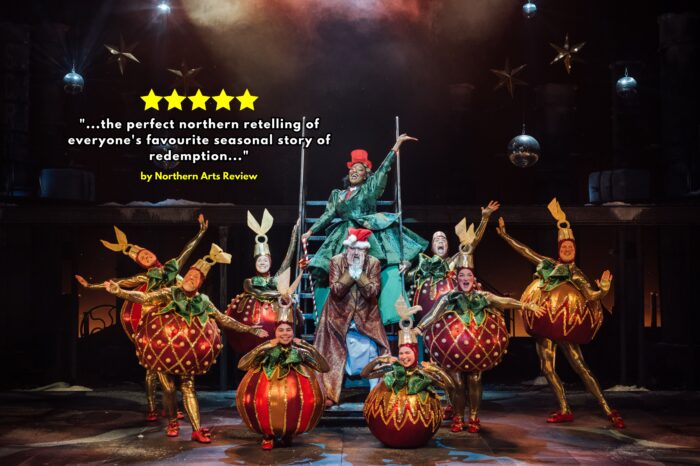
Review: A Christmas Carol at Leeds Playhouse
You may also like