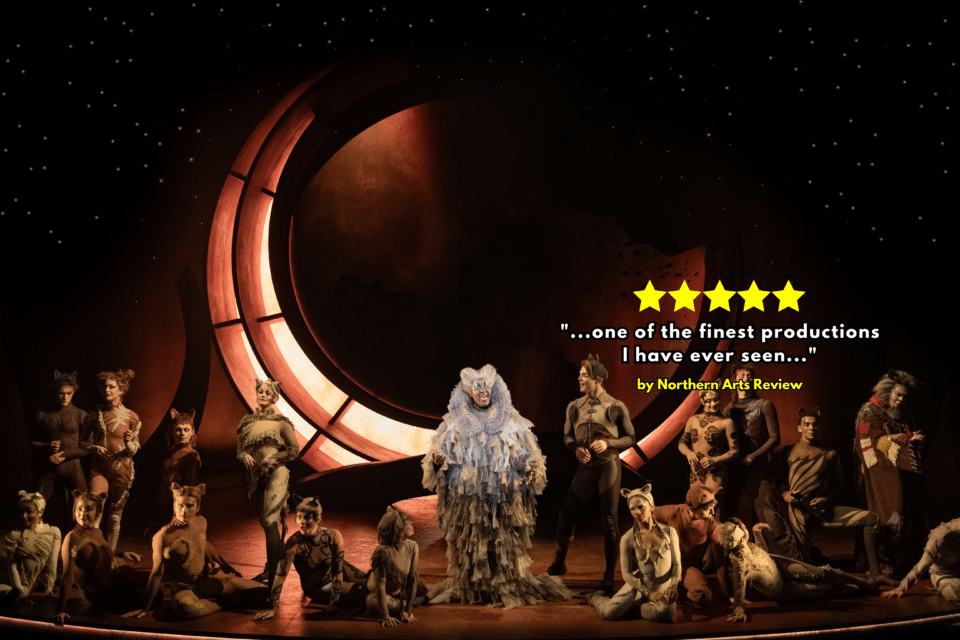
“…one of the finest productions I have ever seen…”
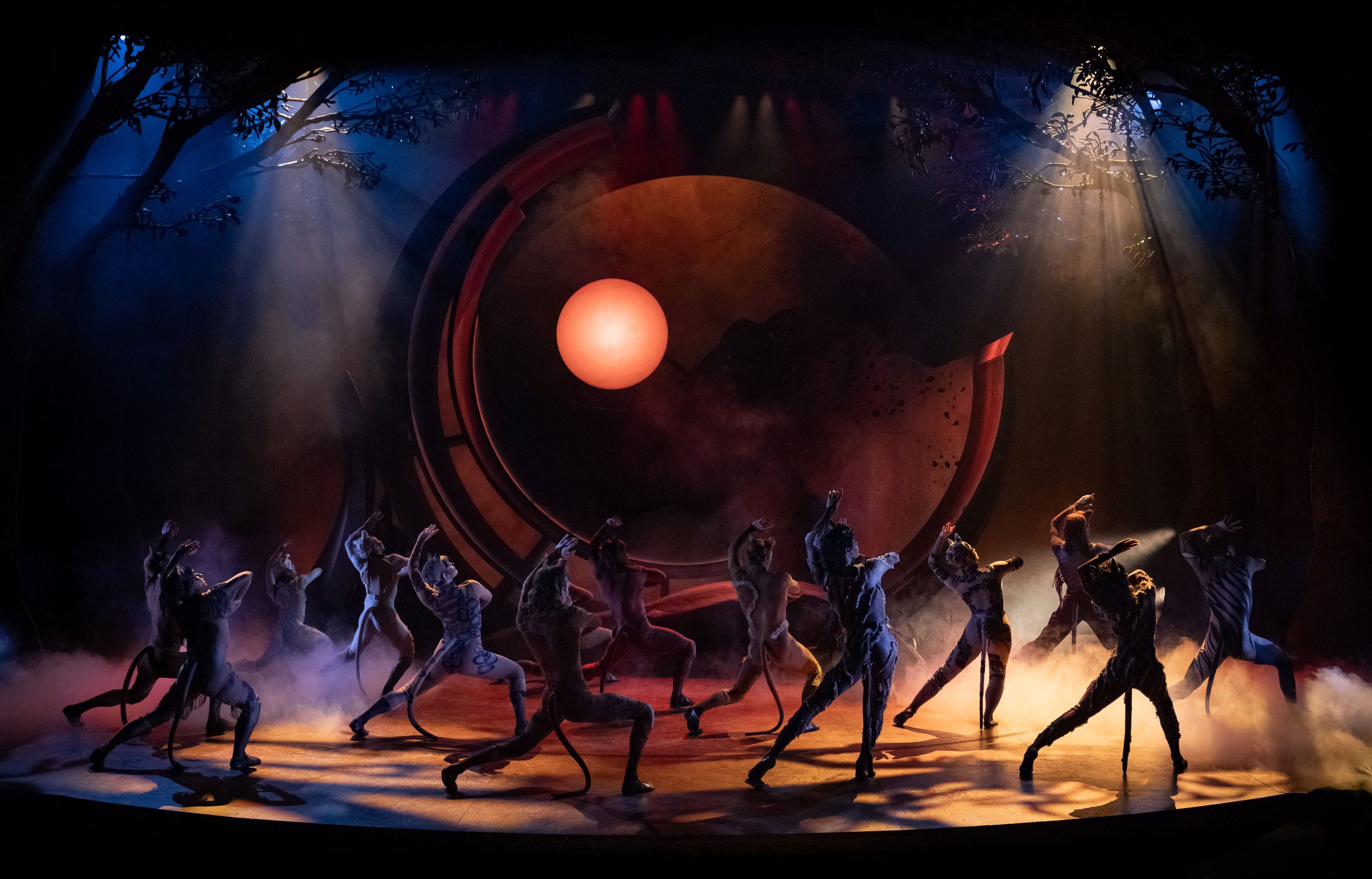
CATS by T. S. Eliot adapted by Andrew Lloyd Webber, Palace Theatre, Manchester
By Christopher Balmer
For more than four decades, Cats has occupied a strange, stubborn corner of British theatre. Revered by millions and ruthlessly mocked by cynics, Andrew Lloyd Webber’s feline oddity long ago slipped past the boundary of standard musical theatre to become an immovable cultural fixture. Reviving it is always a headache; bringing it back in 2026 without looking like an expensive pantomime, especially after that uncanny valley cinematic misfire, is a genuine gamble.
Rather than encasing Trevor Nunn and Gillian Lynne’s 1981 production in theatrical amber, Drew McOnie has taken an axe to the familiar formula. His complete reimagining understands what long-running commercial juggernauts frequently forget: if a show is to survive, it must evolve rather than simply repeat itself.
Produced by Regent’s Park Open Air Theatre and Michael Harrison for Lloyd Webber Harrison Musicals, the production rolls into Oxford Street carrying London acclaim while carving out a sharp identity of its own. T.S. Eliot’s Old Possum’s Book of Practical Cats provides the bones, and plot remains an afterthought. Instead, we get the usual loose revue of Jellicle introductions, sizing each other up before Old Deuteronomy picks one soul for the Heaviside Layer. It remains as structurally paper-thin as ever, yet here, the sheer visual momentum carries it through.
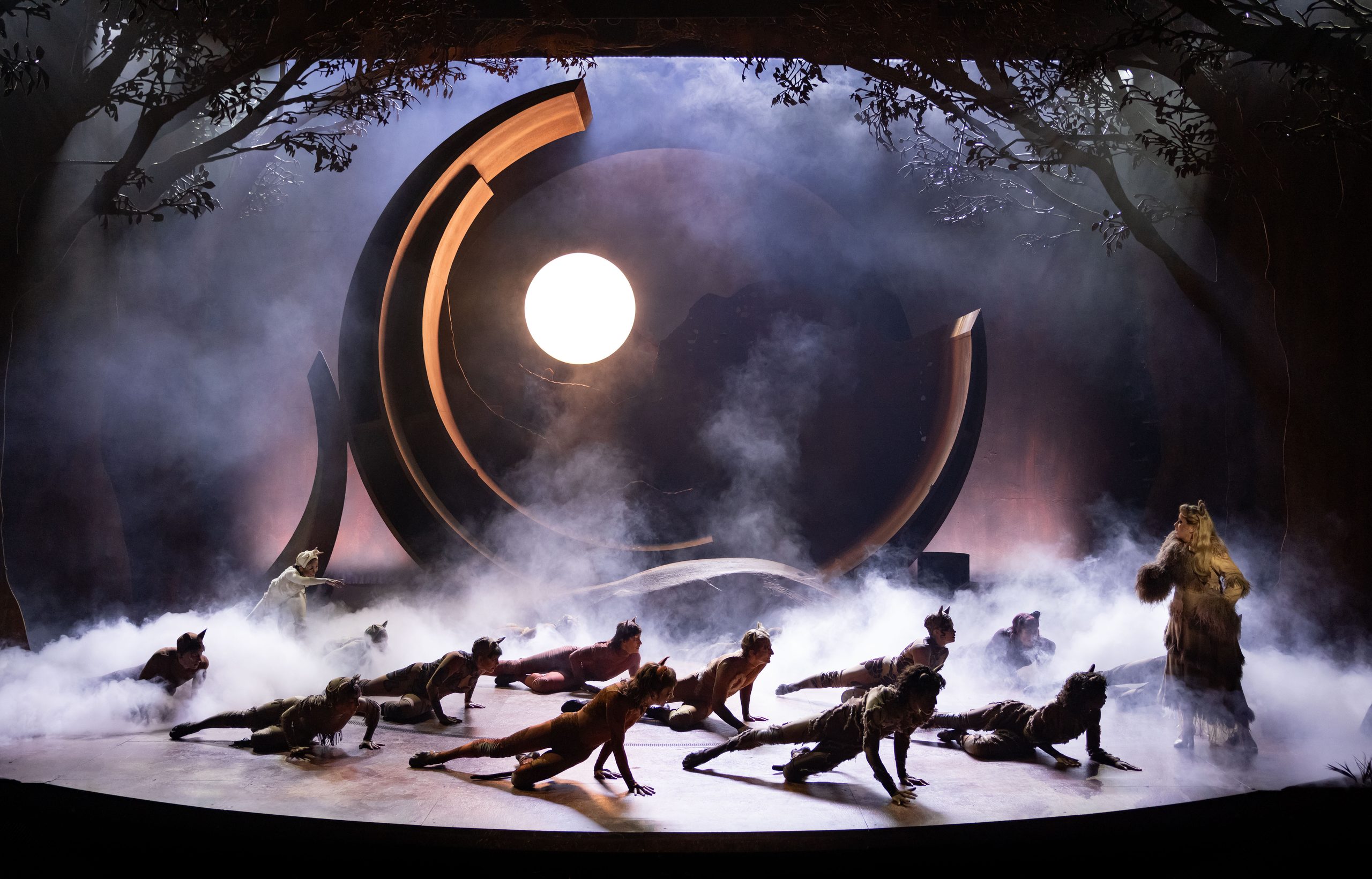
Where McOnie really shifts gears is in the staging’s geography. The fantastical, oversized junkyard is gone, replaced by a nocturnal London of strays and outsiders congregating beneath a hazy metropolitan skyline. It grounds the eccentricities of the piece, turning what could be camp anthropomorphism into a cohesive, territorial subculture.
Sami Fendall’s design makes a clean break from John Napier’s historic rubbish tip. Long before a single note is sung, the production announces its intentions. Great trees arch across the proscenium beneath a glowing amber moon while a veil of haze drifts through the auditorium, creating the feeling that the audience have wandered into the Jellicles’ territory rather than simply taken their seats. What first appears to be a stunning static stage picture gradually reveals itself to be a remarkably versatile playing space, complete with hidden levels concealed within the vast circular structure at its centre. The phases of the moon become a storytelling device in their own right, dictating the emotional palette of scene after scene and proving particularly effective during Memory. Without doubt, it is the finest set I have ever seen with the tabs still closed.
Dance remains the engine of the piece, but McOnie strips away the balletic preening and jazz-hand excess. His choreography is grounded, muscular and steeped in street dynamics, using moments of predatory stillness and explosive bursts of movement to establish status within the pack. Remarkably, the cast maintain exceptional vocal clarity despite the relentless physical demands placed upon them. The stamina, discipline and focus on display throughout the evening are genuinely impressive.
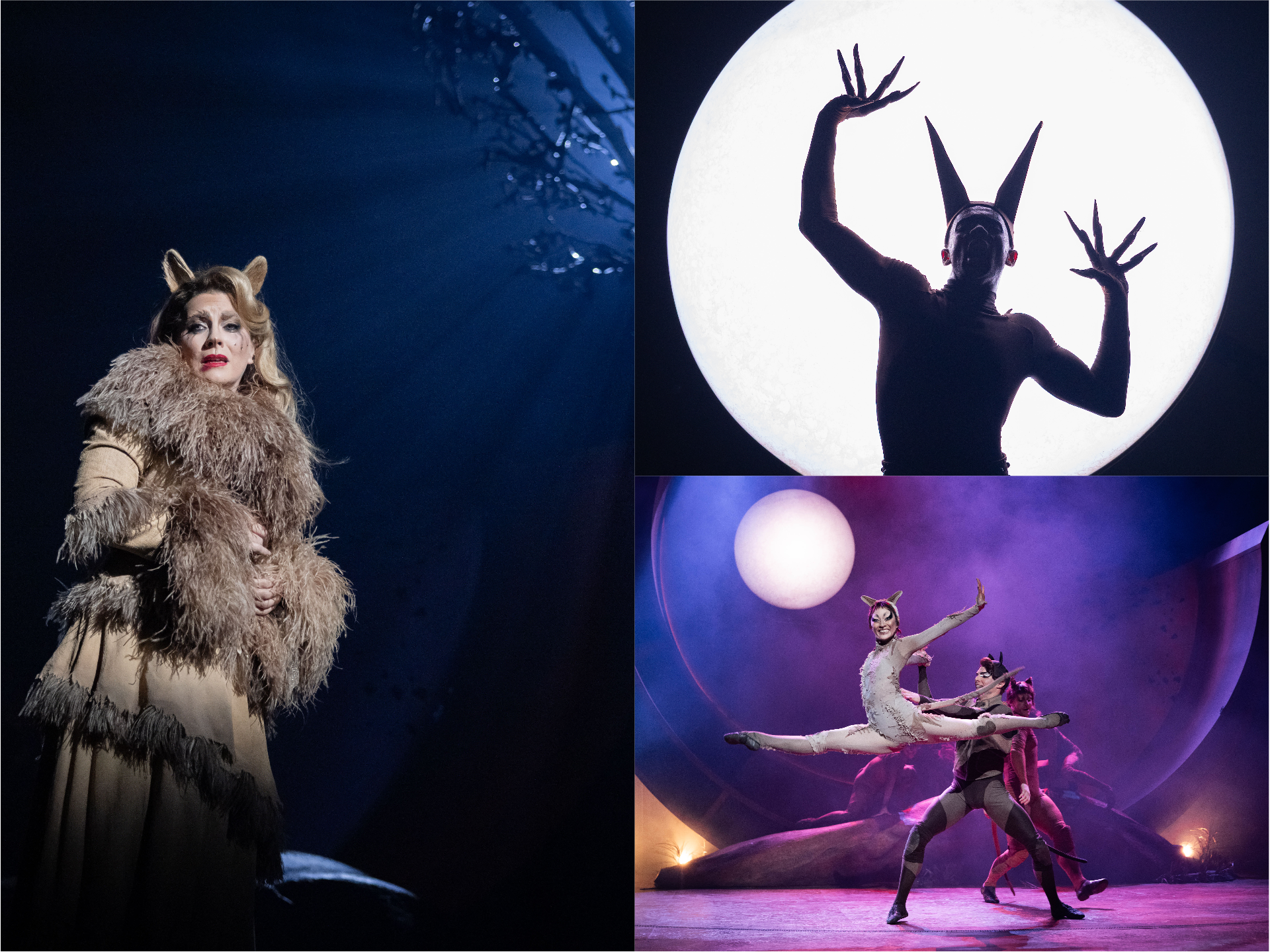
Rachael Wooding anchors the evening’s dramatic weight as Grizabella. Shunning the temptation to play the role purely as a faded diva waiting for an eleven o’clock belting masterclass, she gives us a bruised, desperate figure whose delivery of Memory silences the Palace auditorium through quiet vulnerability. Kalisha Amaris provides steady vocal authority and soulful warmth as Old Deuteronomy. Jaydon Vijn brings swaggering, rock-infused cheek to the Rum Tum Tugger, while Jet Yau’s Mr Mistoffelees swaps vintage parlour tricks for explosive, gravity-defying athletic precision, not to mention boasting one of the finest theatrical character names ever committed to paper.
There was a warmth to the audience response from the very first number that felt noticeably different from routine enthusiasm. This did not feel like an audience discovering a musical. It felt like people welcoming an old friend back to the dinner table. By the end of the evening, that affection had transformed into a standing ovation and raucous applause thoroughly deserved by a cast who never once allowed the energy levels to dip.
The technical effects deserve special mention. Thunder cracks across the theatre with startling force. Rings of fire, flaming torches, shifting moonlight and an exquisitely integrated LED hoop sequence all contribute to a production that rarely stops finding new ways to delight. Macavity’s introduction, accompanied by silhouetted movement around the moon and a thrillingly theatrical duet, proved one of the evening’s highlights. The villainous “Napoleon of Crime” has rarely looked so compelling.
Act Two somehow manages to increase the spectacle. Mr Mistoffelees’ sequence pushes the audience’s delight levels even higher, while Skimbleshanks arrives accompanied by a glorious steam train effect that immediately won this railway enthusiast over. Perfectly illuminated rotating wheels emerge centre stage in a moment that feels part Willy Wonka, part theatrical magic trick. Meanwhile, the appearance of Gus the Theatre Cat, played with warmth and humour, prompted one of the evening’s most affectionate responses.
Visually, the production occasionally resembles the result of Tim Burton, Jean-Paul Gaultier and David Bowie being locked in a room together and instructed to reinvent musical theatre. It shouldn’t work. It works magnificently.
Lloyd Webber’s score still does the heavy lifting. The Jellicle Ball, Macavity, Old Deuteronomy and Memory have endured because their theatrical instincts are razor sharp. Yet what stands out here is the nerve behind the staging. In an era of safe, xeroxed touring revivals, this production insists that audiences look at an old beast with fresh eyes. Intoxicating stuff.
Perhaps the greatest compliment I can pay this production is that I never regarded Cats as a show for me. Previous incarnations often felt elusive and oddly opaque despite their popularity. That is not the case here. McOnie’s vision brings a clarity, confidence and theatrical focus that finally unlocked the material for this reviewer. There is an old saying that you cannot teach an old dog new tricks. Cats can, and did.
Whether purists will miss the warm nostalgia of the original junkyard remains open to debate, but Drew McOnie has given Cats a sharp pair of claws again. This is not merely a successful revival. It feels like the culmination of forty-plus years of experimentation, refinement, and reinvention. In a word: spectacle.
Quite simply, it is one of the finest productions I have ever seen at the Palace Theatre Manchester.
CATS plays at Palace Theatre Manchester until Saturday, 21 November. Tickets are available here.
Christopher Balmer is a Lancashire writer and lifelong theatre‑goer whose work blends northern humour, folklore‑tinged insight, and a deep love of live performance. He’s spent years telling stories in classrooms and on the page, bringing a sharp eye, a warm voice, and a distinctly northern sensibility to everything he writes. Christopher works across genres — from psychological folklore to contemporary northern‑gothic — with several pieces published across the UK. When he’s not at the theatre, he’s usually reading, teaching, or shaping his next story. You can find Christopher on Facebook and Instagram. You can peruse his books here.
Trending Now
Review: A Christmas Carol at Leeds Playhouse
You may also like