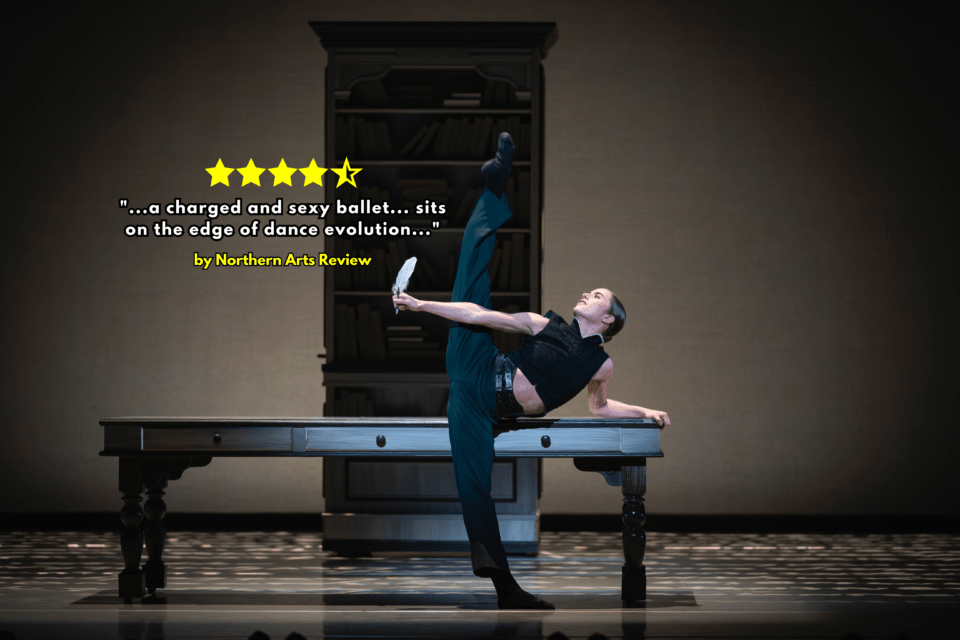
“…a charged and sexy ballet… sits on the edge of dance evolution…”
Northern Ballet’s Gentleman Jack, Leeds Grand Theatre
By Sean Sable
No one would accuse me of being a snob—at least not to my face. I never perch from high on the mount of good taste and proclaim that theatre shouldn’t iterate on popular subjects or dip into the wellspring of the zeitgeist. I enjoy jukebox musicals and practically bound into my seat at a panto. I have happily followed a property from book to stage to movie to TV and back to stage. However, that doesn’t make me a cheap date. Whenever I see a popular piece of media, or a subject that has been recently covered in other formats, I’m always eager to see how this new medium seizes the opportunity to be a genuinely additive experience for the viewer. Not “can it be done” (almost anything can be done) but what is unlocked by the choice?
Traditionally, ballet gravitates towards myth and legend. And it makes sense. Gods and monsters sit naturally in a world of abstracted movement, their emotions enormous and their conflicts cosmic. But Anne Lister, industrialist, landowner, diarist, and the woman often described as the first modern lesbian, is a figure who offers immediacy and freshness that mythological subjects rarely do. Slipping her story into a new format carries a different kind of risk. So, when I settled into my seat at the Leeds Grand Theatre for Northern Ballet’s world premiere of Gentleman Jack, I was genuinely excited to see whether ballet could offer something new to the once hidden love story that has become an anthem for many people in the Queer community.
Gentleman Jack has been in development for some time, and its pedigree is serious stuff. Choreographed by Annabelle López Ochoa, it was developed alongside dramaturg Clare Croft, choreography consultant and queer dancer-songwriter Jemima Brown, and Sally Wainwright, who wrote the BBC/HBO television series. The production is co-produced with the Finnish National Opera and Ballet and was awarded the FEDORA–Van Cleef & Arpels Dance Prize 2025 before a single public performance. It is also the first major commission under artistic director Federico Bonelli, and perhaps that is why the ambition runs so hot through every element of it. The story follows Anne Lister through her battles with male industrialists, her consuming love affair with Mariana Lawton, and her eventual marriage to Ann Walker—the relationship widely considered the first recorded lesbian wedding in Britain.
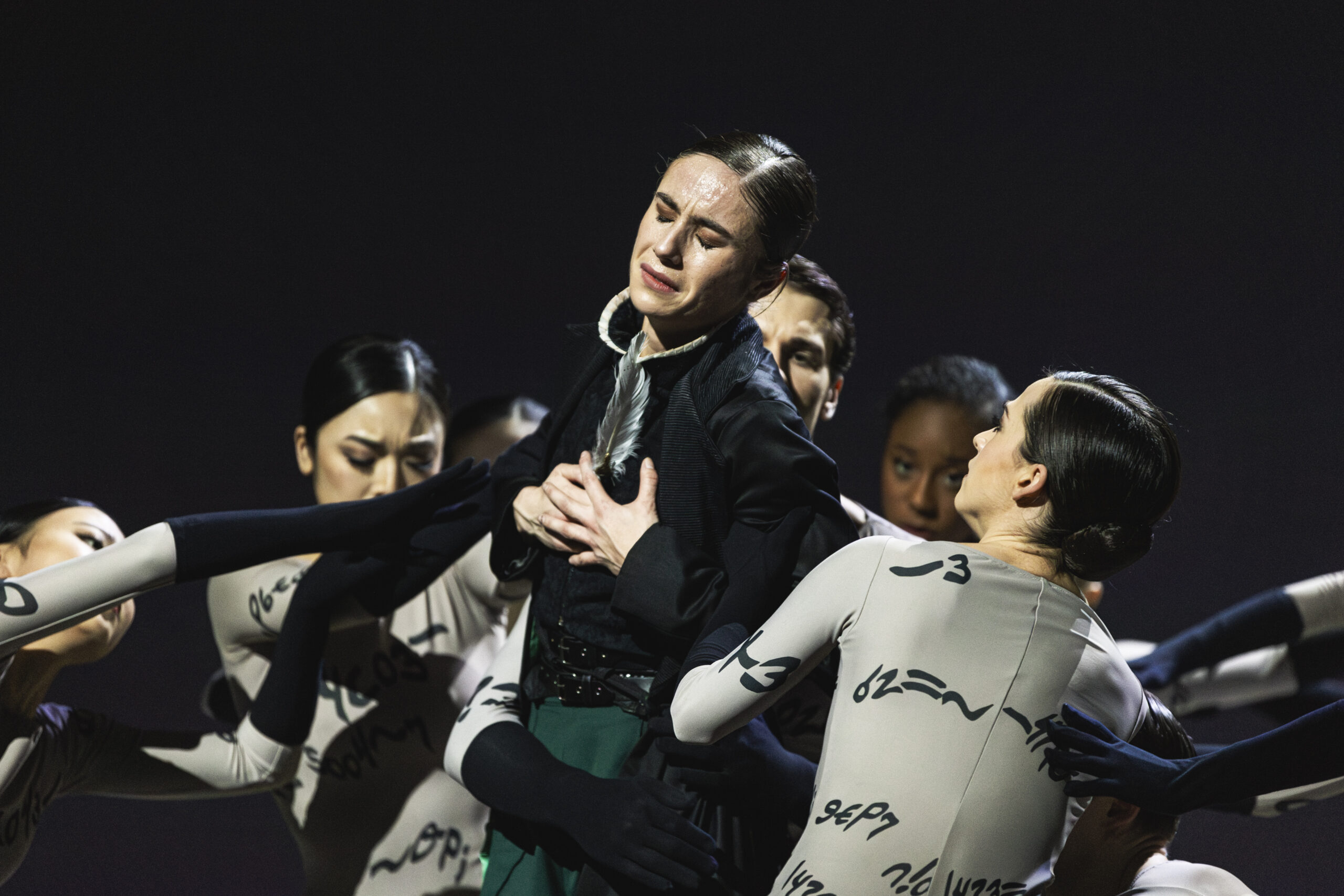
I didn’t have to wait too long to get the first answer to my format question. López Ochoa’s decision to choreograph Anne Lister almost entirely off-pointe is a bold declaration that we feel from the moment the curtain rises. The movement vocabulary Gemma Coutts is asked to embody is borrowed from the male dancer tradition. It is direct, grounded, unashamed of taking up space. Anne Lister was a woman who refused to be made smaller and this commitment to a bolder masculine form is as exciting for character development as it is for dance. When the female love interests move through the ballet on pointe, the visual contrast does discreet, continuous work. Coutts carries a cane, using it not as an affectation but as an extension of the way Anne Lister moved through the world with propulsion and purpose. The hat-brim touch (borrowed so lovingly from Suranne Jones’s TV portrayal) was a mannerism that held special weight when Anne was left on the stage floor after a group of men tear her shirt and leave her—a genuinely heartbreaking image—and her aunt, with one small gesture, places her hat back on her head. Coutts sweeps the brim and the theatre exhales.
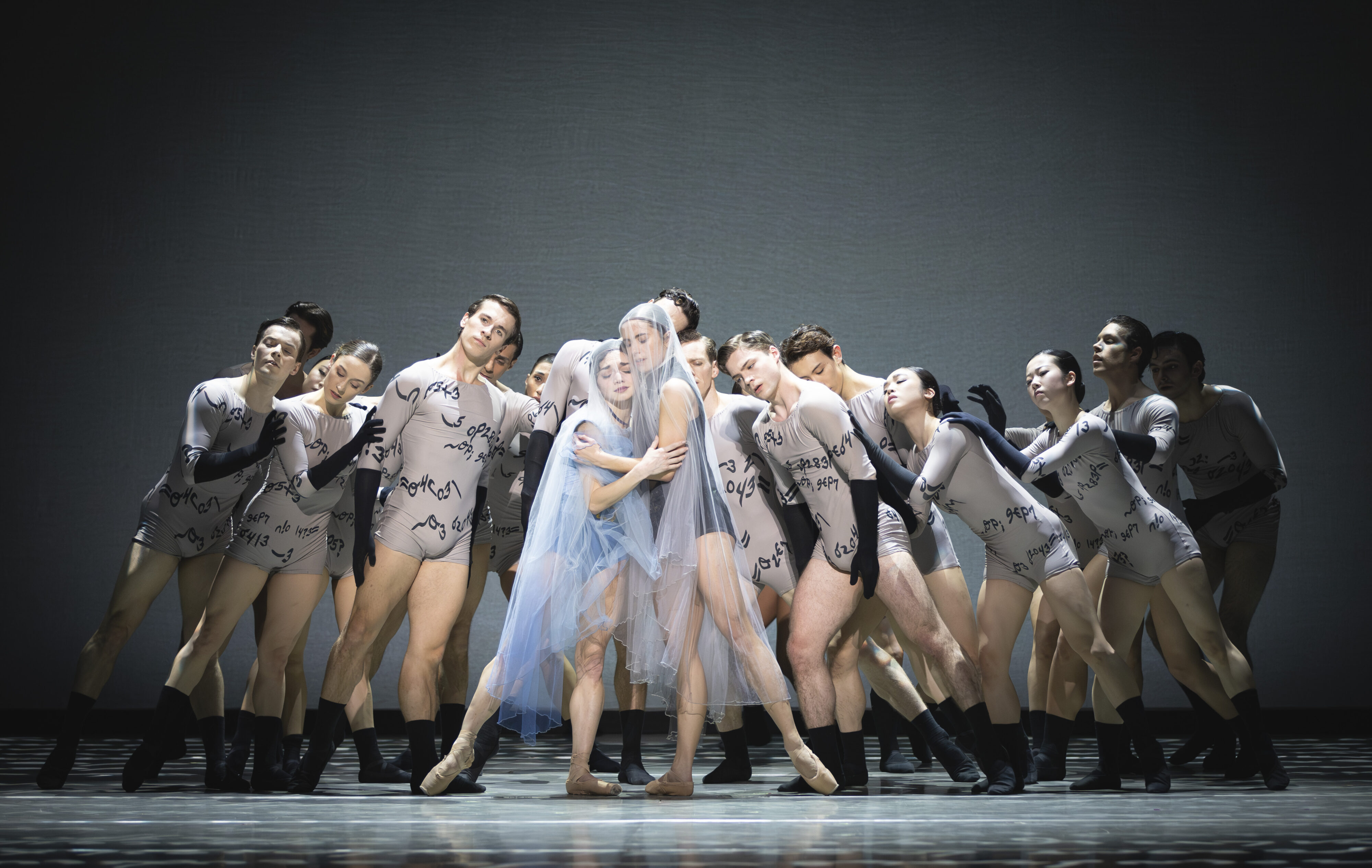
My format question gets answered most fully, though, by the Chorus of Words. The corps de ballet appear in androgynous bodysuits with text printed across the fabric. They are Anne’s words, her diaries, the four to five million words of coded script she spent her adult life producing. They become a living embodiment of her compulsion to record herself, and during the wedding scene, attended only by them, the full emotional weight of that device lands. Anne’s words were the only witnesses to a life she was forced to keep secret. The interplay between the corps and Coutts, a push and pull of anguish and rhythm, offers an emotional tempo that dance is able to explore with fresh eyes.
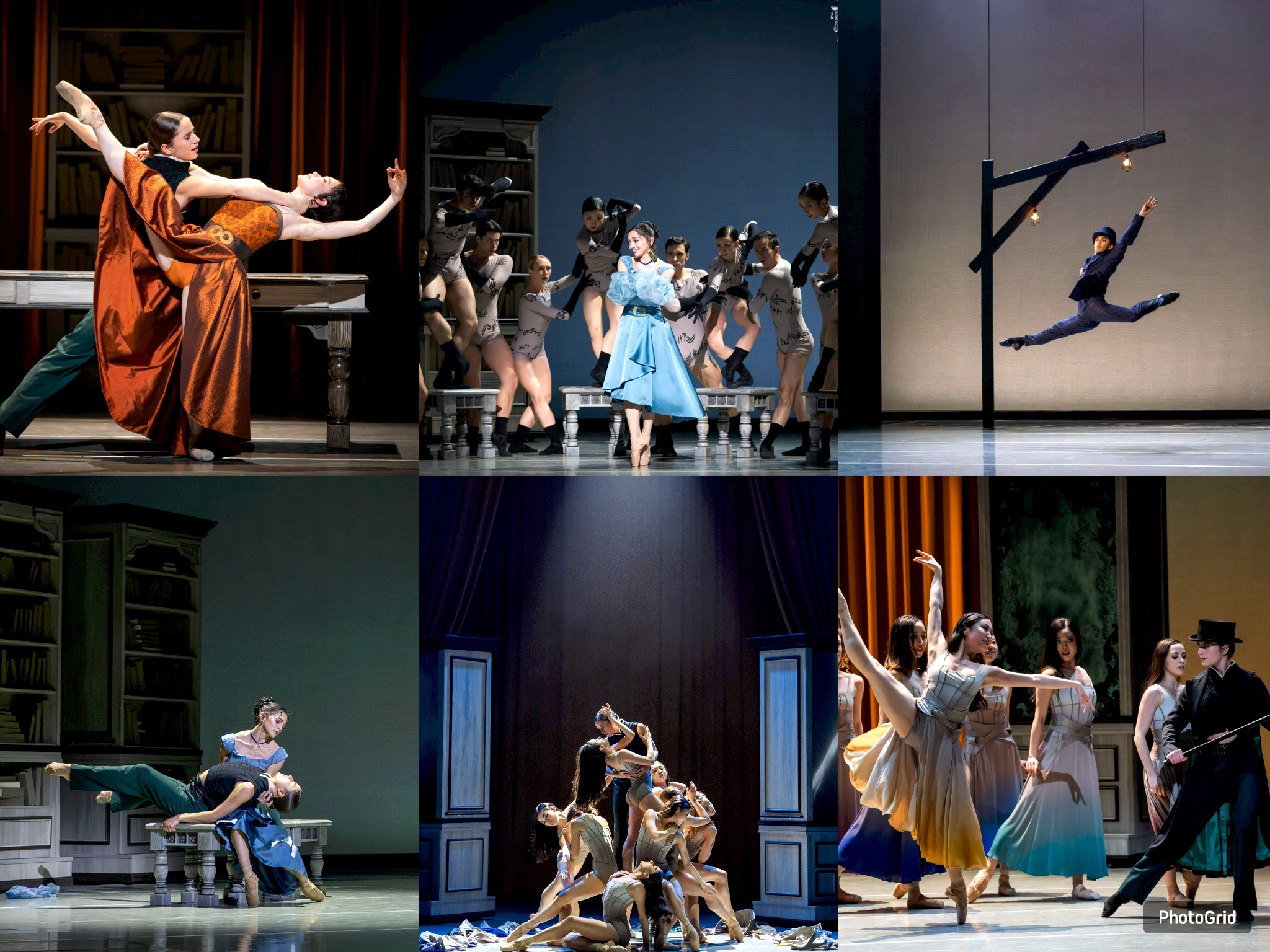
Peter Salem’s score is extraordinary, and I often found myself as lost in the music as I was in the dance. Composed for the Northern Ballet Sinfonia under conductor Daniel Parkinson, it pulls from Yorkshire and Scottish folk sounds and layers them over ambient, electronic textures. In a cinematic gesture, it enters like an opening title sequence where mood and attitude set the tone and then opens up into space and scope that never feels hemmed in by overworn phrases. In the scenes with the miners, a sharp percussive tone evokes a pickaxe striking rock, and the miners themselves, in boots with a clog-like heel-strike, add their own rhythm to the stage floor. When the rejection scene comes and Saeka Shirai’s Mariana is held at the edges of a ballroom, a haunting violin rises above the dampened sounds of the rest of the room, closing in the emotional space in one deft move. I have never heard a live orchestra make a room feel that particular shade of lonely.
The first act is where Gentleman Jack is most convincing. The intimacy between Coutts and Shirai is entirely believable. It was sensual and emotionally layered and, in places, downright sexy. The audience might have suffered from communal vapours, the way we were all fanning ourselves from the heat. Unfortunately, this made Act Two’s pivot to Ann Walker feel abrupt by contrast. Rachael Gillespie handles the flirtation scenes well, but something in the romantic escalation never quite caught for me in the way the Mariana partnership did. Whether that’s a choreographic choice or a reflection of Anne Lister’s own emotional hierarchy is genuinely hard to separate, and I’m not sure whether either answer would resolve this for me.
Nevertheless, Gentleman Jack is a charged and sexy ballet that demonstrates unequivocally that dance offers us emotional dimensions that film and TV simply cannot. It is innovative storytelling with choreography that sits on the edge of dance evolution.
Northern Ballet’s Gentleman Jack plays at Leeds Grand Theatre until Saturday 14 March. Tickets are available here.
Sean Sable is a Yorkshire-based freelance writer and editor specialising in Young Adult and Horror fiction, frequently at the same time. When she isn’t buried under a pile of books and manuscripts, she is looking for her keys and having extensive one-sided conversations, in Swedish, with her deaf cat. You can find her online at: www.seansable.co.uk
Trending Now

Review: To Kill a Mockingbird at Leeds Playhouse

Review: Night Collar at St Helens Theatre Royal
You may also like