Review: Exhibition: The Guardians of Living Matter at Lowry, Salford
 Shannaz
Posted On January 31, 2026
Shannaz
Posted On January 31, 2026

“…will capture everyone’s imagination…”
Exhibition: The Guardians of Living Matter by John-Paul Brown and Sophy King, Lowry, Salford
By Claire Walmsley
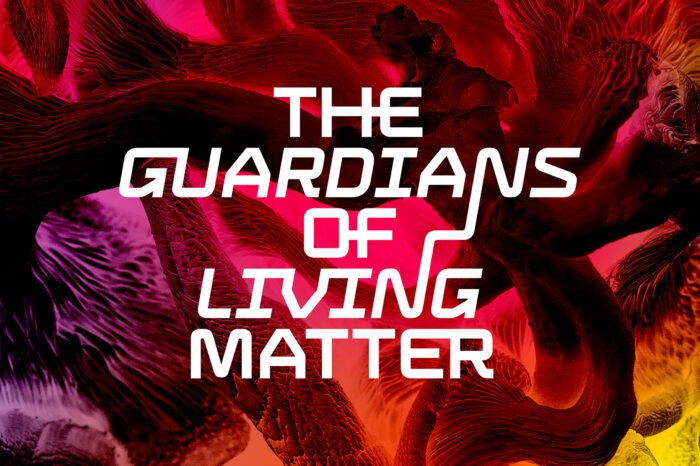
Guardians of Living Matter challenges you to imagine what’s possible when you think outside the box. Developed by artists Sophy King and John-Paul Brown, this spectacular immersive exhibition is housed at The Lowry in Salford.
Set in a speculative future, the artists imagine a world where the climate crisis is solved by the unexpected collaboration of mycelium (the branching, intricate root system of fungi that connects plants and trees in a hidden underground network) and AI. The exhibition is constructed to simulate the headquarters of the Guardians of Living Matter (the organisation responsible for the discovery). This is not a space with exhibitions – the whole space is the exhibition.
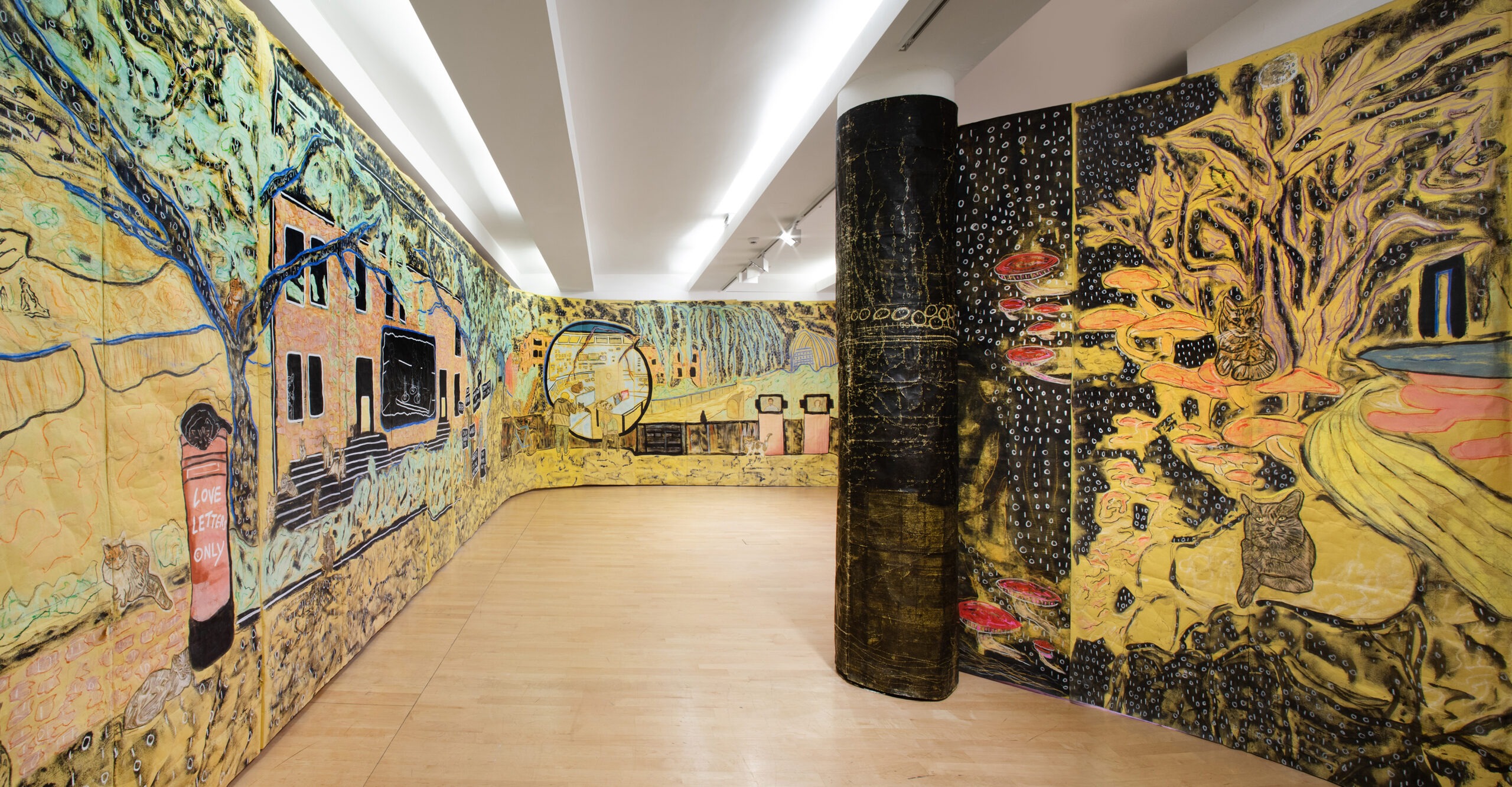
You start at the reception desk to sign in as a visitor in a clinical-feeling room where little is given away. Your journey leads you to a large space housing an enormous mural depicting the history of the mycelium and AI collaboration up to 2076. A running theme of the exhibition is repurposing materials and minimising the impact on the environment. The mural was created using industrial paper that was otherwise destined to spend an eternity in landfill. Other parts are refurbished from the local dance school or even from parts of the artists’ gardens.
The premise of the speculative future is an entity known as the Oracle – a neural network of mycelium and AI. In one of the open spaces, the artists have created the Oracle from real mycelium. It was grown on hemp in their studios and sculpted and preserved into the intricate fibrous web hanging from the ceiling. Around the room, there are a number of spotlights controlled by an AI model that generates patterns from streams of actual data. The combination of the imposing sculpture, swooping lights and knowledge of how it was created makes you stop and take a breath. The room feels alive – it is ethereal and calm yet a little unsettling.
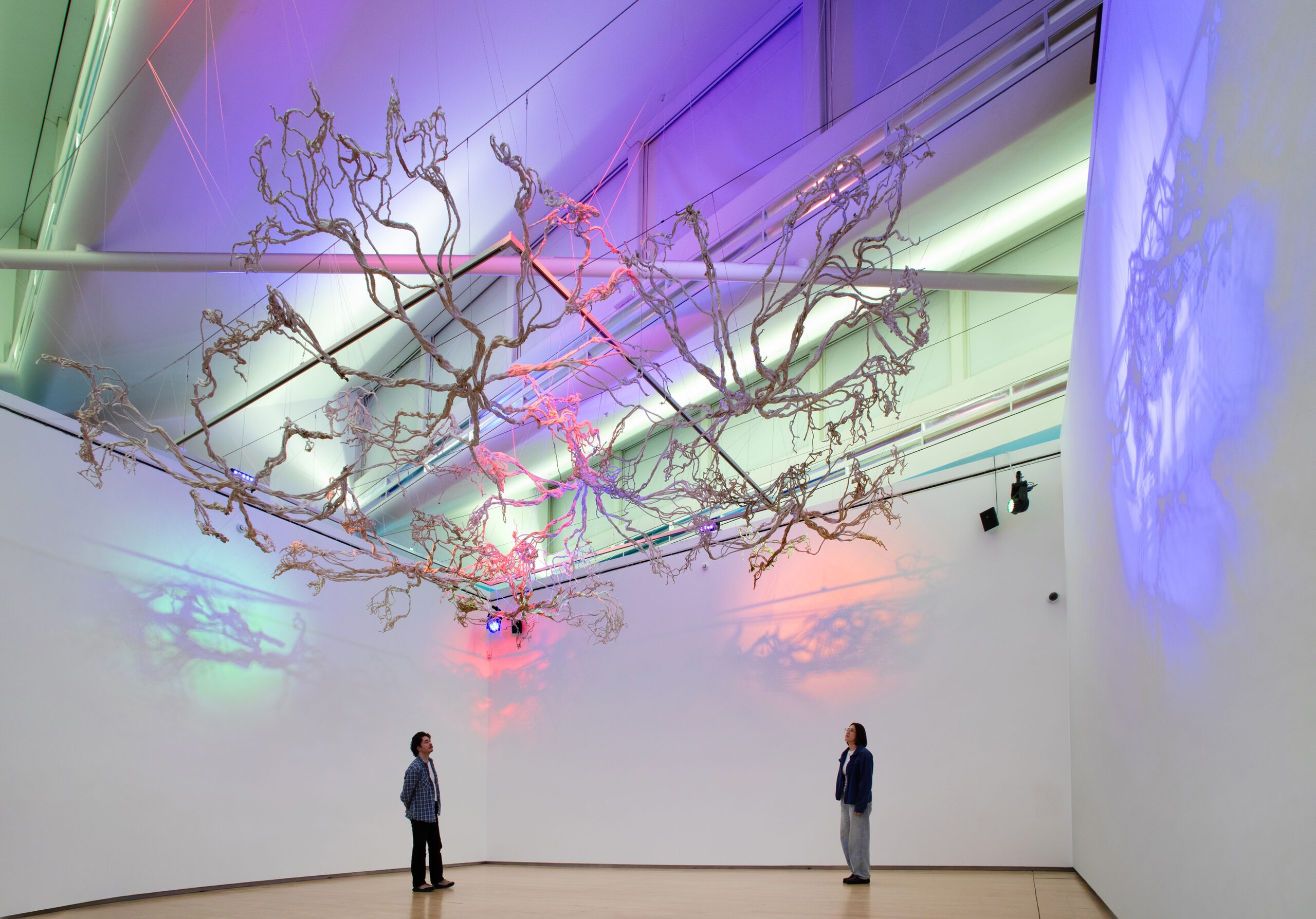
Personally, one of the most impressive parts of the ambitious show was the amount of meticulous research that has gone into creating this prophetic intertwining of art, nature and science. The artists have spoken with dozens of scientists, read countless books and articles and worked with top experts in the field to craft a reality that feels tangibly close.
One of the areas you can explore is the research station, where you can read the books and papers they’ve used as inspiration, touch the materials and learn how this potential future is grounded in reality. One paper in particular detailed how the mycelium network generates approximately fifty ‘words’ to communicate. The artists have used this as inspiration for an ever-moving digital exhibit that weaves a poetic layer into the simulation – blurring the lines between science and art.
There is an accessible beauty to the work that will capture everyone’s imagination, yet the subtle layers of complexity in the ideas offer a more profound insight should you wish to embrace the experience. The added tactile elements help bridge the gap between seeing and experiencing, allowing a wider audience to enjoy the space. The signs offer digestible explanations, but it is definitely worth spending time with your own thoughts to truly appreciate the exhibition.
Throughout the event duration there are a number of accessible events – for example, quiet sessions and BSL led tours. The space itself is well designed for people with a variety of access needs, which is pleasing to see, as art is for everyone.
It left me with a deep feeling of hope. Not a hope that AI will solve all our problems, but that there will always be people to step up to challenges. My lasting thought as I drove home was a quote by Margaret Mead prominently displayed on the mural: “Never doubt that a small group of thoughtful, committed citizens can change the world. Indeed, it is the only thing that ever has.”
Exhibition: The Guardians of Living Matter is at Lowry, Salford until Sunday 29 March. Tickets are available here.
Claire Walmsley is a children’s author who pays the bills by teaching computer science to primary school pupils in Manchester. When she’s not writing, reading or fixing all the broken laptops at work, she likes to run and hike. As a long-term sufferer of Crohn’s Disease, she is always trying to inspire the next generation of chronic illness sufferers. You can find her first picture book here. Or follow Claire Walmsley – Children’s Author on all the socials.
Trending Now

Review: To Kill a Mockingbird at Leeds Playhouse