“…I didn’t want it to end…”

1984 by George Orwell, adapted by Ryan Craig, Liverpool Playhouse
Big Brother is definitely watching you!
While you get yourself seated, the stage is illuminated with a huge screen, with an eye linked up to a camera that is panning around the theatre zooming in randomly on the unsuspecting audience. It is rather unnerving to find yourself projected, in the grainy, black and white CCTV footage, onto the large screen in the centre of the stage. What a fantastic feature; without question, the tone of the night is set.
The question I had before going into the theatre was: how on earth are they going to bring this classic novel to the stage? There was nothing to worry about. The script was expertly adapted by Ryan Craig, true to the style and tone of the original novel. The key phrases were accurate, and the overall mood remained stilted and oppressive.
Initially, I was unsure about the set. The large screen remained and there were images that appeared to be projected onto it. Then, suddenly the images vanished uncovering a wire mesh screen that allowed a clear view to a secondary set behind it. This was used to great effect for flashbacks of Winston’s childhood. This screen was utilised continuously throughout the play. Switching between displaying camera recordings of the characters, in-action scenery imagery, and the big brother transmissions. I’ve never seen technology being used in such a way in a stage performance – it was unique.
The set changes themselves were minimal. A simple bed moved into place to represent Winston’s flat, or a table in situ to represent the house of O’Brien. There was nothing fancy about the props. This seemed a rather strange concept at first, but it perfectly enhanced the overall feeling of poverty and control in a society that banned luxuries. The fact that the play took place almost entirely in once centre area of the stage, except for the flashbacks, emphasised the feeling of claustrophobia and the lack of freedom to explore physically, mentally or emotionally.
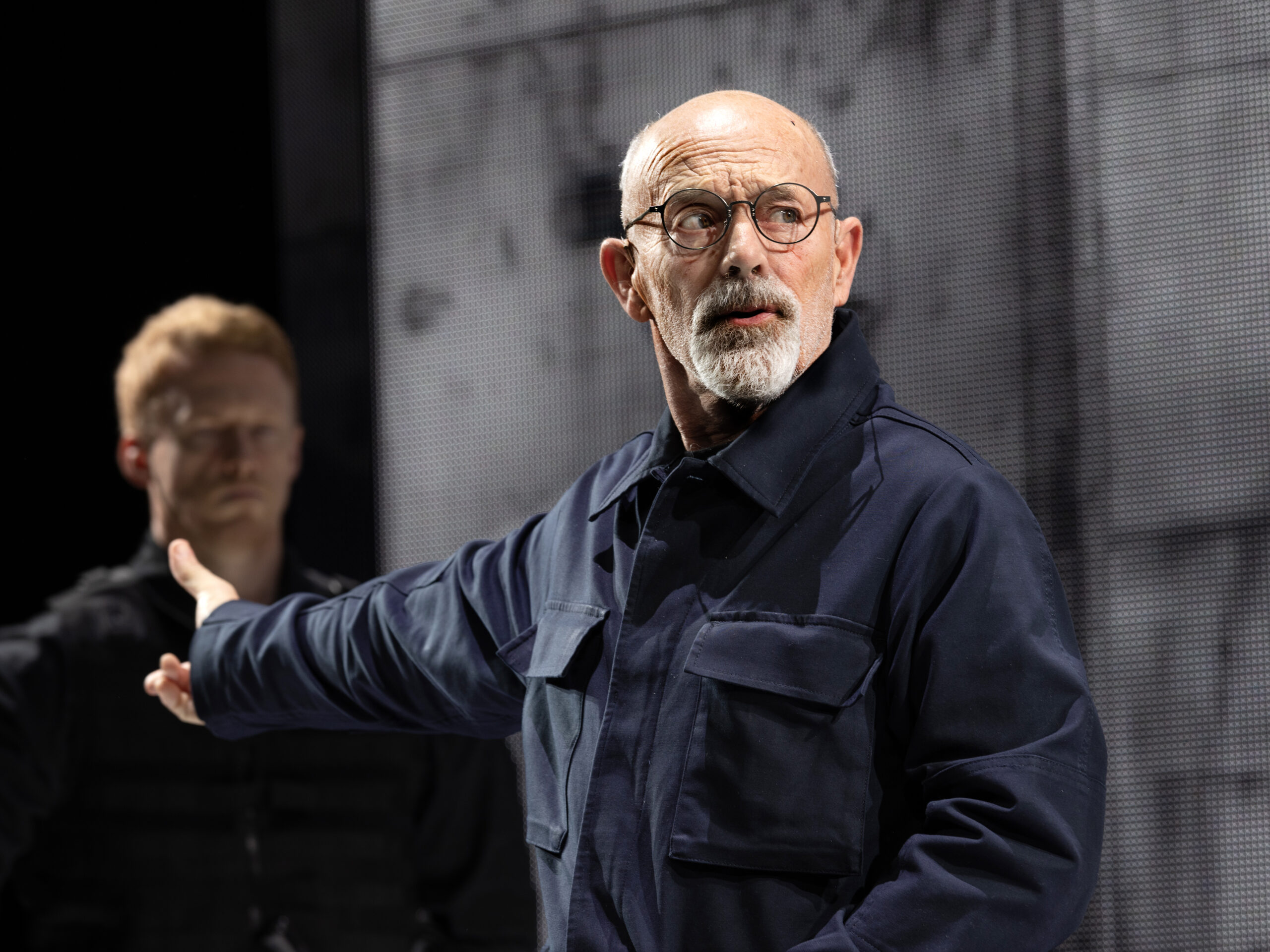
The cast was small, comprising of four main characters and a few supporting, yet it kept the interest of the audience throughout – nobody wanted to miss a word. The simple minimalistic, but clearly well-thought out, set design allowed the audience to fully focus on the characters’ interactions. There was nothing to draw the eye away. This almost felt like a representation of the audience becoming big brother and watching their every move intently. A shout out is definitely deserved for Mark Quartley, who played the lead character of Winston, as his portrayal of an initially awkward and shy Winston blossomed into a rebellious and anarchistic Winston, and then into the broken, tortured Winston – each version being excellently shown. In one scene he was stripped of all clothing, leaving him standing completely naked. If you are bashful look away for at least five minutes when you hear Winston ordered to remove his clothes – he really does remove it all.
By the end of this play I was on the edge of my seat. I didn’t want it to end. It was poignant, heart wrenching and a stark reminder of how society can be edged little by little into a reality that is not in the best interests of humanity. If you love dystopian fiction, sobering, thought-provoking dialogue and excellent acting, go and see this play. I can guarantee you will be lying in bed thinking about it late into the night, as I certainly found myself doing.
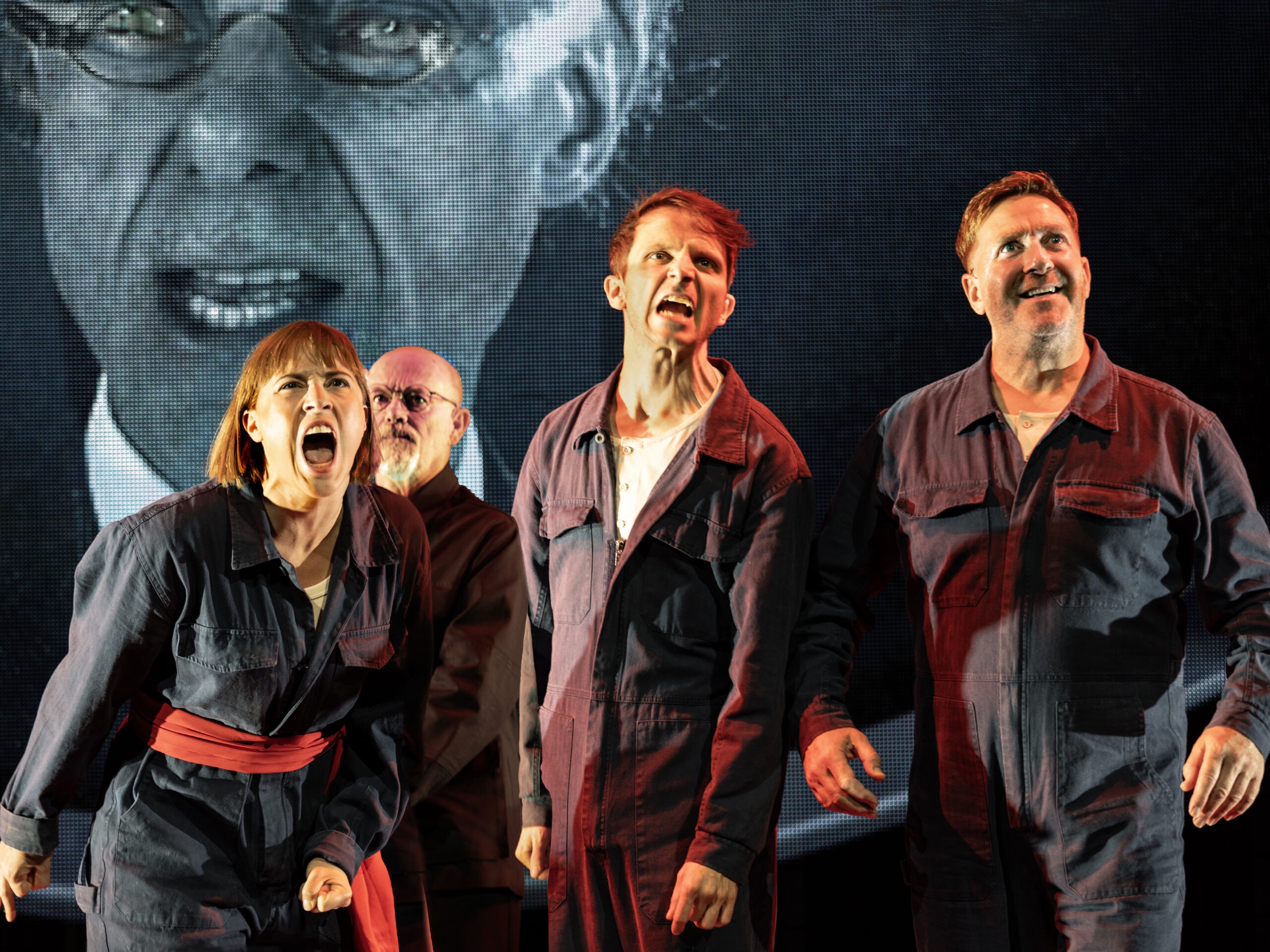
1984 plays at Liverpool Playhouse until Saturday 23 November. Tickets are available here.
Melissa Molloy is currently masquerading as a special needs teacher, having previously spent 10 years teaching English, media studies and drama. In her spare time, she offers editorial reviews, beta-reads and guidance to new authors who wish to self-publish their writing. In lieu of sleeping, Melissa often finds herself with her head buried in her laptop – slowly writing her first novel. When she isn’t drowning in work, Melissa can be found paddleboarding and kayaking in local lakes, usually accompanied by at least one or two of her four children.
Trending Now

Review: To Kill a Mockingbird at Leeds Playhouse

Review: Night Collar at St Helens Theatre Royal
You may also like